
Taiwan's Nuclear Plant No. 3 safety inspection schedule extended to 2029, nuclear restart progress faces uncertainty
 Scan to share
The latest report from the Audit Department shows that the actual progress of Taiwan's nuclear restart may be lower than expected by the public. Although the Ministry of Economic Affairs has determined that Nuclear Plant No. 2 and Nuclear Plant No. 3 are feasible for restart, and Taipower's restart plan for Nuclear Plant No. 3 has been submitted to the Nuclear Safety Commission for review, a gap has emerged in the progress of the critical self-conducted safety inspections. Although the five self-conducted safety inspection contracts for Nuclear Plant No. 3 have been awarded, the contract performance period may be extended to July 2029, casting uncertainty over the original goal of completing document review by the end of 2028.
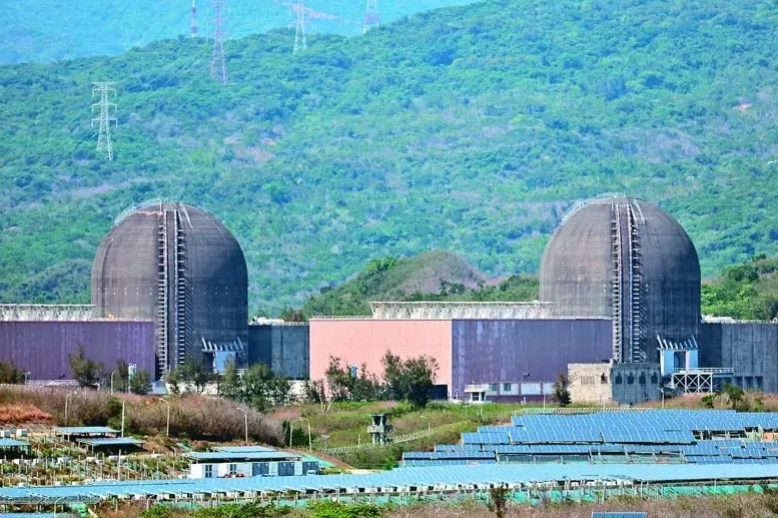
Nuclear Plant No. 3 is currently regarded as the plant with the best chance of advancing toward restart, but its restart process still must clear multiple hurdles including safety review, aging assessment, aging management, and related document review. The Audit Department pointed out that some self-conducted safety inspection work has a contract performance period extending from early 2026 to July 2029, indicating a clear gap between the schedules set by Taipower and the competent authority. If the safety inspection documents cannot be completed and approved on schedule, the subsequent issuance of the operating license and the actual restart timeline may both be forced to be postponed.
In addition to self-conducted safety inspections, spent fuel storage capacity is also a major variable in the restart of Nuclear Plant No. 3. The Audit Department noted that the spent fuel pool at Nuclear Plant No. 3 can support approximately 4.5 to 5 more years of operation, and although the indoor dry cask storage facility contract was awarded in May this year, it is estimated that the operating license may not be obtained until 2032. In other words, even if Nuclear Plant No. 3 makes progress in safety review, fuel storage arrangements will still affect the feasibility and stability of its long-term operation.
The difficulty of restarting Nuclear Plant No. 2 is even greater. Because the spent fuel pool is already full, Nuclear Plant No. 2 was decommissioned early for this reason. To advance toward restart now, it must first complete the relevant testing of the dry cask storage facility and obtain an operating license before spent fuel can be removed from the reactor, followed by self-conducted safety inspections inside the reactor. At present, the outdoor dry storage facility at Nuclear Plant No. 2 has only completed cold testing, and it still must undergo review by the Nuclear Safety Commission, hot testing, and subsequent license application, with overall progress still in the early stage.
Taipower emphasized that the restart preparations for Nuclear Plant No. 2 and Nuclear Plant No. 3 will uphold nuclear safety as the highest principle, advancing in a scientific, professional, pragmatic, and rigorous manner. However, the Audit Department has already required the Ministry of Economic Affairs to urge Taipower to better plan the restart schedule, the submission timeline for self-conducted safety inspection documents, and to accelerate the construction of dry storage facilities. Whether nuclear power can return to the power supply system as quickly as policy expects is no longer just a matter of political decisions, but whether safety inspections, licensing, fuel storage, and engineering progress can all be synchronized.
Disclaimer: Information republished from partner media, institutions or other websites is provided for reference and communication purposes only. It does not imply endorsement of its views or verification of its accuracy. Please contact us if any content infringes rights or requires correction.