Registration
REGISTER FOR THE CONFERENCE
Registration
REGISTER FOR THE CONFERENCE
 Apply to Exhibit
APPLICATION FOR EXHIBITION
Apply to Exhibit
APPLICATION FOR EXHIBITION
 Sponsorship
SPONSORSHIP APPLICATION
Sponsorship
SPONSORSHIP APPLICATION

Takahama Nuclear Power Plant in Japan to Transport 1,600 Drums of Low-Level Radioactive Waste
Kansai Electric Power announced on September 4 that it will transport low-level radioactive waste generated at the Takahama Nuclear Power Plant to the Low-Level Radioactive Waste Disposal Center of Japan Nuclear Fuel Limited (JNFL) in Rokkasho Village, Aomori Prefecture. According to the plan, the dedicated low-level radioactive waste transport vessel Seiei Maru will berth at the Takahama Nuclear Power Plant on September 5 and depart on September 12 after loading is completed. If the transport schedule is adjusted due to factors such as weather conditions, Kansai Electric Power will announce the actual situation separately. This shipment consists of 200 dedicated containers holding 1,600 waste drums, all of which are cement-solidified waste, excluding homogeneously solidified waste.
2026-09-04
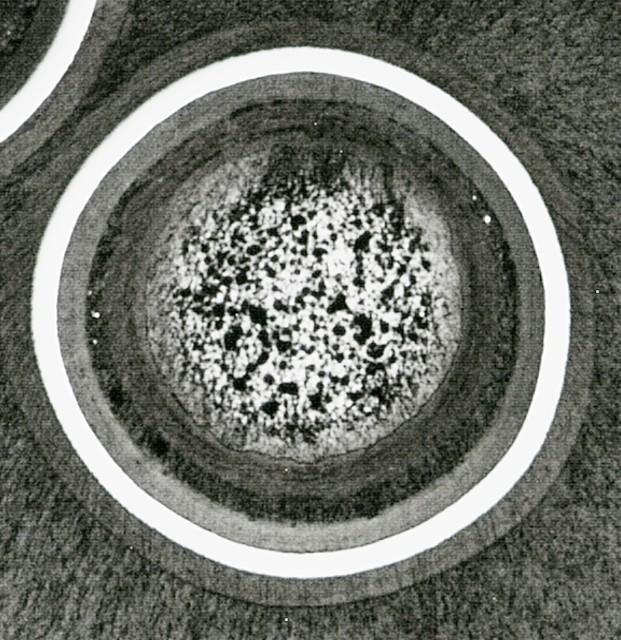
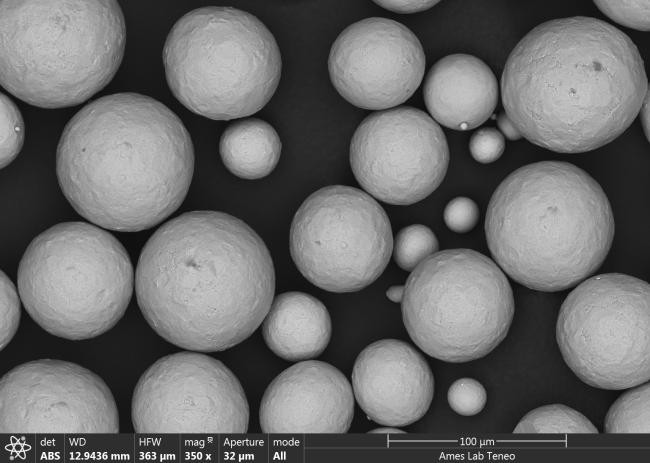
U.S. Completes Mechanical Property Measurements of Irradiated HALEU TRISO Fuel Particles
2026-09-04

Danzhou in Hainan Advances "Nuclear Power to Yangpu" and "Nuclear Steam to Yangpu" to Support Zero-Carbon Industrial Park Development
2026-09-04

Sweden's First New Nuclear Reactor Could Be Operational by Mid-2030s
2026-09-04

Site Construction Officially Launched for Phase I of Shandong Laiyang Nuclear Power Project
2026-09-04

Pre-commissioning WANO Peer Review Launched at Türkiye's Akkuyu Nuclear Power Plant
2026-09-04
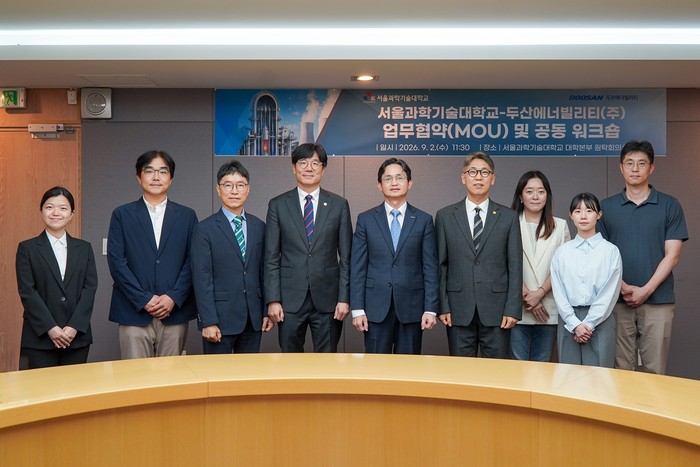
Seoul National University of Science and Technology and Doosan Enerbility Deepen Nuclear Design Cooperation
2026-09-04

Russia Plans to Build Floating Nuclear Power Plant Production Facility Near Murmansk
2026-09-04

Key steam turbine components for UK Rolls-Royce SMRs to be produced in Newcastle
2026-09-04
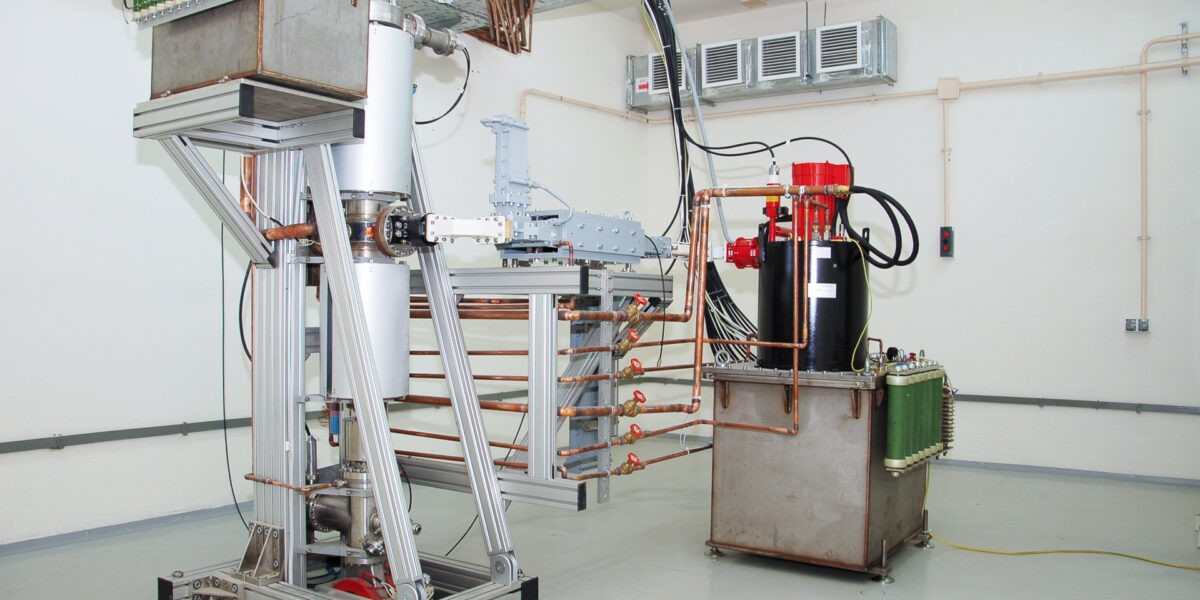
The Frumkin Institute of Physical Chemistry and Electrochemistry of the Russian Academy of Sciences has synthesized a novel metal-organic framework material containing neptunium and cesium atoms. Research shows that this material is insoluble in water, resistant to high temperatures and intense radiation, and can stably "lock" radioactive cesium within its own structure, offering new insights for research on radionuclide immobilization and radioactive waste treatment materials. Metal-organic framework materials are a class of materials with high porosity and controllable crystal structures, whose lattices are typically composed of metal atoms connected by organic molecules. Since their pore sizes and structures can be tuned at the molecular level, these materials can be used to adsorb gases or specific nuclides. However, compared with traditional adsorbents such as activated carbon...
2026-09-04
On the evening of September 2, 2026, Beijing time, the team led by Luo Tao from the Institute of Modern Physics at Fudan University, together with collaborators, published a research achievement titled "Exploring baryon semileptonic decays through polarization and entanglement" in Nature. This study, for the first time in a collider experiment, utilized quantum entanglement and polarization information to extract the Cabibbo-Kobayashi-Maskawa (CKM) matrix element |Vus|, providing a new experimental pathway for precisely testing the Standard Model of particle physics. The CKM matrix describes the strength of transitions between different quarks under the weak interaction. Among them, |Vus| corresponds to the transition from the strange quark to the up quark, and its numerical precision is related to the test of the three-generation quark mixing mechanism in the Standard Model. Currently, results for |Vus| obtained from different decay processes still show discrepancies, and the unitarity test of the first row of the CKM matrix also exhibits some tension, necessitating more independent measurement methods for verification.
2026-09-04
On September 3, 2026, the Moscow Additive Manufacturing Technology Center of Rosatom's Fuel Division completed the assembly of its 30th industrial metal 3D printer. The equipment is the medium-sized RusMelt 300M, a flagship model in Rosatom's metal 3D printer product line. The rollout of the 30th unit coincides with the 30th anniversary of TVEL JSC, the management company of Rosatom's Fuel Division. According to reports, the additive manufacturing technology business unit of Rosatom's Fuel Division currently produces industrial-grade 3D printers capable of meeting manufacturing needs for components of various sizes, utilizing mainstream metal additive manufacturing technologies such as selective laser melting (SLM), direct metal deposition (DMD), and electron beam additive manufacturing (EBAM)...
2026-09-04
BWX Technologies, Inc. (BWXT) has announced that it has been awarded a contract by the U.S. Department of Energy's National Nuclear Security Administration (DOE/NNSA) to perform conceptual design work for the first module of a new lithium processing facility planned for the Y-12 National Security Complex. According to available information, lithium post-processing operations are currently still being conducted in some aging facilities. To continue supporting missions such as direct reuse of lithium materials, purification, component production, and recycling, NNSA plans to modernize related facilities to meet its national security mission requirements. Heatherly Dukes, President of BWXT Technical Services Group, stated that this project represents a significant investment in the modernization of U.S. nuclear security infrastructure, aimed at...
2026-09-04
The XTOMO-CUBE series micro-CT, independently developed by Ruiying Detection Technology (Jinan) Co., Ltd., recently made its debut. With dimensions of 140×132×220 mm and a total weight of approximately 6 kg, the device can be held in one hand and is dubbed the "palm-sized CT." It can scan small-sized samples such as chicken bones, snail shells, and capsule tablets, revealing their internal three-dimensional structures. According to reports, CT stands for computed tomography technology. Compared with traditional CT equipment, the XTOMO-CUBE integrates key modules such as a miniaturized X-ray source, rotation stage, and detector into a compact body, paired with fully self-developed software capable of completing processes including projection data acquisition, CT image reconstruction, and 3D rendering. The...
2026-09-04
Royal Victoria Hospital Belfast recently introduced the Siemens Healthineers NAEOTOM Alpha.Prime photon-counting CT scanner, becoming the first hospital in Ireland to adopt this next-generation CT imaging technology. The hospital is part of the Belfast Health and Social Care Trust, and this installation is part of a long-term value partnership between the hospital and Siemens Healthineers. According to reports, the NAEOTOM Alpha.Prime photon-counting CT delivers ultra-high-resolution images and spectral data at lower radiation doses. Its 0.2 mm slice thickness helps clinicians visualize small blood vessels, fine anatomical structures, and early pathological changes, enabling more diagnostic information to be obtained in a single scan...
2026-09-03
The Beijing Synchrotron Radiation Facility (BSRF) User Office issued a notice on September 2 stating that the facility will conclude its summer maintenance and resume operations in mid-September 2026. The notice reminds users with experimental needs to promptly log in to the Chinese Academy of Sciences' Major Scientific and Technological Infrastructure Sharing Service Platform, or submit project proposals and beamtime reservation requests through the BSRF User Service System. The BSRF accepts project proposals and beamtime reservation requests year-round, and the specific application procedures can be found in the relevant attachments. Users encountering issues during the application or reservation process may contact the BSRF User Office or the corresponding beamline station contacts. Contact information for each beamline station has been provided along with the notice...
2026-09-03