
Bulgarian experts state that restarting the Belene nuclear power plant is technically feasible
 Scan to share
Bogomil Manchev, a Bulgarian energy expert, recently stated that the Belene Nuclear Power Plant (NPP) project—which has been shelved for years—remains technically viable for restart. If Bulgaria and Ukraine collaborate on financing and establish a joint ownership mechanism, the project could become a joint nuclear power venture between the two nations.
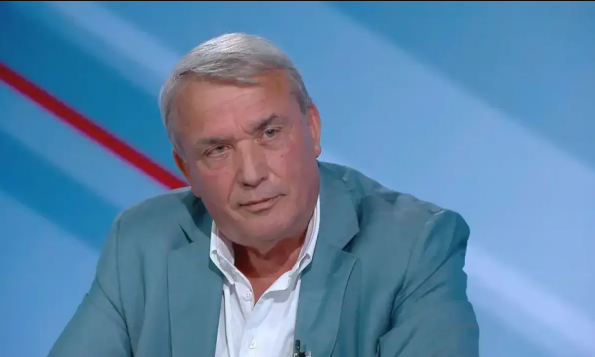
Manchev believes that Ukraine will continue to face significant electricity demand for the foreseeable future; if funding can be secured, Bulgaria could proceed with the plant's construction at the original Belene site. His proposed models include joint funding and ownership by both countries, or a long-term power purchase agreement signed by Ukraine to underpin the project's financing.
Regarding the equipment already procured for the Belene NPP, Manchev noted that Bulgaria has taken possession of the items, though some metal samples are still undergoing testing. Once analysis is complete, liability for the equipment could be assumed by the future plant owner or the project company. He indicated that, aside from reactor-specific components, non-nuclear island equipment—such as turbines—could be supplied by Western manufacturers, with French companies being potential suppliers.
Manchev disagrees with the assertion that the project cannot proceed without the signature of the Russian "general designer." He explained that the general designer's signature primarily concerns the allocation of design liability; if the future plant owner or a design firm assumes this responsibility and completes the necessary material inspections, there is certainly room for the project to move forward.
Regarding potential partners, Manchev views France as a suitable choice. He noted that France has already signed a nuclear fuel supply contract for Unit 6 of the Kozloduy NPP, and the fuel type planned for the Belene NPP is identical. In his assessment, France could supply not only fuel-related systems but also primary circuit neutron flux management systems, reactor operation control systems, and non-nuclear plant equipment. The project's advancement hinges on France's willingness to participate and the specific financial terms involved.
Should the Belene NPP project be restarted, relevant administrative and regulatory procedures would need to be undertaken anew. Manchev stated that since the technical configuration, reactor power output, and fuel type remain unchanged, the environmental impact assessment would not need to start from scratch; however, it would be necessary to re-validate that the existing assessment conclusions remain applicable. A new construction permit would need to be issued, and the project would also be required to submit relevant safety review documentation to the nuclear regulatory authority in accordance with current standards.
He also noted that the Belene site is well-prepared; the foundational conditions for Units 1 and 2 are already in place, and the site was originally planned to accommodate four reactors. While the future construction of Units 3 and 4 would require additional infrastructure, such a development is a prospect for at least two or three decades down the line.
Regarding another nuclear power project in Bulgaria, the Kozloduy Nuclear Power Plant Units 7 and 8 project is continuing to advance. Manchev stated that Westinghouse Electric Company has recently applied for a 14-month extension to its conceptual design contract for the "Kozloduy NPP – New Capacity" project. If the extension is approved, the conceptual design phase is expected to run until mid-2027, followed by the stage of refining the equipment list and project cost estimates. Some equipment might be manufactured by Mitsubishi Heavy Industries (MHI), though supply chain arrangements still require further clarification.
According to Manchev's estimates, if the first concrete for Kozloduy Unit 7 is poured in 2032 and construction proceeds as planned, the unit could enter commercial operation around 2037; for Unit 8, due to outstanding site and technical details that need to be finalized, the operational date would likely fall between 2039 and 2040.
Disclaimer: Information republished from partner media, institutions or other websites is provided for reference and communication purposes only. It does not imply endorsement of its views or verification of its accuracy. Please contact us if any content infringes rights or requires correction.