
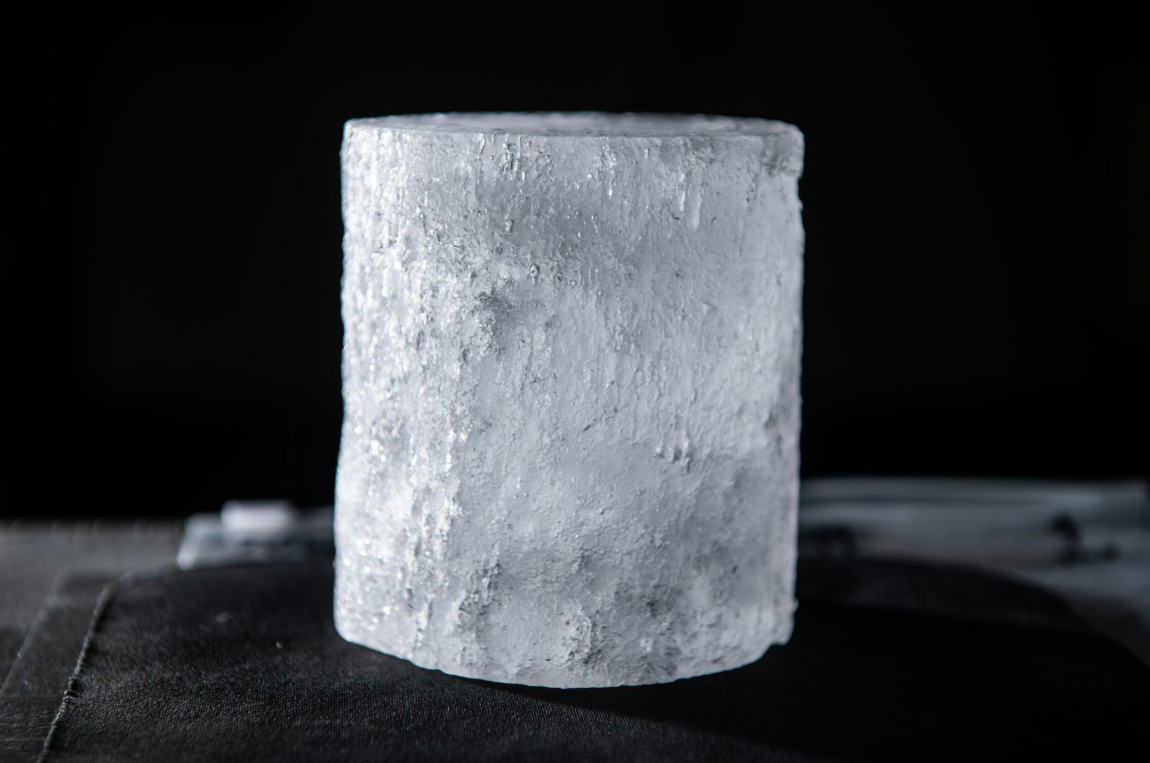
Iron-60 Found Again in Antarctic Ice Core Samples from 40,000 to 80,000 Years Ago
An international research team recently analyzed trace radioactive elements in ancient Antarctic ice layers and discovered an important clue recording the solar system's cosmic journey over the past 80,000 years. The researchers believe that the stardust buried deep in the ice proves that Earth has long been receiving material from interstellar space, and that this material may help scientists unveil the mystery of the formation history of the interstellar environment surrounding the solar system. At the core of the research is a rare radioactive isotope called iron-60. Iron-60 is not produced in large quantities in Earth's natural environment; it is typically born inside massive stars and ejected into cosmic space when those stars undergo supernova explosions. Therefore, iron-60 has long been...
2026-09-14

Brookhaven National Laboratory Develops Integrated X-ray Imaging Tool for Nuclear Materials Research
A research team at the U.S. Department of Energy's Brookhaven National Laboratory has recently developed and built a new experimental apparatus that integrates four X-ray computed tomography techniques into a single instrument, enabling multiscale, comprehensive studies of next-generation nuclear reactor materials. The related technical achievements and capability demonstration have been published in the Journal of Synchrotron Radiation. The apparatus is located at the X-ray Powder Diffraction (XPD) beamline of the National Synchrotron Light Source II (NSLS-II) and was commissioned jointly by the U.S. Department of Energy Office of Nuclear Energy's Nuclear Science User Facilities program, Brookhaven National Laboratory's Nuclear Science and Security Department, and NSLS-II. Researchers said that next...
2026-09-12

Japan's Monju Fast Breeder Reactor Sodium Coolant Overseas Transport Planned to Start in Fiscal 2028
Japan's Ministry of Education, Culture, Sports, Science and Technology plans to include 23.7 billion yen in its fiscal 2027 budget request to advance decommissioning work for the Monju fast breeder reactor in Tsuruga City, Fukui Prefecture, including preparation costs for overseas transport of sodium coolant. The amount represents an increase of 4.9 billion yen over the previous fiscal year's budget, including supplementary budgets. Under the plan, overseas transport of sodium coolant from the Monju reactor will begin in fiscal 2028. Unlike conventional light water reactors, Monju uses metallic sodium rather than water as a coolant to remove heat from the reactor. Sodium has a boiling point of approximately 880 degrees Celsius and does not easily pressurize at high temperatures, but it can burn upon contact with water or air, making handling and management highly difficult...
2026-09-11
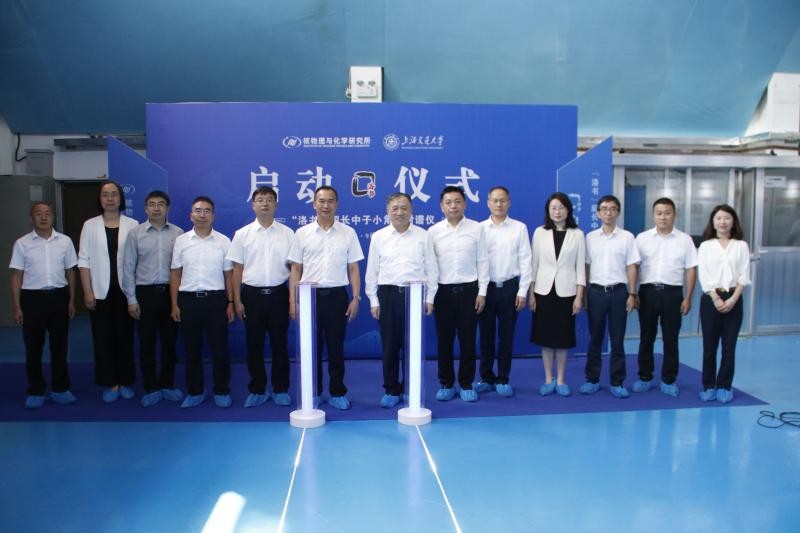
Shanghai Jiao Tong University's "Luoshu" Ultra-Long Neutron Small-Angle Scattering Spectrometer Officially Commissioned
On September 2, the launch ceremony for Shanghai Jiao Tong University's Luoshu Ultra-Long Neutron Small-Angle Scattering Spectrometer was held at the China Mianyang Research Reactor. Yang Zhenbin, Secretary of the Party Committee of Shanghai Jiao Tong University, Huang Ming, Vice President of the China Academy of Engineering Physics, and other leaders attended the event to jointly witness the official commissioning of this major scientific research facility. At the launch ceremony, Yang Zhenbin and Huang Ming jointly lit up the Luoshu Ultra-Long Neutron Small-Angle Scattering Spectrometer, marking its official commissioning. The Luoshu spectrometer was jointly built and collaboratively developed by Shanghai Jiao Tong University and the China Mianyang Research Reactor, with multiple core indicators reaching internationally advanced levels. It can broadly support research in fields such as aerospace, nuclear power and energy, biomedicine, new materials, and basic sciences, providing...
2026-09-10
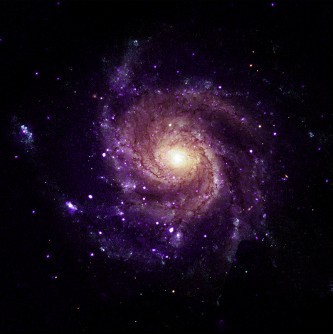
NASA's Chandra Telescope Discovers 84 Mysterious Supersoft X-ray Sources
NASA's Chandra X-ray Observatory recently announced that researchers using the observatory's publicly available observation data discovered 84 mysterious celestial objects known as supersoft X-ray sources in 6 galaxies. The related research was published in Nature Astronomy. Image credit: X-ray: NASA. These objects emit X-rays with unusually low energy and may be accompanied by strong high-energy ultraviolet radiation. The research team stated that the behavior of these objects is clearly different from previously observed known celestial bodies and may provide new clues for explaining the origin of Type Ia supernovae and the electron-stripping mechanism in the intergalactic medium. The 6 galaxies covered by this search include two spiral...
2026-09-10
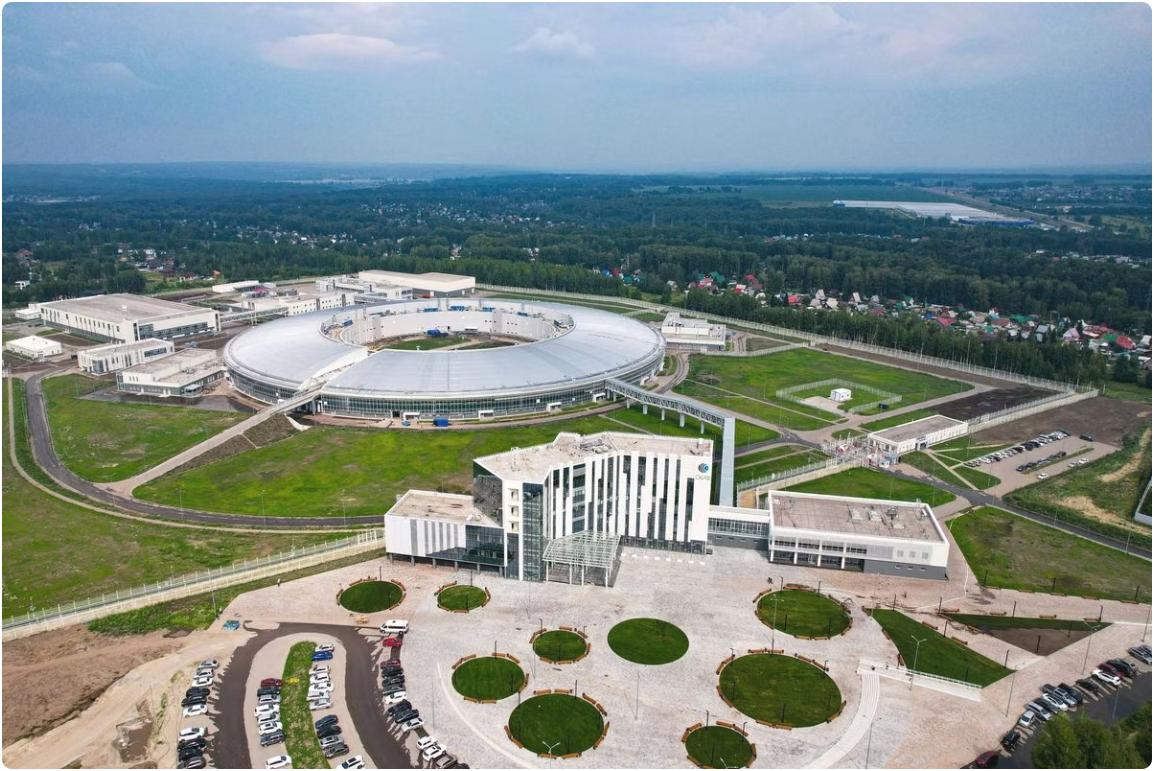
Russia's SKIF Synchrotron Considers Building Enterprise-Funded Experimental Stations
The Siberian Circular Photon Source (SKIF) synchrotron project in Russia is considering the construction of enterprise-funded experimental stations. Andrei Bukhtiyarov, Deputy Director of the SKIF Shared Use Center, stated that this idea is expected to advance after the first-phase experimental stations are put into operation and their operational capabilities are verified. According to reports, construction of the SKIF synchrotron was completed in June 2026. Once the facility becomes operational, it will help researchers obtain high-precision data on the internal structure and behavior of materials. The first phase of the SKIF project, located near Novosibirsk, plans a total of 7 experimental stations, all scheduled to become operational by August 2027, when research teams can begin conducting relevant experiments. Bukhtiyarov...
2026-09-09

National Major Science and Technology Infrastructure Project "High-Intensity Heavy-Ion Accelerator Facility" Passes Special Financial and Asset Acceptance
From September 6 to 7, the Bureau of Finance and Assets and the Bureau of Science and Technology Basic Capacity of the Chinese Academy of Sciences organized a financial expert group and an asset expert group to carry out special financial and asset acceptance work on the National Major Science and Technology Infrastructure—the High-Intensity Heavy-Ion Accelerator Facility (HIAF) project. The expert group consisted of 13 experts from the Chinese Academy of Sciences, research institutes, and universities. Figure: Acceptance meeting site. The expert group listened to reports on the project's construction, financial asset management, and investment completion. The financial acceptance expert group reviewed materials such as the financial summary report and the completion financial final accounts audit report, conducted on-site inspections of final account statements and account books, and spot-checked contracts and accounting vouchers, followed by on-site inquiries and discussions on the financial investment completion status. The asset acceptance expert group reviewed materials including the asset summary report and procurement ledgers, conducted on-site spot checks of process equipment for the High-Intensity Heavy-Ion Accelerator, experimental terminal systems, facility auxiliary equipment, and public supporting systems, and held on-site inquiries and discussions on asset delivery status.
2026-09-09
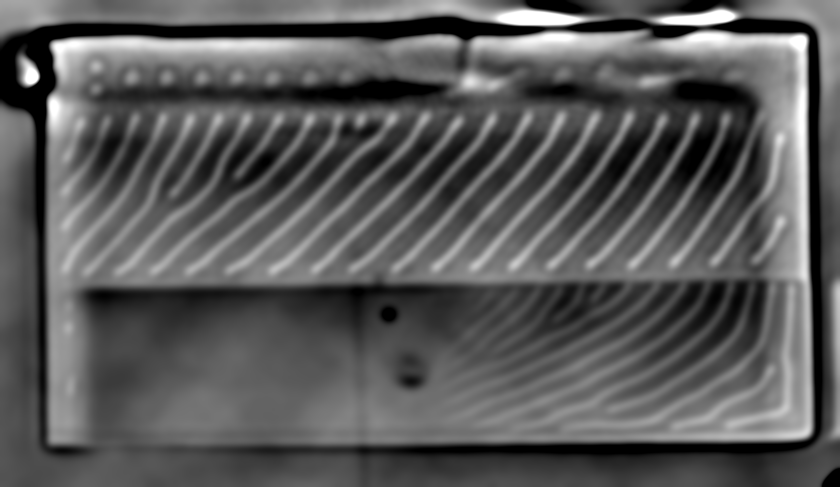
German BESSY II 3D Magnetic Field Experiments Reveal Mechanism of Weak Magnetic Field Control over Magnetic Textures
A team at the Helmholtz-Zentrum Berlin (HZB) in Germany has made progress in controlling magnetic textures in the magnetic material (Fe0.63Ni0.3Pd0.07)3P (abbreviated as FNPP) through 3D magnetic field experiments conducted at the BESSY II synchrotron facility. The research shows that a very small external in-plane magnetic field is sufficient to alter the magnetic stripe structure in this material, providing new experimental evidence for the development of functional magnetic materials for spintronics. FNPP is a magnetic material that exhibits complex magnetic structures at room temperature, making it a focus of spintronics research. Spintronics is considered promising for lower-energy data processing and novel data storage applications. However, to achieve practical applications, the key lies in...
2026-09-08
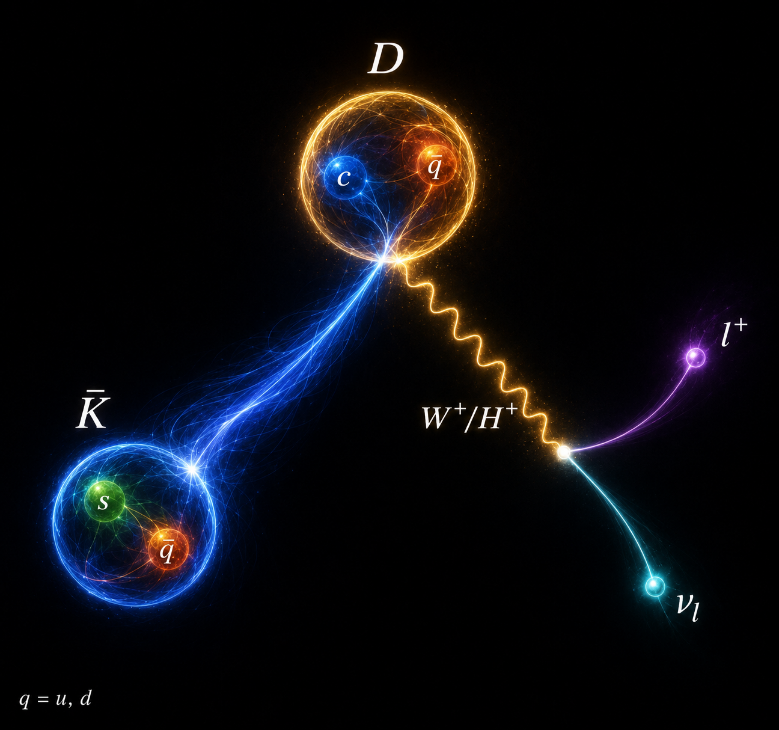
BESIII Experiment Achieves High-Precision Measurement of Charm Meson Semileptonic Decays and First Constraint on "Scalar Current"
Recently, the BESIII international collaboration utilized the world's largest near-threshold charm meson data sample to perform a combined measurement of four semileptonic decay channels: D⁰→K⁻e⁺νₑ, D⁰→K⁻μ⁺νμ, D⁺→K̄⁰e⁺νₑ, and D⁺→K̄⁰μ⁺νμ. The research team extracted the quark mixing matrix element |Vcs| with a precision better than 0.5%, determined the form factor zero-point value f₊(0) with a precision better than 0.2%, and verified lepton universality in the above processes at the 0.5% precision level. Beyond these precise determinations of Standard Model parameters, what is particularly noteworthy is that this experiment has, for the first time...
2026-09-08

U.S. Research Team Discovers Strong Ultrafast Optical Response Induced by Ionizing Radiation, Potentially Advancing Medical Imaging and Sensing Technologies
September 3 news, Stanford University and the U.S. Department of Energy's SLAC National Accelerator Laboratory research team used ultrafast electron and laser pulses to observe a strong ultrafast optical response triggered by ionization processes in semiconductor materials. The related research has been published in Nature Photonics. The researchers believe this discovery could provide new insights for radiography and sensing technologies, and also offer experimental evidence for understanding the fundamental behavior of materials under high-energy particle interactions. Radiation detection is a key technology in particle accelerators, scientific instruments, medical imaging, and security screening equipment. Existing detectors typically face a trade-off between signal strength and response speed: processes with stronger signals tend to be slower, while those with faster response may produce weaker signals...
2026-09-08

Shanghai Jiao Tong University and Sichuan Provincial Cultural Relics and Archaeology Research Institute to Jointly Build Neutron Cultural Heritage Protection Laboratory
On September 2, Shanghai Jiao Tong University and the Sichuan Provincial Cultural Relics and Archaeology Research Institute signed a strategic cooperation agreement to jointly advance the construction of the Neutron Cultural Heritage Protection Laboratory, promoting the deep integration of modern technology and cultural heritage conservation. Yang Zhenbin, Party Secretary of Shanghai Jiao Tong University, and Pu Xin, Deputy Director of the Sichuan Provincial Cultural Heritage Administration, delivered speeches respectively and jointly witnessed the signing. The collaboration focuses on the scientific research, conservation, and transmission of significant cultural heritage sites including Sanxingdui. The Sanxingdui site is a vital component of the Chinese Civilization Exploration Project. With the continuous advancement of archaeological excavations in recent years, a large number of precious artifacts have been unearthed, with increasingly complex structures and materials. How to accurately obtain their internal structure, material composition, manufacturing techniques, and preservation status without damaging the artifacts themselves has become a critical issue in cultural heritage conservation and archaeological research...
2026-09-08
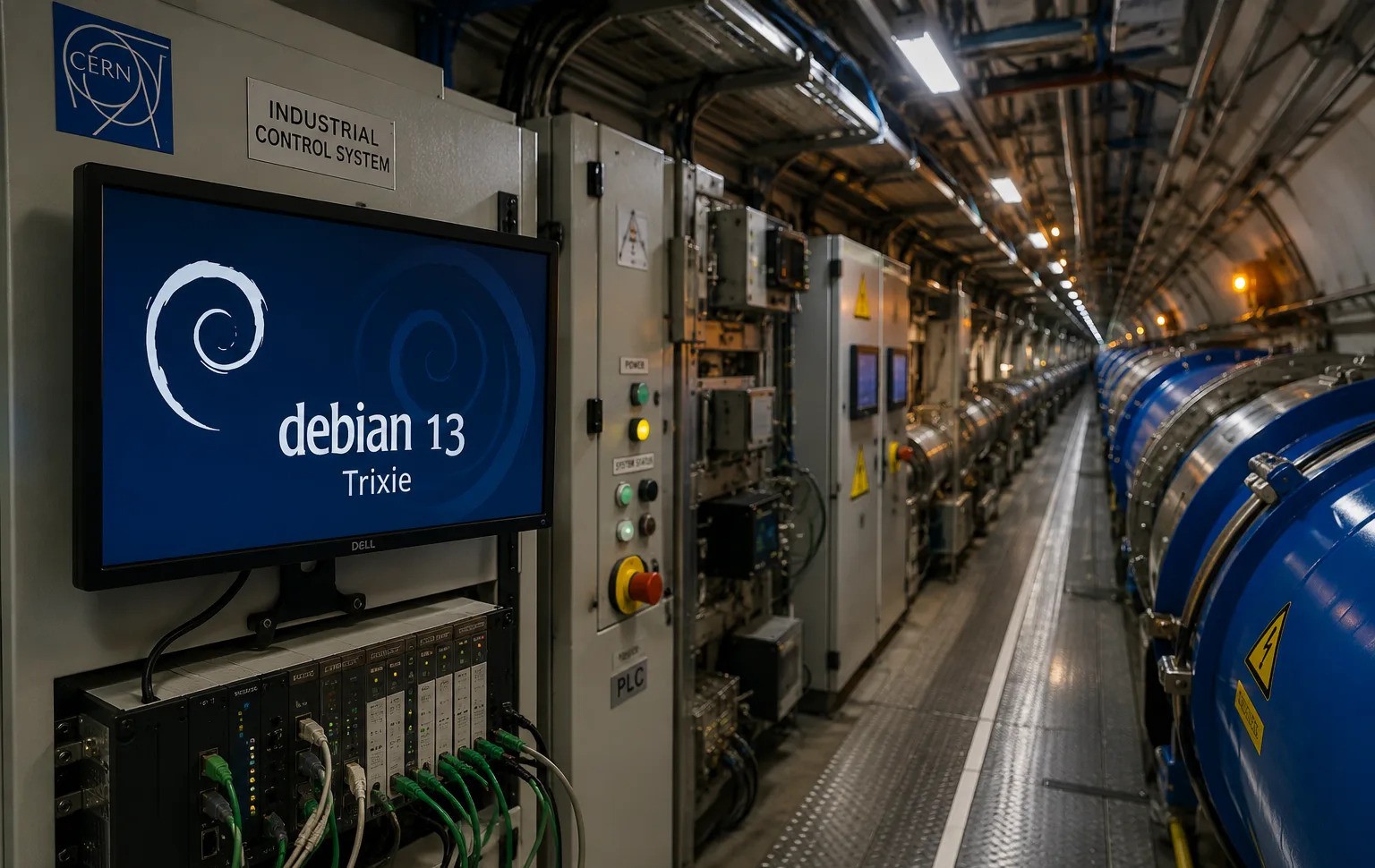
CERN Accelerator Control Systems to Migrate to Debian 13
Representatives from the European Organization for Nuclear Research (CERN) stated at the MiniDebConf conference that they plan to migrate over 2,200 industrial and embedded computers used to control their accelerator complex from RHEL to Debian 13 by the end of 2026. The systems involved include control computers for the Large Hadron Collider as well as several independent experimental facilities. CERN also clarified that this migration applies only to accelerator control-related equipment and will not affect data centers or experimental systems. Those data centers and experimental systems will continue to use RHEL/AlmaLinux. According to reports, CERN engineers had previously considered migrating the relevant systems to CentOS Stream, but...
2026-09-08
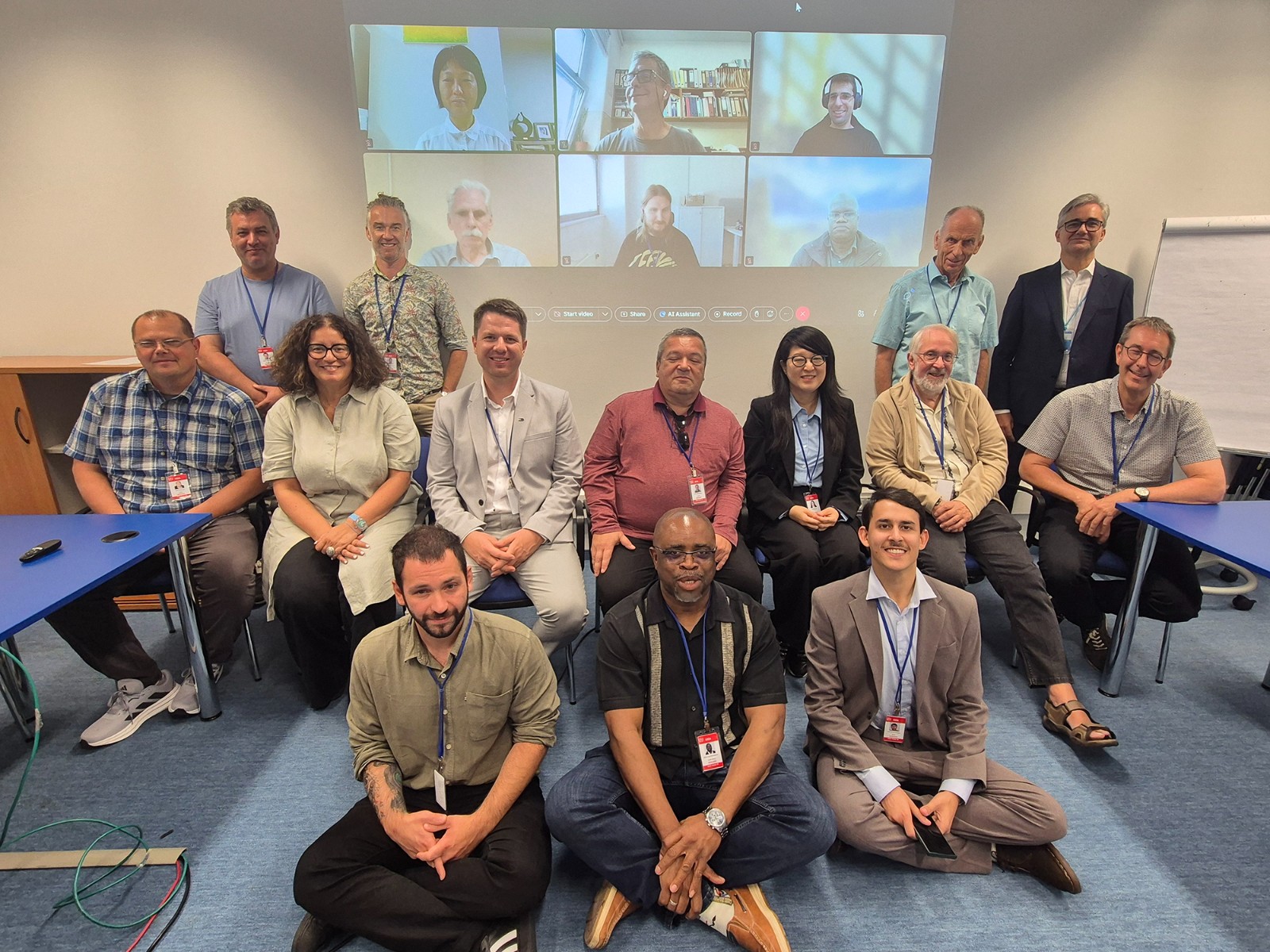
IAEA Technical Meeting on Data Requirements for Ion Beam Analysis Explores Prospects for Nuclear Track Emulsion Applications
From 24 to 28 August 2026, the International Atomic Energy Agency convened a Technical Meeting on Data Requirements for Ion Beam Analysis Experiments in Vienna, Austria, attended by scientists and experts from multiple nuclear physics research institutions. The meeting discussed the nuclear data requirements for current and future applications of ion beam analysis, with attention to new experimental methods and the application of artificial intelligence and machine learning in experiments and data processing. The meeting focused on assessing whether existing nuclear data can meet the needs of ion beam analysis applications, covering areas such as elastic recoil cross sections, nuclear reaction data, and gamma-ray spectrum analysis. Experts discussed the limitations that insufficient existing data impose on quantitative analysis and uncertainty assessment...
2026-09-08
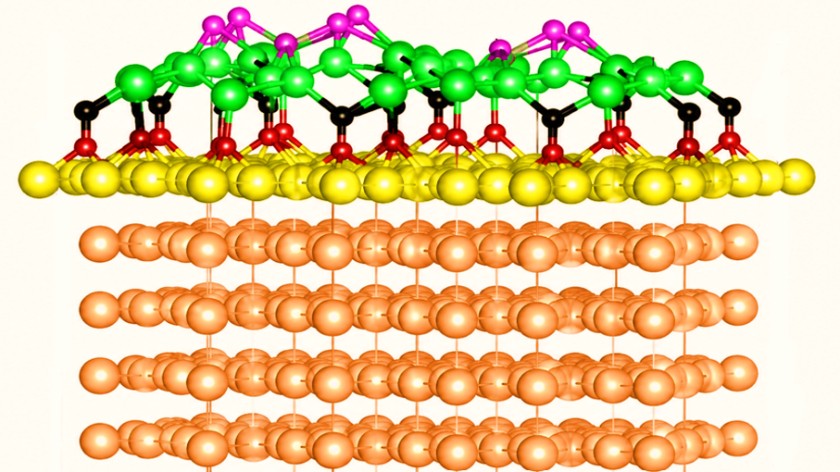
BESSY II reveals early-stage copper oxidation: providing evidence for catalyst development and corrosion research on nuclear waste final disposal containers
Germany's BESSY II synchrotron facility has recently provided new experimental insights into the early-stage oxidation process of copper surfaces. The study shows that before the formation of pure copper oxides, copper and oxygen atoms first form complex surface superstructures, such as "29"CuₓO. The chemical state of such structures has long been debated, and the findings are of reference value for catalyst research as well as for corrosion protection studies of copper containers used for radioactive waste final disposal. Before the formation of pure copper oxide, complex superstructures composed of copper and oxygen atoms emerge—such as "29"CuxO. HZB In everyday environments, copper surfaces gradually lose their red metallic luster and form a greenish oxide layer. This layer structure can slow further corrosion over an extended period. Regarding the initial stages of this process, the core question researchers focus on is: to what extent are copper atoms actually oxidized once oxygen enters the copper surface. Since conventional spectroscopic methods struggle to clearly distinguish between pure copper and partially oxidized surfaces, such oxidation states have previously been difficult to determine directly.
2026-09-07
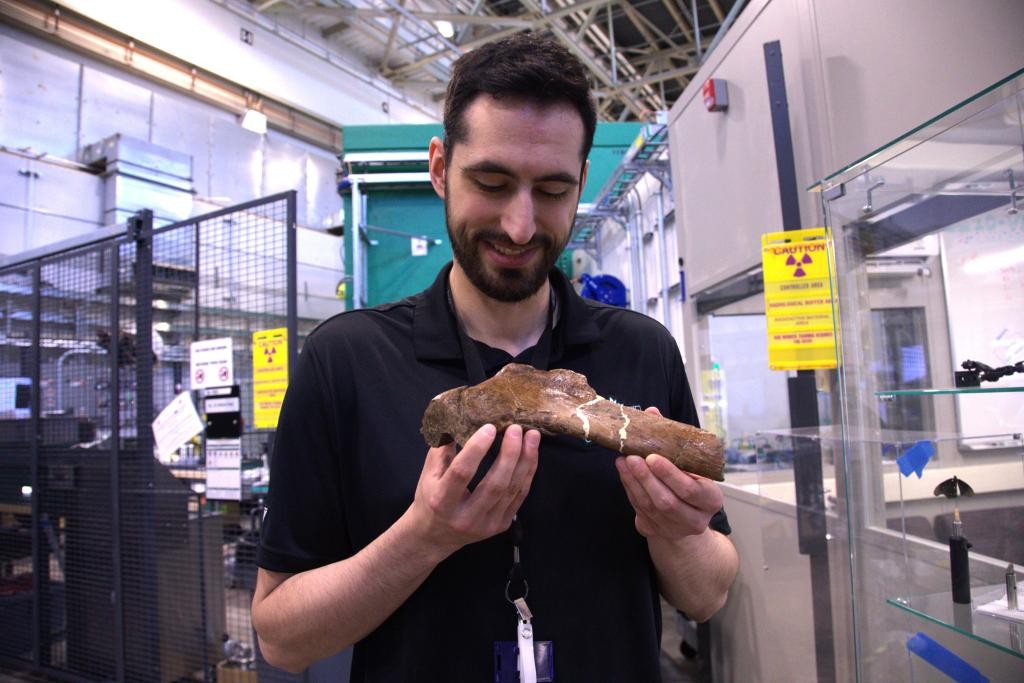
ORNL Neutron Imaging Technology Reveals Healed Rib Fracture in Tyrannosaurus Rex Fossil
Neutron imaging technology at the U.S. Department of Energy's Oak Ridge National Laboratory (ORNL) has helped researchers from the University of Regina in Canada and other institutions observe rare healing signs inside the fossilized bones of a Tyrannosaurus rex, providing new insights into ancient life from approximately 66 million years ago. The subject of this study is a fractured rib from "Scotty," the largest Tyrannosaurus rex skeleton ever discovered. Researchers found that this rib preserved a wound-healing process rarely seen in the fossil record: after the fracture occurred, iron-rich blood entered the injured area and formed a network of blood vessels to promote healing; however, before the rib had fully healed, Scotty died and was preserved in a salt marsh environment, which slowed the decomposition of the remains...
2026-09-07
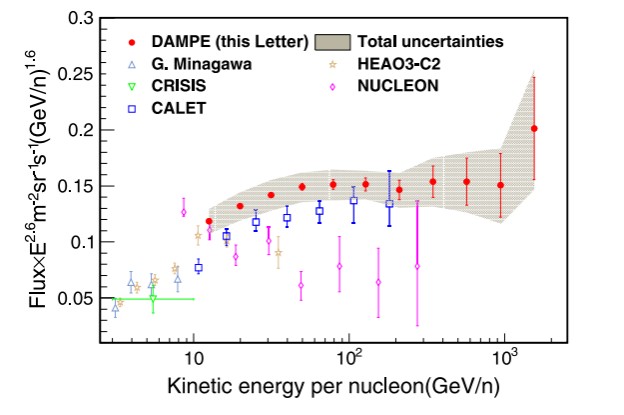
"Wukong" Detects "Super-Iron" Elements in Cosmic Rays, Achieving First High-Precision Cosmic Ray Nickel Energy Spectrum in the TeV Range
Recently, the DAMPE scientific team led by Academician Chang Jin of the University of Science and Technology of China made significant progress in direct observations of high-energy cosmic rays. Based on DAMPE on-orbit observation data, the scientific team obtained the differential flux spectrum of nickel nuclei from 10 GeV/n to 2 TeV/n. The results were published in the international academic journal *Physical Review Letters* under the title "Measurement of the Cosmic Ray Nickel Energy Spectrum from 10 GeV/n to 2 TeV/n with the DAMPE Space Mission." The origin of super-iron elements in cosmic rays has long been a challenge for the scientific community. It is generally believed that cosmic ray elements are primarily produced in nuclear fusion processes within stars, but since iron nuclei have the highest binding energy per nucleon, stellar fusion reactions typically struggle to proceed beyond elements near iron. Heavier elements than iron are generally attributed to different nucleosynthesis processes such as neutron capture. Because the abundance of super-iron elements is typically at least an order of magnitude lower than that of iron, measurements of super-iron elements in cosmic rays remain extremely scarce. Most experiments have only provided relative abundances of different elements; a few experiments have measured the differential flux spectrum of cosmic ray nickel, but with energy upper limits of only a few hundred GeV/n.
2026-09-07
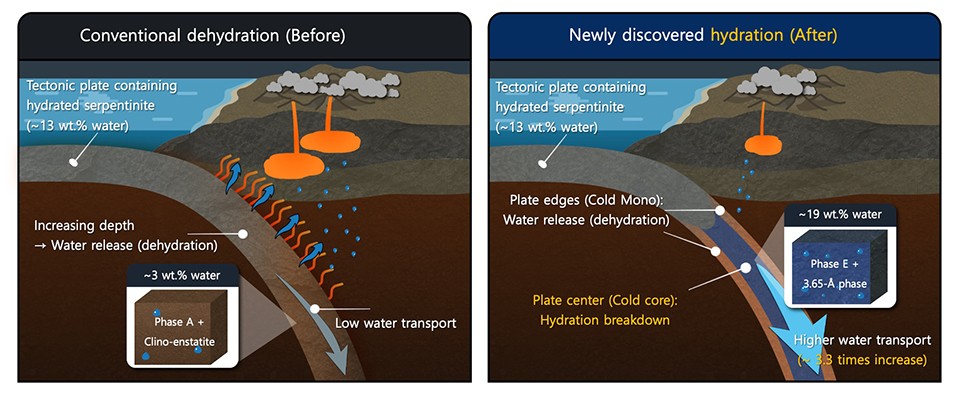
South Korean research team reveals that water storage capacity of cold subducting slabs has been underestimated using synchrotron radiation sources
A research team led by Professor Yongjae Lee of the Department of Earth System Sciences at Yonsei University in South Korea has recently found that in cold, rapidly descending tectonic subduction zones, crustal rocks may transport up to 1 trillion kilograms of water to the mantle each year—approximately twice the previous estimate. The findings have been published in Nature Communications. Subduction zones are regions where Earth's tectonic plates converge and one plate descends beneath another, often accompanied by volcanic and seismic activity. For a long time, the academic community has generally believed that serpentinite, a water-bearing rock, gradually dehydrates as it descends with the plate due to increasing pressure and temperature, and the released water further promotes melting of the overlying plate and is associated with the formation of volcanic arc chains.
2026-09-07
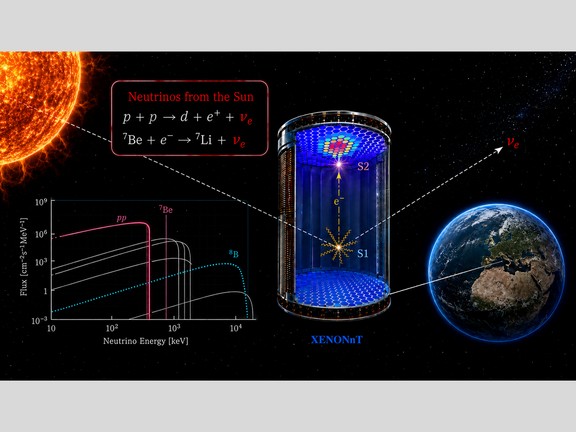
XENONnT Observes First Low-Energy Solar Neutrino-Electron Scattering Signals
Scientists of the XENON collaboration recently announced the first observation of low-energy solar neutrino scattering off electrons in the XENONnT particle detector. The results were presented at a workshop held on August 31, 2026, at the Gran Sasso National Laboratory of the Italian National Institute for Nuclear Physics. The team of Prof. Teresa Marrodán Undagoitia and Dr. Hardy Simgen from the Max Planck Institute for Nuclear Physics played a key role in the experiment. Nuclear fusion in the Sun continuously produces vast numbers of neutrinos, with hundreds of billions passing through every square centimeter of Earth each second. Because neutrinos interact with matter extremely weakly, detecting these particles...
2026-09-07
No Evidence of Mirror Neutrons Found in Swiss PSI Ultracold Neutron Experiment
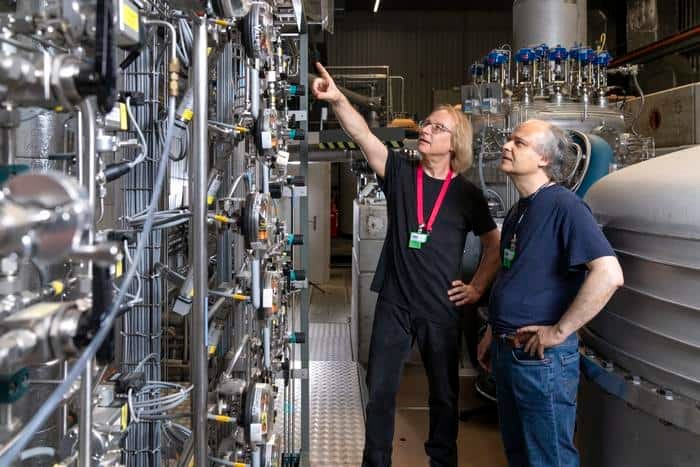
The Ultracold Neutron Physics Group at the Paul Scherrer Institute (PSI) in Switzerland recently stated that its research team found no evidence of spontaneous transformation of ordinary neutrons into mirror neutrons in a high-precision experiment. The researchers said the result essentially rules out the main parameter space previously suggested for anomalous neutron-mirror neutron oscillation signals, and also weakens the possibility that mirror neutrons could be a component of dark matter. Bernhard Lauss (left) and Géza Zsigmond examined approximately 2.5 billion neutrons at the ultracold neutron source at the Paul Scherrer Institute (PSI). They essentially ruled out the hypothesis of spontaneous transformation of neutrons into mirror neutrons. (Image courtesy of Paul Scherrer Institute PSI/Ma...
2026-09-07
Japanese research team accelerates muons to 0.3 MeV, taking a step toward the world's only muon accelerator
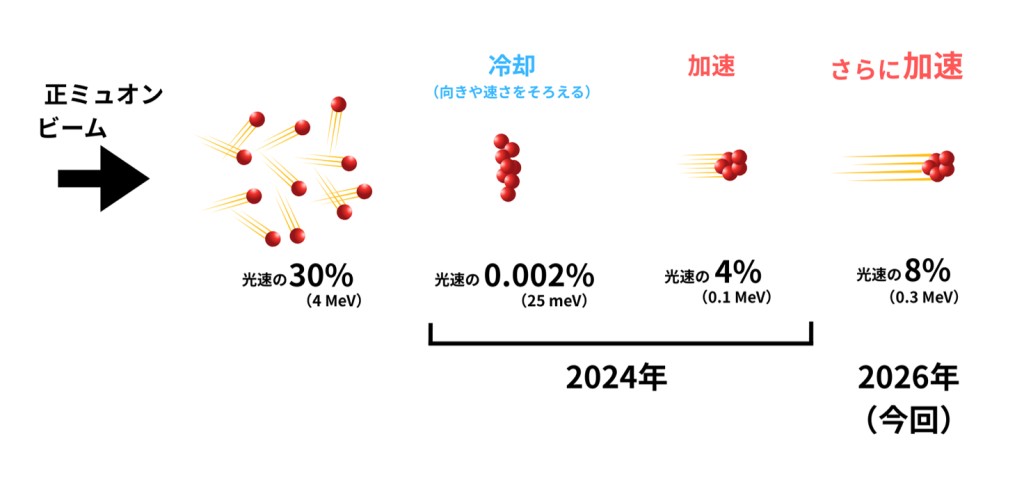
A research team comprising the J-PARC Center, High Energy Accelerator Research Organization (KEK), the University of Tokyo, Tokai National Higher Education and Research System, Nagoya University, and RIKEN recently completed muon cooling and radio-frequency acceleration experiments in the newly constructed muon acceleration experimental area at the J-PARC Materials and Life Science Experimental Facility, successfully accelerating muons to a kinetic energy of 0.3 MeV, corresponding to approximately 8% of the speed of light. Conceptual diagram of cooling and accelerating positive muon beams. By cooling positive muons with non-uniform direction and velocity, efficient high-frequency acceleration can be achieved. Muons are elementary particles similar to electrons that can be artificially produced by accelerators and are widely used in materials science, particle physics research...
2026-09-07
Russia masters production technology of ultra-pure germanium for gamma detectors
The Giredmet Research Institute, part of Rosatom, recently announced that its researchers have developed technology for producing high-purity germanium (HPGe) for gamma-ray detectors. This breakthrough is expected to replace imported crystals and promote the formation of a complete production cycle for detector equipment within Russia. According to reports, experts at Giredmet have designed and manufactured experimental equipment, and based on this, developed a process for preparing ultra-high-purity germanium single crystals. The purity of the germanium material reaches at least 7N, i.e., 99.99999%, equivalent to only one impurity atom per 10 million atoms of the primary material. The institute stated that the first batch of experimental samples has been obtained, verifying the effectiveness of the adopted deep germanium purification method in achieving the purity level required for detector applications.
2026-09-07
Reading Ranking
- 1 NASA's Chandra Telescope Discovers 84 Mysterious Supersoft X-ray Sources
- 2 Japan's Monju Fast Breeder Reactor Sodium Coolant Overseas Transport Planned to Start in Fiscal 2028
- 3 Shanghai Jiao Tong University's "Luoshu" Ultra-Long Neutron Small-Angle Scattering Spectrometer Officially Commissioned
- 4 Brookhaven National Laboratory Develops Integrated X-ray Imaging Tool for Nuclear Materials Research
- 5 Russian Researchers Propose New Method for Preparing Iron-59 Magnetite Nanoparticles, Potentially Advancing Nuclear Medicine Diagnostics and Therapy
- 6 Russia's SKIF Synchrotron Considers Building Enterprise-Funded Experimental Stations
- 7 BESIII Experiment First Confirms the Existence of Glueballs
- 8 U.S. Research Team Discovers Strong Ultrafast Optical Response Induced by Ionizing Radiation, Potentially Advancing Medical Imaging and Sensing Technologies
- 9 Kyoto University and NEDO to Build Dedicated Beamline for Hydrogen Energy Research at SPring-8-II
- 10 CERN Accelerator Control Systems to Migrate to Debian 13
- 11 Research Reactors Support Kazakhstan's Safe Nuclear Energy Development
- 12 German BESSY II 3D Magnetic Field Experiments Reveal Mechanism of Weak Magnetic Field Control over Magnetic Textures
- 13 Brazil's IRD Radiometric Metrology Laboratory Receives CTBTO Certification, Joins International Nuclear Test Monitoring Network
- 14 National Major Science and Technology Infrastructure Project "High-Intensity Heavy-Ion Accelerator Facility" Passes Special Financial and Asset Acceptance
- 15 Iron-60 Found Again in Antarctic Ice Core Samples from 40,000 to 80,000 Years Ago