
Brazil's IRD Radiometric Metrology Laboratory Receives CTBTO Certification, Joins International Nuclear Test Monitoring Network
 Scan to share
The Radiometric Metrology Laboratory of Brazil's Institute of Radiation Protection and Dosimetry (IRD/ANSN) has recently received certification from the Comprehensive Nuclear-Test-Ban Treaty Organization (CTBTO), officially qualifying it to join the international verification system. The certification was granted following an on-site audit conducted by the CTBTO in Rio de Janeiro from June 16 to 25, marking the Brazilian laboratory as the 15th certified unit among the 16 treaty-designated radionuclide laboratories.
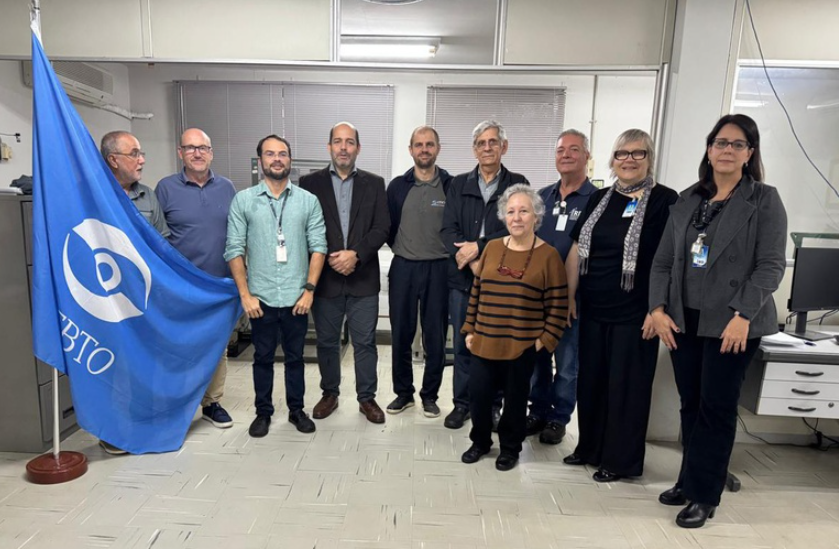
The certification primarily confirmed that the laboratory meets CTBTO requirements in high-precision analysis, result reliability, data traceability, and standardization of technical procedures. The audit covered the complete workflow, including sample reception and preparation, equipment calibration, result interpretation, report compilation, and secure communication transmission. Following the on-site assessment, the laboratory completed corrective actions based on the audit findings and passed CTBTO re-verification confirming compliance with the standards.
With the certification obtained, the laboratory will provide technical support to the CTBTO International Monitoring System. When global radionuclide monitoring stations detect results requiring further verification or clarification, samples can be sent to certified laboratories for independent, high-precision analysis. This means Brazil will assume a more specialized technical role within the Comprehensive Nuclear-Test-Ban Treaty framework, while also enhancing its participation in global nuclear non-proliferation and nuclear safety governance.
This process began in 2021, when the Brazilian National Nuclear Energy Commission and IRD initiated laboratory capacity building, with sustained investment in personnel training, gamma spectroscopy system upgrades, technical procedure development, and quality control system improvement. The work was also supported by Finep-funded projects and institutional resources. The laboratory team developed specialized software, participated in annual international proficiency tests, and progressively met the CTBTO's stringent requirements for complex analytical capability and full-process quality management.
Brazilian expert Luiz Conti believes that the certification not only reflects the accuracy of the laboratory's individual analysis results, but also represents international recognition of its long-term technical expertise, quality system, and team capabilities. With the completion of certification, IRD's role within the Comprehensive Nuclear-Test-Ban Treaty verification system has been further consolidated, and Brazil has thereby expanded its technical contributions to the international nuclear monitoring network.
Disclaimer: Information republished from partner media, institutions or other websites is provided for reference and communication purposes only. It does not imply endorsement of its views or verification of its accuracy. Please contact us if any content infringes rights or requires correction.