
PNNL Uses Artificial Intelligence to Accelerate the Development and Testing of Radiation-Hardened Chips
 Scan to share
Recently, a team at the U.S. Pacific Northwest National Laboratory (PNNL) successfully deployed an artificial intelligence agent system in the testing and development of radiation-hardened microchips, significantly shortening the evaluation cycle for electronic components used in extreme high-radiation environments such as satellites and nuclear reactors.
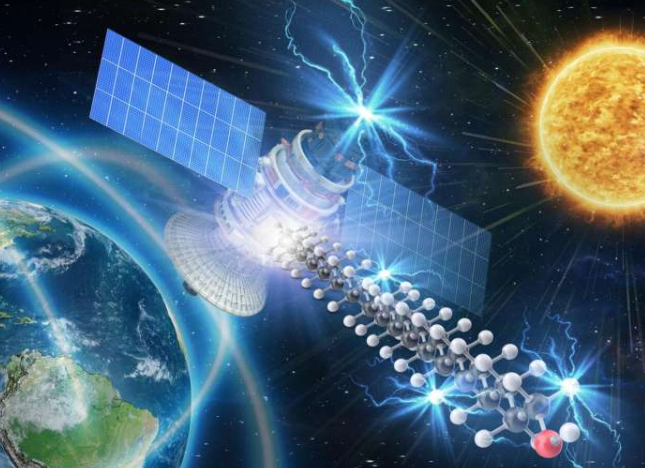
It is reported that galactic cosmic rays, heavy ions, and high-energy electrons pose serious threats to microchips, while adding physical shielding significantly increases equipment weight and operating costs. Relying on ion beam experimental data from the University of Tennessee, the PNNL team, through its built-in hierarchical AI agent system SciLink, completed ion impact damage analysis and computational simulation within a few hours that would traditionally require days or even weeks of testing.
The project focused on radiation hardening evaluation of aluminum gallium nitride (AlGaN) and gallium nitride (GaN) heterojunction chips, semiconductors widely used in core fields such as communications, power systems, and radar control. The SciLink system, through collaborative analysis of atom probe tomography and scanning transmission electron microscopy data, provides precise diagnosis of structural damage mechanisms with confidence scores, while maintaining human researcher supervision and logic verification throughout the process.
Ben Kowash, head of PNNL's radiation hardening business, and researcher Erin Barker stated that introducing intelligent workflows is a key breakthrough for addressing the radiation testing challenges of the latest microelectronic architectures. The maturation of this technology will provide solid technical support for deep space exploration, extended service life of communication satellites, and reliable operation of instrumentation and control systems in future advanced nuclear reactors.
Disclaimer: Information republished from partner media, institutions or other websites is provided for reference and communication purposes only. It does not imply endorsement of its views or verification of its accuracy. Please contact us if any content infringes rights or requires correction.