
Joint Institute for High Temperatures of the Russian Academy of Sciences Discovers a New Phase Transition in Cesium Plasma: Abrupt Conductivity Jump and a Rare Double Critical Point
 Scan to share
A research team from the Joint Institute for High Temperatures of the Russian Academy of Sciences (JIHT RAS / ОИВТ РАН) has achieved an important physics advance in the study of extreme high-temperature and high-pressure states: researchers have discovered a previously undescribed phase transition in cesium (Cesium) under dense plasma conditions, accompanied by a dramatic jump-like change in electrical conductivity.
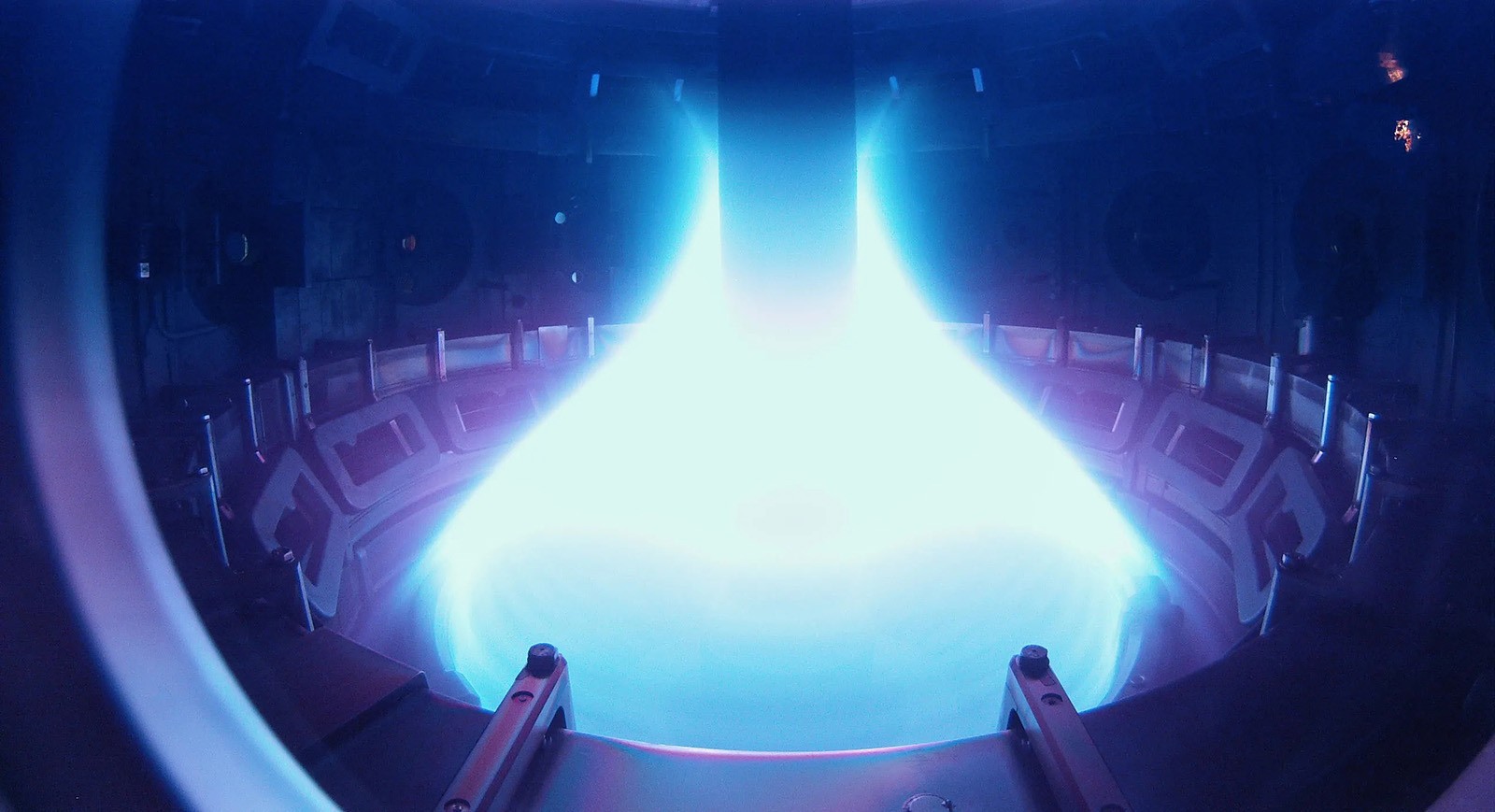
The study focuses on the microscopic physical behavior of matter at temperatures from 500 to 20,000 Kelvin (K) and pressures ranging from about 1 hectopascal (hPa) to several terapascals (TPa). Under such severe extreme conditions, interatomic distances are greatly compressed, matter undergoes multiple deep ionizations, and the traditional criteria for distinguishing solid, liquid, and gas states can no longer accurately describe its state properties. The research institution particularly emphasizes that this discovery is not a conventional ionization transition from ordinary matter to the plasma state, but rather a transition between two completely different states of matter within an already formed high-density dense plasma.
The research team captured this physical effect using Quantum Molecular Dynamics (Quantum Molecular Dynamics, QMD) computational simulation methods. Simulation data indicate that during compression of cesium, there exist two intermediate atomic states with nearly identical pressure but markedly different electrical conductivity. This phase transition occurs entirely within the high-density multiple ionization region, that is, it is a jump between two different microstructural phases within the dense plasma state.
Alexey Filatkin, a researcher at the Joint Institute for High Temperatures, pointed out that in the warm dense matter region, which is extremely difficult to reproduce in the laboratory and difficult for traditional theory to describe accurately, this achievement expands the scientific community's understanding of the fundamental properties of multiply ionized matter under extreme conditions. This phase transition is a completely independent physical phenomenon, independent of the conventionally known solid-liquid melting or liquid-gas evaporation processes.
Particularly noteworthy is that the researchers calculated and determined the parameter coordinates of two Critical Points on the phase diagram of this phase transition. Outside the range of these critical parameters, the two-phase coexistence state will become completely unstable. The paper's authors specifically point out that in a pure elemental system of a single chemical element, the phenomenon of two critical points existing simultaneously on a phase equilibrium line has no precedent in the physics community.
This breakthrough has important fundamental theoretical guiding value for High Energy Density Physics (High Energy Density Physics), modeling of strong laser-matter interaction processes, and analysis of the dynamic response of fast heavy ions penetrating media, and will provide entirely new theoretical support for humanity's study of the internal environments of dense stars in astrophysics and the anomalous state behavior of materials under extreme cosmic conditions.
Disclaimer: Information republished from partner media, institutions or other websites is provided for reference and communication purposes only. It does not imply endorsement of its views or verification of its accuracy. Please contact us if any content infringes rights or requires correction.