
UKAEA Invests £45 Million to Build Fusion Supercomputer
 Scan to share
Recently, the United Kingdom Atomic Energy Authority (UKAEA) launched “SUNRISE”, an artificial intelligence supercomputer dedicated to fusion energy research and development. This computing platform, with an investment of £45 million and 672 Graphics Processing Units (GPUs), aims to use Artificial Intelligence (AI) and High-Performance Computing (HPC) to solve complex problems in areas such as plasma, fusion materials, and tritium breeding. Meanwhile, the UK also plans to connect it with the “STELLAR-AI” platform of the Princeton Plasma Physics Laboratory (PPPL) in the United States of America, exploring transatlantic fusion computing collaboration.
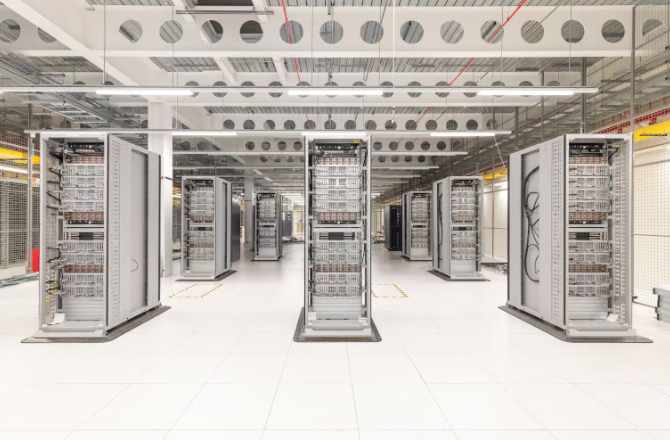
It is understood that “SUNRISE” is a mission-oriented artificial intelligence supercomputer for fusion energy research and development, located at the Culham Campus in Oxfordshire, UK. The project has a total investment of £45 million, funded by the Department for Energy Security and Net Zero (DESNZ), owned by the United Kingdom Atomic Energy Authority, and operated by the University of Cambridge. It is part of the UK's 2026 Fusion Strategy and is the first-phase computing infrastructure of the AI Growth Zone at the Culham Campus. Unlike general-purpose supercomputers, “SUNRISE” was designed from the outset for AI and high-performance computing tasks in fusion research, with the goal of accelerating simulation of complex physical processes, data analysis, and digital twin development. The United Kingdom Atomic Energy Authority expects it to become the world's most powerful supercomputer dedicated to fusion energy.
In terms of key research directions, the United Kingdom Atomic Energy Authority hopes to combine AI and high-performance computing to solve multiple complex fusion challenges. Among them, plasma turbulence involves multi-scale, strongly nonlinear physical processes, and direct high-precision simulation requires substantial computing resources. AI-accelerated modeling is expected to improve simulation efficiency and help researchers understand plasma transport and confinement behavior more quickly. In fusion materials research and development, materials inside fusion devices are exposed to extreme environments such as high heat flux and neutron irradiation over the long term. AI and high-performance computing can be used for material behavior simulation, performance prediction, and materials development, supporting the screening and optimization of materials for future fusion reactors. In tritium breeding, future deuterium-tritium fusion power plants need to achieve tritium self-sufficiency through breeding blankets. The related processes involve multiple physical processes such as neutron transport, nuclear reactions, heat transfer, and material behavior. High-performance computing helps carry out multi-physics simulations, optimize blanket design, and support digital twin model development.
On September 14, 2026, the United Kingdom Atomic Energy Authority and the Princeton Plasma Physics Laboratory of the U.S. Department of Energy signed a statement of intent to cooperate, planning to connect “SUNRISE” with the “STELLAR-AI” platform and establish a cooperation framework named the “SUNRISE–STELLAR-AI Federation”. Both sides hope to use the two computing platforms and their respective experimental data to jointly train AI models. An important basis for this cooperation is that the UK's “Mega Amp Spherical Tokamak Upgrade” (MAST Upgrade) and the United States of America's “National Spherical Torus Experiment-Upgrade” (NSTX-U) are both spherical tokamaks with similar device configurations. By combining experimental data from the two devices, researchers are expected to train AI models with better cross-device predictive capability and reduce dependence on data from a single experimental device. In the future, both sides also plan to explore digital twin development for the two devices as well as task scheduling and model migration between different computing platforms, providing support for the UK's “Spherical Tokamak for Energy Production” (STEP) demonstration reactor and related spherical tokamak research in the United States of America.
Disclaimer: Information republished from partner media, institutions or other websites is provided for reference and communication purposes only. It does not imply endorsement of its views or verification of its accuracy. Please contact us if any content infringes rights or requires correction.