
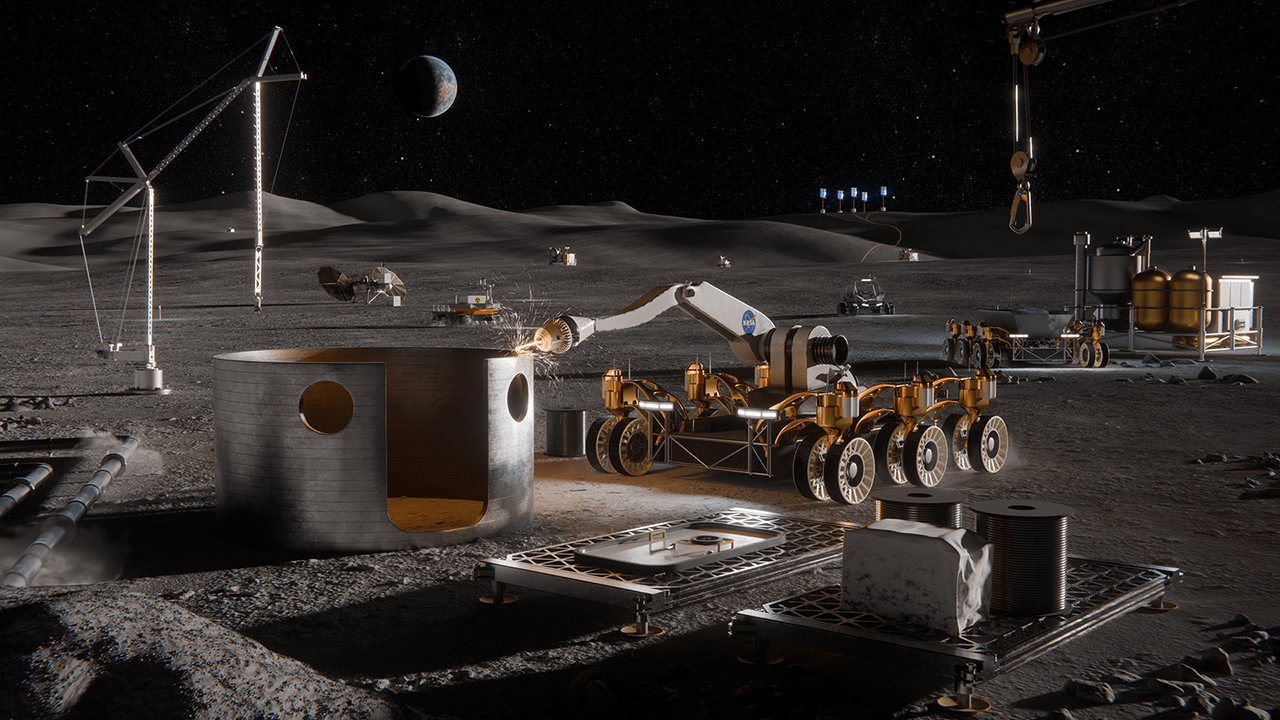
NASA Seeks Proposals for Radioisotope Power and Other Technologies for Lunar Missions
On September 8, 2026, the National Aeronautics and Space Administration (NASA) issued a solicitation seeking proposals for critical technologies and infrastructure for lunar exploration, with near-term focus on supporting the construction of a lunar base in the lunar south pole region. This solicitation is included under Appendix A of the NextSTEP-3 Broad Agency Announcement, the Lunar Enabling Infrastructure Accelerator framework, and covers five technology areas: vertical solar arrays, lunar regolith oxygen extraction, radioisotope power, advanced space manufacturing, and innovative nanomaterial production. NASA stated that these capabilities will be used to address the power generation, resource utilization, materials...
2026-09-13

Antares Wins U.S. Air Force Space Nuclear Energy Technology Contract
Antares recently announced that it has received a Strategic Breakthrough Award from the Office of the Assistant Secretary of the Air Force for Space Acquisition and Integration to advance space nuclear energy technology development. The company said this is currently the largest contract awarded by the U.S. War Department in the field of space nuclear energy. Antares CEO and co-founder Jordan Bramble said that space applications have been a core focus since the company's founding, and that cooperation with the Space Force has turned related concepts into formal space missions. He said nuclear fission technology is expected to provide space missions with strategic capabilities that are currently difficult to achieve. Under the project arrangement, Antares will carry out a ground nuclear power demonstration of the R1-S reactor...
2026-09-13
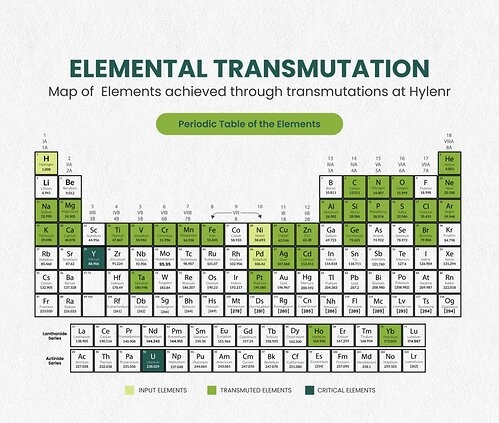
India's Hylenr Technologies Claims Detection of Rare Earth Element Signatures in Lattice-Confined Fusion System
Indian deep-tech company Hylenr Technologies announced on September 9 that it has observed evidence of element formation in an engineered lattice structure system, including rare earth element signatures. The company stated that this result could provide a technological pathway for nucleosynthesis and strategic materials production that differs from traditional mining. According to the company, the related results stem from Hylenr Technologies' more than 10 years of fusion technology research centered on lattice-confined fusion. Part of the research, titled "Nuclear Signatures in Hydrogen-Loaded Nickel-Palladium Lattice-Confined Systems," was presented earlier this month at the 27th International Conference on Condensed Matter Nuclear Science...
2026-09-10

Lightbridge Approved to Conduct Advanced Nuclear Fuel Irradiation Testing at Idaho National Laboratory
On September 9, Lightbridge Corporation (Lightbridge, Nasdaq: LTBR), a developer of advanced nuclear fuel technology, announced that it has completed the signing of Project Task Statement No. 2 (PTS No. 2) under the Cooperative Research and Development Agreement (CRADA) with Battelle Energy Alliance, LLC (BEA), the operating contractor of Idaho National Laboratory (INL). Under this task statement, Lightbridge will gain access to the loop test facility of the Advanced Test Reactor (ATR) at Idaho National Laboratory to conduct irradiation testing of Lightbridge Fuel™ cladded fuel rods. The loop...
2026-09-10
US-based Thea Energy Unveils Helios Stellarator Fusion Power Plant Design
On September 9, 2026, Thea Energy, Inc., a fusion energy company based in Kearny, New Jersey, announced that 16 peer-reviewed papers on its Helios fusion power plant design had been published in a special issue of Fusion Engineering and Design (FED). The special issue, titled "Thea Energy's Helios Stellarator Power Plant Design," presents the Helios architecture and its key engineering solutions. According to Thea Energy, Helios is a stellarator fusion power plant architecture oriented toward commercial deployment requirements, integrating magnet coils that can be controlled by software to adapt to actual operating conditions, a stellarator divertor exhaust system for continuous fusion power generation operations, and a sectorized maintenance scheme supporting long-term operation...
2026-09-10
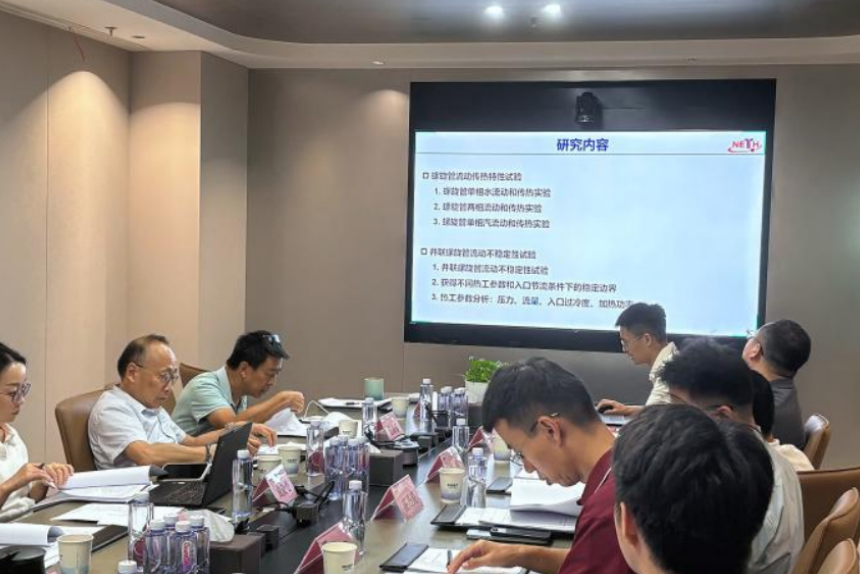
"Junhe-1" OTSG Thermal-Hydraulic Experiment Program Passes Expert Review
On September 2, 2026, Shanghai Junhe Atomic Technology Co., Ltd. organized an expert review meeting on the "Junhe-1 OTSG Single-Tube Flow and Heat Transfer Experiment Program" and the "Junhe-1 OTSG Parallel Channel Flow Instability Experiment Program." The review meeting invited multiple experts from CGN Research Institute, Shanghai Nuclear Engineering Research and Design Institute, Fudan University, Nanjing University of Aeronautics and Astronautics, and Shanghai Jiao Tong University. The first thermal experiment project of Junhe-1 is undertaken by Professor Gu Hanyang's team from Shanghai Jiao Tong University, which has extensive experience in reactor R&D experiments and has undertaken multiple thermal-hydraulic experiment tasks for the Hualong One and domestic small reactor R&D projects. The meeting heard...
2026-09-09

Türkiye partners with Danish company to develop thorium-based nuclear technology
Türkiye's Ministry of Energy and Natural Resources stated on September 7 that the Turkish Energy, Nuclear and Mineral Research Agency (TENMAK) has signed a memorandum of understanding with Danish nuclear technology developer Copenhagen Atomics to cooperate on developing next-generation nuclear energy technologies centered on Türkiye's thorium resources. According to the Turkish statement, the cooperation priorities include research and development of technologies that can utilize thorium, domestic production of thorium compounds in Türkiye, and promoting the participation of Turkish industrial enterprises, technology companies, and researchers in thorium-based nuclear technology development. The two sides will focus on thorium material preparation, research and development, and project design applicable to next-generation nuclear reactors, particularly molten salt reactors.
2026-09-08
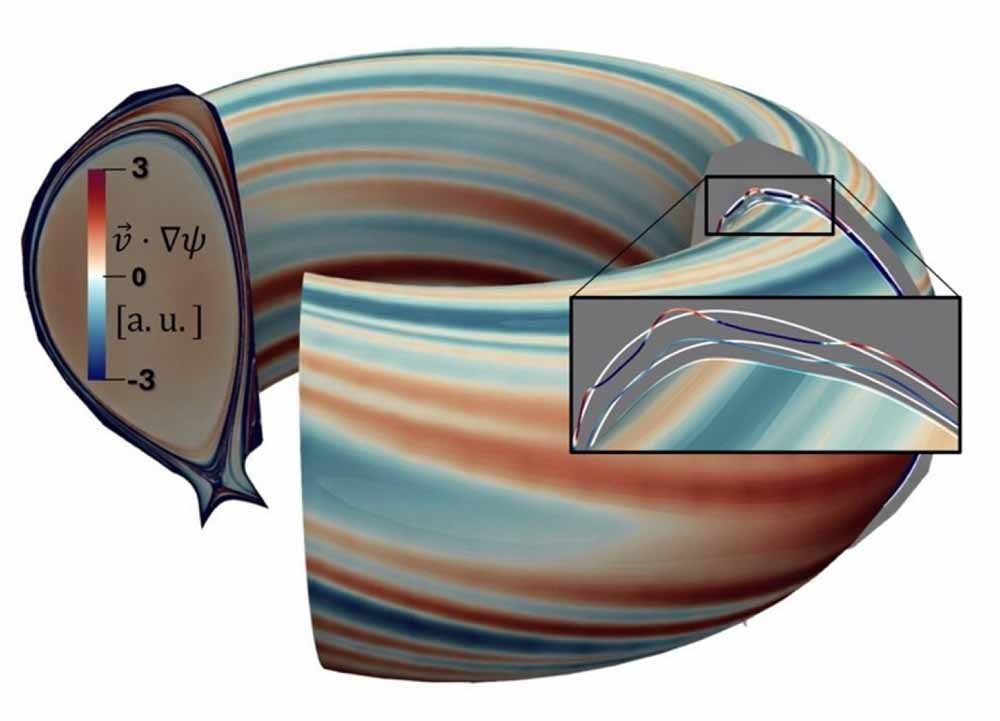
Digital twins are becoming an important R&D pathway in fusion research
Recently, a new paper reviewed the progress of digital twin technology in fusion research over the past five years and noted that several key gaps remain before a complete digital twin model of a fusion power plant can be achieved. Simulating the movement of tungsten in the plasma core. Copyright: (F. Jenko et al., 2026, *Nuclear Fusion* 66 116014) Digital twins are a class of virtual models that reflect the structure, environment, and behavior of physical systems, and can be used to predict future system states and inform real-world decision-making. In fusion research, as issues in plasma physics, device engineering, and material interactions grow increasingly complex, digital twins are considered promising...
2026-09-07

U.S. ZC Institute Unveils "Kardashev One" Fusion Prototype Reactor Plan to Independently Test Neutron Recovery Concept
ZC Institute, a fusion energy company headquartered in Atlanta, USA, announced on September 4 the launch of the Kardashev One program, aiming to develop a fusion prototype reactor to explore recovering energy lost to radiation and neutron escape during fusion reactions. As an early validation step of the program, ZC Institute has commissioned Professor Jason Cassibry and his team at the University of Alabama in Huntsville (UAH) to conduct independent testing of the related field distortion technology. According to ZC Institute, existing fusion approaches, including inertial confinement fusion and magnetic confinement fusion, lose energy in forms such as electromagnetic radiation and neutron escape. Magnetic fields can confine charged...
2026-09-05
South Korea Exports Molten Salt Reactor R&D Technology to Denmark
The Korea Atomic Energy Research Institute (KAERI) announced on September 4 that it has signed a two-year contract worth USD 2.26 million (approximately KRW 3 billion) with Danish nuclear energy company Saltforce to provide molten salt reactor-related R&D services, covering areas such as nuclear fuel manufacturing, molten salt testing, and material corrosion assessment. Molten salt reactors are a class of next-generation reactors that typically use high-temperature molten salt as a fuel carrier or coolant medium. Based on the molten salt chemical system, this type of technology is mainly divided into fluoride-based and chloride-based systems. Under the contract arrangement, KAERI will provide support for the fluoride-based...
2026-09-04

Israel's Quantum X Labs Claims Efficient Geometric Encoding for Complex Nuclear Environments
Quantum X Labs Inc. of Israel announced on September 3 that it has achieved a key milestone in its nuclear quantum business: the company has developed a new method to more efficiently encode complex spatial geometries into quantum transport frameworks. The company stated that the new method can be used to simulate the trajectories of particles moving through complex material boundaries and heterogeneous structures, providing a new technical pathway for representing more complex physical systems within quantum computing frameworks. Such capabilities are closely related to simulation needs in practical nuclear-related scenarios such as nuclear power plants, medical devices, and space exploration. In photon and particle transport simulations, real-world systems often contain complex boundaries,...
2026-09-04
U.S. Develops Refractory Metal Powder Atomization System to Support Fusion Energy Materials Research
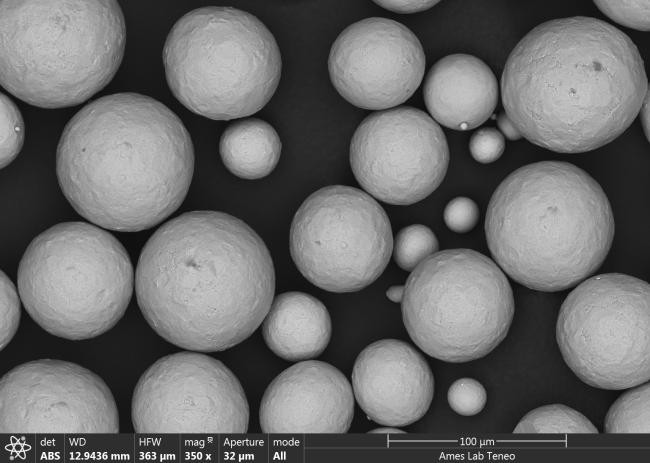
U.S. researchers are developing a new refractory metal powder atomization system to produce high-temperature alloy powders for extreme-environment applications. The system will support new materials research in areas such as gas turbines, aerospace equipment, and fusion energy systems. Jordan Tiarks, a scientist at Ames National Laboratory, stated that the laboratory has long been engaged in specialty powder production research, and the new system will expand its materials processing capabilities to higher temperature ranges and more challenging material systems. The research team noted that metal powders are a critical foundation for advanced manufacturing technologies such as powder metallurgy and additive manufacturing...
2026-09-03

Egyptian Minister of Electricity Inspects Small Modular Reactor Technology in Russia
On August 27, 2026, Egyptian Minister of Electricity and Renewable Energy Mahmoud Esmat visited a small nuclear reactor manufacturing and assembly plant operated by Rosatom during an official visit to Russia. The inspection focused on the latest advancements in small modular reactor-related technologies, industrial application status, and potential cooperation opportunities between the two sides. The Egyptian side stated that such visits align with the country's direction of diversifying energy sources and enhancing the security and sustainability of electricity supply. During the visit, Esmat was briefed on the manufacturing and assembly processes of small reactor components, as well as related safety systems...
2026-08-28
Cambridge AtomWorks Opens New Laboratory at Granta Park to Develop ODIN Microreactor
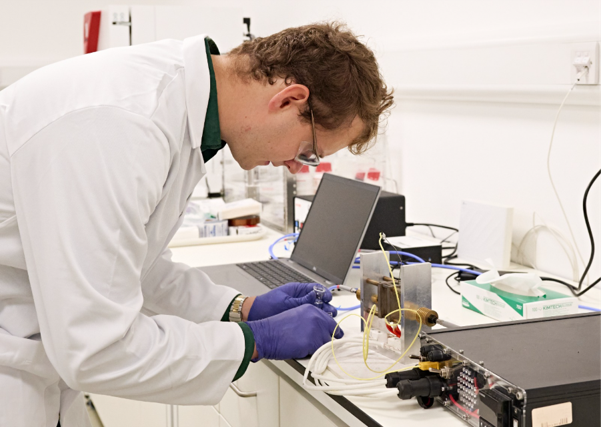
Cambridge AtomWorks announced on August 27 that its new light industrial facility and laboratory at Granta Park in Cambridge, UK, has officially entered service. The site, leased from TWI (The Welding Institute), will be used to advance research and development work related to the ODIN microreactor. According to the company, the new laboratory has already begun conducting experiments closely linked to ODIN microreactor development, including studies on coolant properties and behavior. The research team is using an STA-MS system to characterize material properties related to fuel performance, which enables simultaneous thermogravimetric analysis, heat flow analysis, and mass spectrometry. The new facility will also be used for reactor flow...
2026-08-28

South Korean research team evaluates pipe rupture risk in nuclear power plants using probabilistic analysis
Researchers from Seoul National University of Science and Technology in South Korea have recently proposed a sensitivity analysis method based on probabilistic fracture mechanics to evaluate the rupture frequency of main coolant piping systems in nuclear power plants. This method can analyze the impact of uncertainties and modeling assumptions on prediction results, helping engineers distinguish extremely low-probability events from relatively more likely failure scenarios. In nuclear power plants, the main coolant piping system plays a critical role in maintaining structural integrity under normal reactor operating conditions. A pipe rupture could trigger a loss-of-coolant accident, and therefore this system has long been included in the key scope of nuclear power plant safety design and assessment.
2026-08-28

NSF Funds $30 Million Turbulence Research Center Focused on Predictive Modeling for Fusion Energy
The U.S. National Science Foundation (NSF) has established a new Science and Technology Center with a total funding of $30 million, focusing on the understanding and prediction of turbulence. The project targets application scenarios such as fusion energy, astrophysics, and hypersonic flight, aiming to tackle the challenges of cross-scale turbulence modeling and prediction in complex physical systems. Researchers and students from San José State University (SJSU) will participate in the related research. This is a three-dimensional simulated turbulent velocity field at the core collapse point of a massive star before a supernova explosion. Image credit: S. Couch, based on research by Fields and Couch published in The Astrophysical Journal, Volume 921, Page 28.
2026-08-27
U.S. HFIR Research Reactor Boosts Validation of New Nuclear Fuels
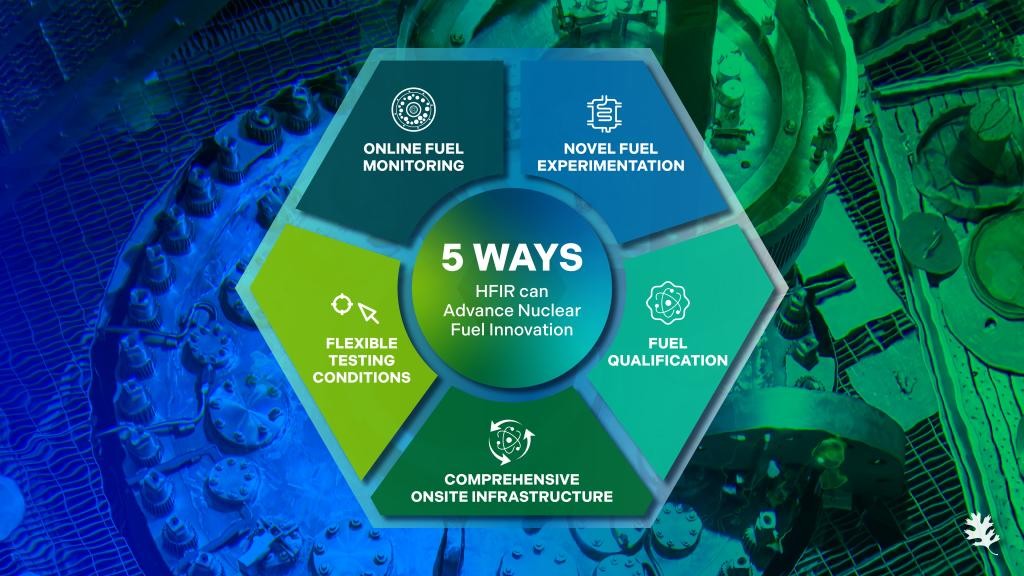
The High Flux Isotope Reactor (HFIR) at the U.S. Department of Energy's (DOE) Oak Ridge National Laboratory (ORNL) is becoming a key facility in the U.S. research, development, and qualification system for new nuclear fuels. A research paper published on August 25 noted that amid growing demand for new commercial nuclear power and advanced reactor construction in the United States, research reactor resources available for new fuel testing are becoming strained, and HFIR is expected to help alleviate the shortage of related testing capabilities. Image credit: Gunes Ozcan/Oak Ridge National Laboratory, U.S. Department of Energy. HFIR is one of the world's highest-flux steady-state research reactors and has long been used for nuclear fuel and materials irradiation testing. The paper recognizes...
2026-08-26

U.S. Research Reveals Diamond Melting Mechanism at High Pressure, Potentially Enhancing Inertial Confinement Fusion Performance
A research team at Lawrence Livermore National Laboratory (LLNL) in the U.S. recently published a study in Nature Physics reporting that the latest dynamic compression experiments have, for the first time, directly recorded atomic structural changes during diamond melting under extreme high pressure. The experiments showed that under high-pressure conditions, solid diamond can float in liquid metallic carbon, similar to ice floating on water. Diamond is not only a high-hardness carbon material but is also used as the fuel target capsule shell in inertial confinement fusion experiments. When intense lasers drive the capsule implosion, the compression and melting behavior of the diamond shell can affect whether the fusion fuel reaches the required high-temperature, high-pressure state. Meanwhile, the planetary science community has long focused on the high-pressure behavior of carbon in the deep interiors of ice giant planets...
2026-08-26
Japan's Helical Fusion Publishes Research Results on High-Temperature Superconducting Magnets
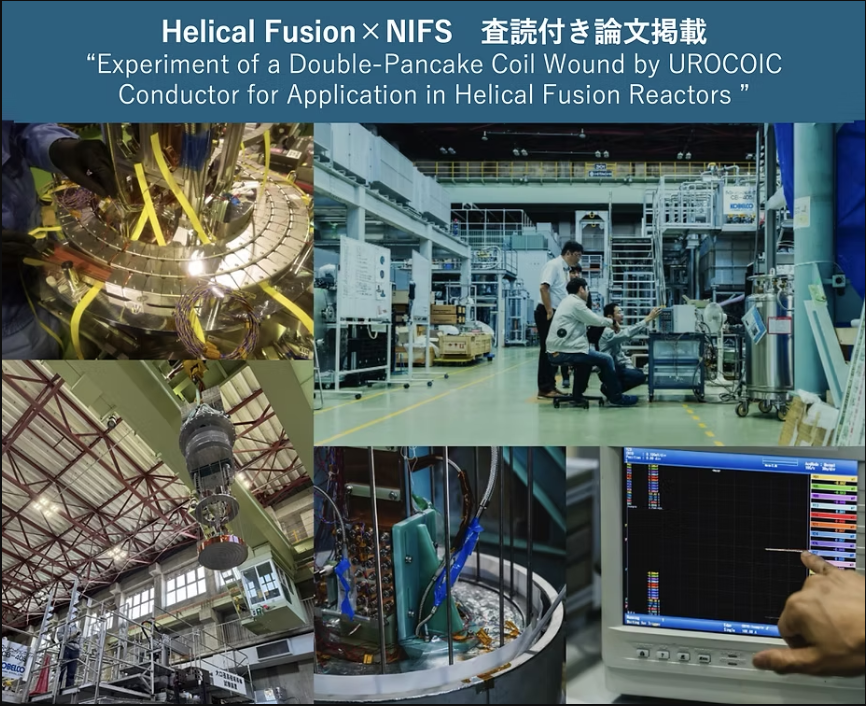
Helical Fusion recently announced that its joint research on high-temperature superconducting magnets with the National Institute for Fusion Science (NIFS) has passed peer review and been published in the Journal of Physics: Conference Series. The results, previously disclosed in a preliminary report, primarily validate the performance of high-temperature superconducting conductors for fusion reactor applications under strong magnetic fields and high currents. This study tested the UROCOIC high-temperature superconducting conductor independently developed by Helical Fusion. The research team fabricated the conductor into a double-pancake coil sample and used existing test equipment to simulate, as closely as possible, the magnetic field and current environment expected in future fusion reactors.
2026-08-26

NuCube Energy and Canadian Nuclear Laboratories Launch Microreactor R&D Collaboration
NuCube Energy, Inc. announced on August 25 that it has initiated research and development activities under an agreement signed with Canadian Nuclear Laboratories (CNL). The two parties will conduct research on the NuCube reactor design, focusing on advancing data identification, modeling, and analysis efforts to support the validation of its microreactor technology. Under this R&D program, Canadian Nuclear Laboratories will validate existing experimental data and benchmark computational models used to predict heat pipe performance in high-temperature environments exceeding 900 degrees Celsius. The qualified experimental data provided by Canadian Nuclear Laboratories will be used to expand the NuCube computational mo...
2026-08-26
US Study Shows Inertial Fusion Implosions Can Tolerate Certain Asymmetries
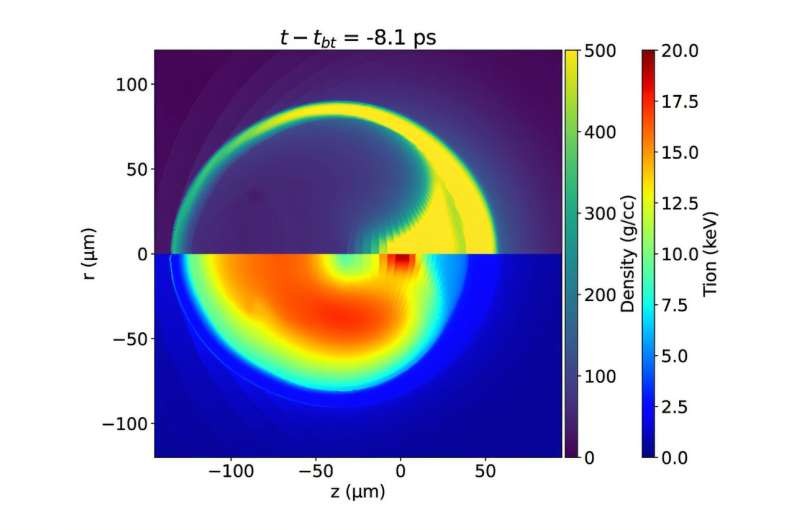
Researchers at the Lawrence Livermore National Laboratory (LLNL) in the US have recently found that implosion designs for inertial fusion energy (IFE) can withstand considerable imperfections before performance degrades sharply. This result aids in the design of fuel targets for future fusion power plants, particularly in assessing the tolerance of target capsules to errors under high-frequency injection and laser-driven conditions. The study's simulation results show the density (top) and temperature (bottom) at the instant just before fusion reactions peak in an asymmetric implosion. The hottest spot coincides with the point of highest fuel density, indicating direct ignition of high-density fuel jets driven by asymmetry. The image was recently selected for the cover of Physics of Plasmas...
2026-08-25
Reading Ranking
- 1 India's Hylenr Technologies Claims Detection of Rare Earth Element Signatures in Lattice-Confined Fusion System
- 2 US-based Thea Energy Unveils Helios Stellarator Fusion Power Plant Design
- 3 Antares Wins U.S. Air Force Space Nuclear Energy Technology Contract
- 4 NASA Seeks Proposals for Radioisotope Power and Other Technologies for Lunar Missions
- 5 Sophelio Launches Fusion Equilibrium Challenge, Opening DIII-D and MAST Experimental Datasets
- 6 Lightbridge Approved to Conduct Advanced Nuclear Fuel Irradiation Testing at Idaho National Laboratory
- 7 Digital twins are becoming an important R&D pathway in fusion research
- 8 NEA Advances SFCOMPO Database Upgrade to Support Spent Nuclear Fuel Nuclide Inventory and Decay Heat Validation
- 9 NuCube Energy and Canadian Nuclear Laboratories Launch Microreactor R&D Collaboration
- 10 Radiation protection expert Peter Bryant to lead University of Liverpool's Chadwick Institute for Nuclear Innovation
- 11 Huaneng Nuclear Energy Research Institute Conducts First Specialized Training on Hualong One System Principles
- 12 Two IPP studies reveal edge turbulence mechanisms in fusion plasmas from first principles
- 13 South Korean Scholar Patents Fusion Reactor Optimization Design Method
- 14 IAEA Launches New Project to Advance Research Network on Small and Medium-Sized Fusion Devices
- 15 The Energy Research Institute of Hefei Comprehensive National Science Center Achieves a Series of New Progress in Safety Assessment of Activated Corrosion Products under Magnetic Field Environments in Fusion Reactors