
IAEA Launches New Project to Advance Research Network on Small and Medium-Sized Fusion Devices
 Scan to share
The International Atomic Energy Agency recently launched a new Coordinated Research Project, aiming to further strengthen the global network of small and medium-sized fusion devices, supporting multinational coordinated experiments, diagnostic technology development, and personnel training, providing a platform for cultivating the next generation of fusion researchers.
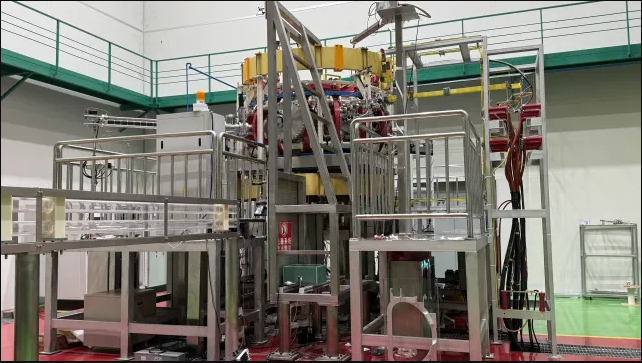
The Tokamak TT-1 device at the Thailand Institute of Nuclear Technology (TINT) has long participated in the IAEA Coordinated Research Project on the network of small and medium-sized fusion devices, contributing to international cooperation, research, and capacity building. (Photo: JP Cayol/IAEA)
This project builds upon a previous five-year collaborative research program. The previous project, named “Network of Small and Medium-Sized Magnetic Confinement Fusion Devices for Fusion Research,” officially concluded in 2026. The project brought together 24 institutions from 18 countries, collaborating through 17 research contracts, 6 research agreements, and 1 technical contract, connecting 14 laboratories operating fusion devices, involving platforms such as tokamaks, stellarators, plasma focus devices, and linear plasma devices. The TT-1 tokamak device at the Thailand Institute of Nuclear Technology has also been a long-term participant.
Countries participating in this network include Bulgaria, Canada, China, Costa Rica, Czech Republic, Iran, Lebanon, Malaysia, Mexico, Pakistan, Portugal, Russian Federation, Singapore, Slovenia, Spain, Thailand, Ukraine, and the United Kingdom. Relevant institutions have collaborated around coordinated experiments, technology development, modeling, and training activities.
The IAEA stated that as more countries focus on the potential of fusion as a future clean and reliable energy source, the sharing of experimental facilities and expertise is of great significance for the development of fusion programs. Although small and medium-sized fusion devices are smaller in scale compared to large flagship facilities, they offer advantages in experimental flexibility, technological innovation, and personnel training, making them particularly suitable for countries developing or expanding their fusion research programs.
In the previous Coordinated Research Project, participants conducted multiple joint experiments and comparative studies, with research directions including plasma turbulence, magnetohydrodynamic activity, plasma heating, edge physics, and plasma-wall interactions. These efforts are linked to research areas relevant to the International Thermonuclear Experimental Reactor (ITER) and future fusion reactors.
During the project, coordinated experiments on the Spanish TJ-II stellarator were a significant achievement. Researchers from multiple countries conducted joint studies on plasma transport, turbulence, electric fields, and diagnostic techniques using this facility. The project also promoted the development and testing of tools such as soft X-ray tomography systems, microwave diagnostic techniques, and machine learning methods for plasma analysis, and deepened the understanding of plasma behavior through computational models, supporting real-time data analysis.
In the field of fusion materials research, coordinated experiments focused on the performance of liquid lithium and tin materials, tungsten material properties, and the tolerance of materials under extreme heat load conditions, providing experimental support for research on plasma-facing materials and future fusion technologies.
In addition to scientific research, the project also emphasized capacity building. Through international schools, workshops, student exchanges, and hands-on experiments, the IAEA provided young researchers with practical opportunities in plasma physics and diagnostic techniques. Participating institutions also organized summer schools on plasma-surface interactions, regional workshops, and university courses under the project framework, integrating education and training with cutting-edge research.
The IAEA believes that small and medium-sized fusion devices can serve as convenient platforms for proof-of-concept, rapid testing, diagnostic technology development, and talent cultivation, serving as important complements to large facilities like ITER. The new Coordinated Research Project will continue to promote international cooperation around these directions, maintaining the diversity of experimental platforms for fusion research.
Disclaimer: Information republished from partner media, institutions or other websites is provided for reference and communication purposes only. It does not imply endorsement of its views or verification of its accuracy. Please contact us if any content infringes rights or requires correction.