
ITER Organization Director-General Attends Aix Economic Forum to Discuss Complexity Management of Pioneering Strongly-Coupled Mega-Projects
 Scan to share
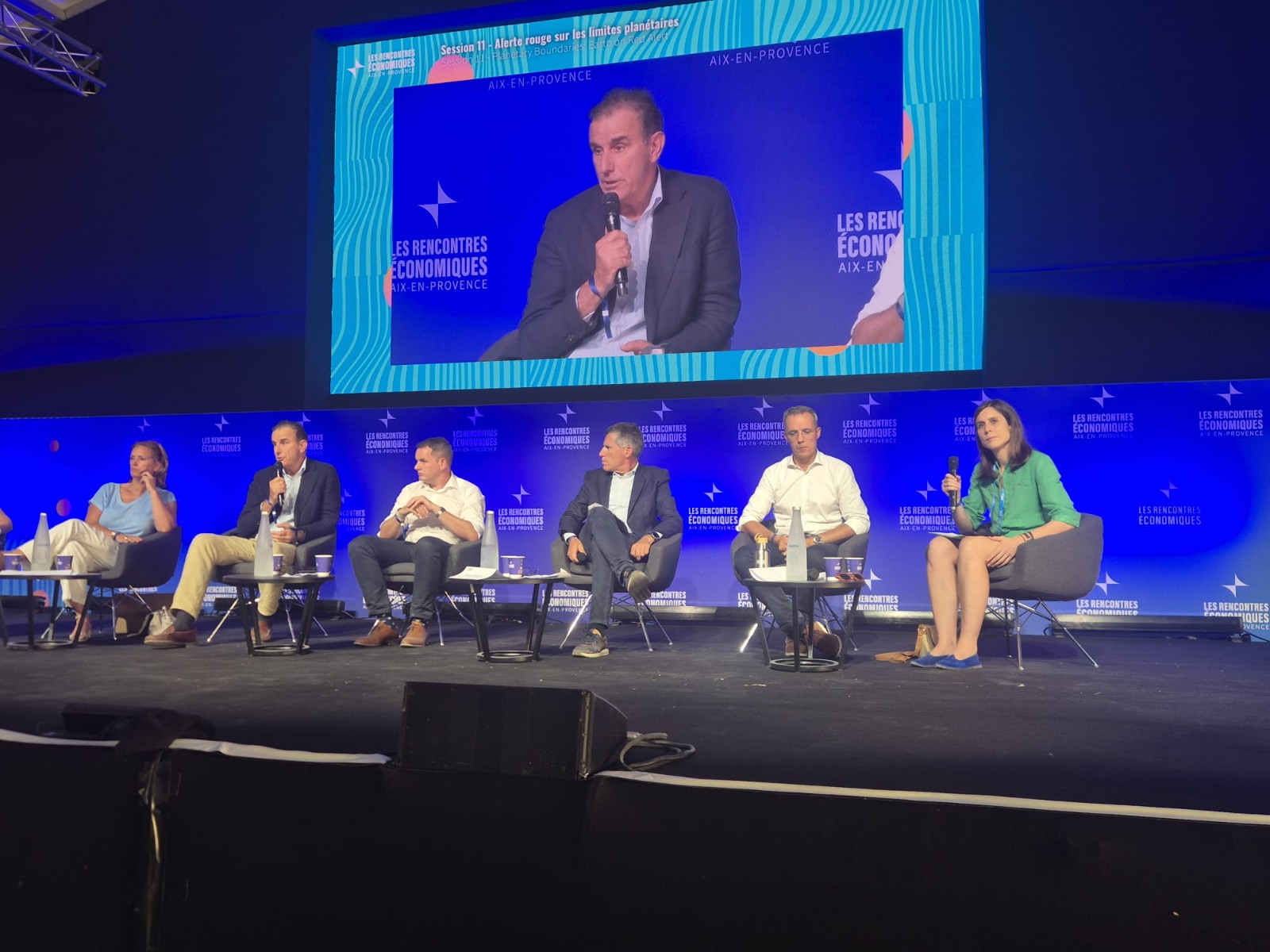
From July 2 to 4, the Aix Economic Forum (Les Rencontres Économiques d’Aix) was held in Provence, France, under the annual theme "Navigating a World of Uncertainty." Pietro Barabaschi, Director-General of the ITER Organization, was invited to attend the forum, where he presented the ITER Project and its pivotal role in addressing future energy challenges. His remarks centered on two core themes—climate change and the energy crisis—covering topics such as mega-project management experience and the development of the global fusion industry.
As the world's first fusion verification experimental reactor, ITER's core mission is to validate the engineering feasibility of fusion power generation, paving the way for subsequent demonstration fusion power plants (DEMO), thereby reducing reliance on fossil fuels at the source, cutting greenhouse gas emissions, and alleviating ecological and environmental pressures caused by the transgression of planetary boundaries.
I. Analyzing the Management Methodology of Pioneering Strongly-Coupled Mega-Projects: The ITER Case
ITER is a pioneering strongly-coupled project encompassing a vast number of many-to-many geometric and functional interfaces. The extreme compression of design tolerances, schedule, and performance margins in early designs has resulted in extremely low system fault tolerance, where minor defects can trigger chain-reaction rework across the entire project.
Over the past two years, the ITER Organization has strengthened management, continuously enhanced technical capabilities, fostered organizational mutual trust, strictly curbed excessive schedule compression, and allocated margins based on professional technical assessments to balance margin scales, achieving an overall acceleration of the ITER project.
ITER's complex project management experience can serve as a general management reference for various transnational mega-scale research projects in fields such as climate, infrastructure, and aerospace.
II. Fostering a Landscape of Global Fusion Industry Collaboration and Healthy Competition
The ITER facility is a public infrastructure for humanity's fusion endeavors. The vast data accumulated on engineering, irradiation, and system integration will be openly shared with public laboratories and private fusion companies worldwide, reducing R&D trial-and-error costs across the industry. With the rapid growth of global private fusion capital and the emergence of startups, healthy competition can accelerate technological iteration. A diversified portfolio of parallel technical routes benefits the development of the entire sector. While the ITER Organization completes foundational fusion engineering validation, various private enterprises explore simplified commercial reactor designs—the two approaches complement each other, jointly advancing the early deployment and widespread adoption of fusion energy.
ITER is not merely a scientific device; it carries dual demonstrative significance: first, validating the feasibility of fusion as the ultimate carbon-neutral energy source; second, providing a replicable governance model for transnational pioneering mega-projects, offering both technological and managerial solutions to address the global crisis of transgression of planetary boundaries.
Disclaimer: Information republished from partner media, institutions or other websites is provided for reference and communication purposes only. It does not imply endorsement of its views or verification of its accuracy. Please contact us if any content infringes rights or requires correction.