
"Lingshu" Plasma Control System Reaches Internationally Leading Level
 Scan to share
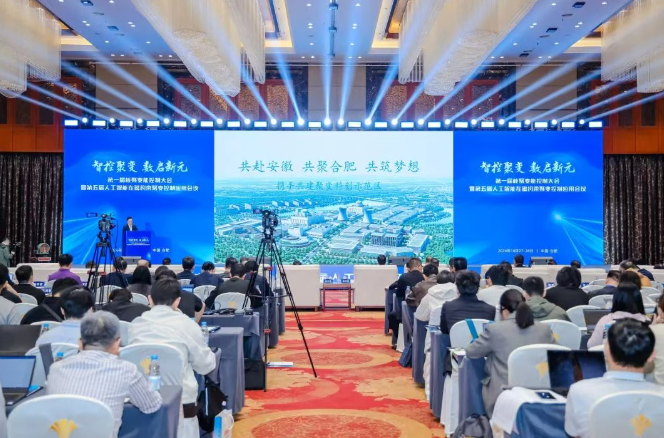
Recently, the First Fusion Energy Control Conference and the Fifth Conference on the Application of Artificial Intelligence in Magnetic Confinement Fusion Control opened in Hefei, Anhui Province, where the latest progress of China's self-developed "Lingshu" plasma control system was officially released.
It is understood that the "Lingshu" system has integrated more than 40 control algorithms, achieved a system reliability of 99.7%, and features a minimum control cycle of only 50 microseconds (equivalent to one twenty-thousandth of a second), along with continuous stable operation capability exceeding 50 hours. Multiple key performance indicators have reached internationally leading levels.
Xiao Bingjia (Bingjia Xiao), a researcher at the Institute of Plasma Physics of the Chinese Academy of Sciences and Director of the Artificial Intelligence and Digital Twin Center at the Energy Research Institute of the Hefei Comprehensive National Science Center, stated that "Lingshu," as the neural center of the "artificial sun," has completed verification in multiple rounds of experiments on the Experimental Advanced Superconducting Tokamak (EAST) in Hefei, and has cumulatively participated in more than 10,000 discharge experiments.
As China's fusion research transitions from the laboratory to the engineering stage, the successful application of the "Lingshu" system provides key technical support for the safe and stable control of high-temperature plasma exceeding 100 million degrees Celsius, and also marks an important milestone for China on the path toward independent development of core fusion control technologies.
Disclaimer: Information republished from partner media, institutions or other websites is provided for reference and communication purposes only. It does not imply endorsement of its views or verification of its accuracy. Please contact us if any content infringes rights or requires correction.