
Russia Completes Qualification Tests of ITER First Wall Tungsten Lining, Advancing Development of Key Components for International Thermonuclear Fusion
 Scan to share
The Efremov Institute of Electrophysical Apparatus (NIIEFA), a subsidiary of Rosatom State Atomic Energy Corporation——recently successfully completed the qualification testing phase of tungsten materials for the first wall lining of the International Thermonuclear Experimental Reactor (ITER). This testing aimed to verify the feasibility of the selected technical solution. The expert team completed vacuum rapid brazing of the tungsten lining, robotic ultrasonic inspection, and rigorous thermal cycling tests, laying a solid foundation for subsequent mass production of key components.
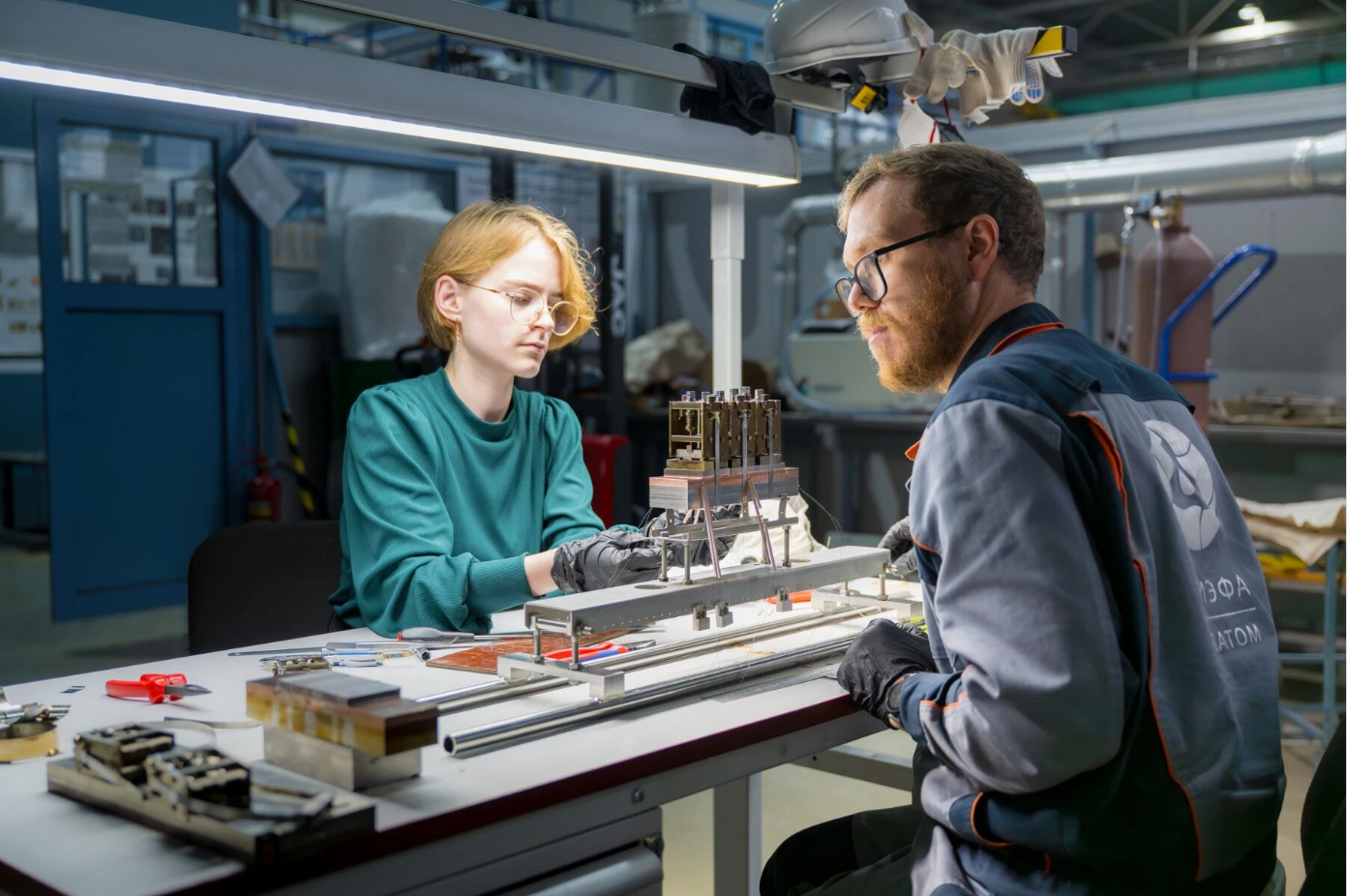
As the physical boundary between the scorching plasma and the main reactor equipment in a tokamak device, the first wall lining must efficiently conduct heat away while protecting the equipment from high-energy particle bombardment. In response to the major technical adjustment of the ITER project, which previously changed the first wall lining material from beryllium to tungsten, the Russian research team successfully overcame the manufacturing and process challenges brought by the new material, completing the upgrade and restructuring of the entire production and inspection system.
According to Anatoly Krasilnikov, Director of the Russian ITER Project Center, this is one of the most critical scientific research and engineering tests conducted by Russia for the ITER project this year. The test results not only confirmed the correctness of the technical approach but also demonstrated the team's exceptionally high engineering implementation capability, ensuring a smooth transition of this core component from research and development to industrial manufacturing.
In terms of technical details, in order to balance the strength performance of the copper alloy with the thermal conductivity efficiency of the tungsten-copper structure, the institute adopted a unique vacuum rapid brazing technology. In this qualification test, the prototype with a “flat channel” cooling configuration successfully withstood 10,000 thermal pulses with a power density of 3 MW/m² on the thermal test bench. In the subsequent phase, the team will adopt a more complex “Hypervapotron” cooling structure to challenge a higher thermal load of 5 MW/m².
According to the plan, the qualification research and design work for the first wall tungsten lining will continue until 2028, at which point it will officially transition to full-scale mass production of the ITER first wall panel lining. As an important participant in the ITER project, Rosatom State Atomic Energy Corporation and its subordinate research institutions are continuously optimizing production processes to ensure high-quality physical contributions to this, the world's largest international nuclear fusion megascience project.
Disclaimer: Information republished from partner media, institutions or other websites is provided for reference and communication purposes only. It does not imply endorsement of its views or verification of its accuracy. Please contact us if any content infringes rights or requires correction.