
ITER Tokamak Plasma Instability Simulation Tool JOREK Released as Open Source
 Scan to share
JOREK, a key simulation software used for simulating large-scale plasma instabilities in nuclear fusion devices, was officially released as open source on October 8, 2026, and its code has been hosted under the official GitHub account of the International Thermonuclear Experimental Reactor (ITER) Organization. This move aims to promote global nuclear fusion research toward a more open and innovative ecosystem, greatly lowering the threshold for researchers in various countries to obtain, use, and further develop this core algorithm code.
Nina Schwarz, a researcher at the French Alternative Energies and Atomic Energy Commission (CEA), pointed out that this open license allows researchers worldwide to contribute code to JOREK and publicly improve the algorithm. A clear open-source license not only simplifies the interface connection between JOREK and other physics simulation codes, but also creates more convenient conditions for open collaboration and academic exchange in the international fusion field.
According to official materials, JOREK is a mature nonlinear extended magnetohydrodynamics (extended MHD) simulation code, specifically designed for solving tokamak X-point geometry, and fully supports single-null and double-null configurations. The core physics applications of the software are mainly focused on plasma disruption mechanisms in nuclear fusion devices as well as the physical characteristics and engineering control of edge localized modes (ELMs).
The first line of JOREK code was written by scholar Guido Huijsmans more than twenty years ago. After years of version iteration and functional expansion, the code has been widely used by the international academic community to study various complex plasma phenomena in tokamaks and stellarators. Among them, the physics model for stellarators currently supports single-fluid simulation.
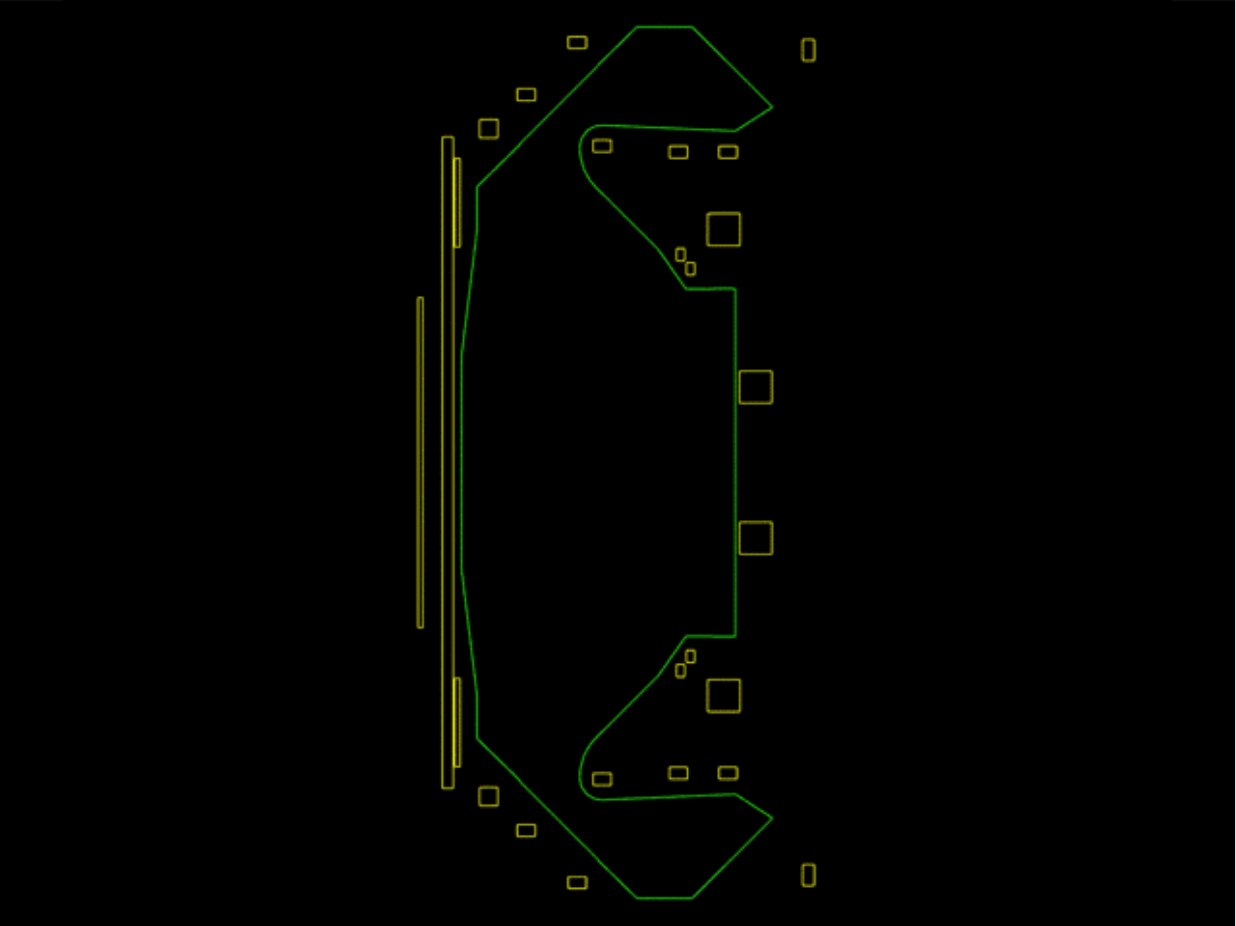
In its list of specific physics problems covered, disruption research mainly includes vertical displacement events (VDEs), eddy currents and halo currents, runaway electrons, density limit disruptions, as well as disruption mitigation methods such as massive gas injection (MGI) and shattered pellet injection (SPI). In terms of edge localized modes, it covers natural type-I ELM cycles, ELM-free operating regimes, pellet triggering, vertical displacement event triggering, and mitigation and suppression using resonant magnetic perturbation (RMP) fields. In addition, the software also supports accurate simulation of key processes such as neoclassical tearing modes, locked modes, impurity sputtering and transport, and divertor detachment.
At present, JOREK's simulation results have successfully provided solid physics and engineering data support for the design of the ITER project's disruption mitigation system. Matthias Hoelzl, a researcher at the Max Planck Institute for Plasma Physics (IPP) in Germany who has long participated in the continuous improvement of the code and community building, commented that in the field of plasma simulation to which he devotes himself, JOREK is unquestionably one of the world's leading simulation codes.
Disclaimer: Information republished from partner media, institutions or other websites is provided for reference and communication purposes only. It does not imply endorsement of its views or verification of its accuracy. Please contact us if any content infringes rights or requires correction.