
World's Largest Stellarator W7-X Launches New Experimental Campaign to Pursue Long Pulses
 Scan to share
Recently, Wendelstein 7-X (W7-X), the world's largest and most complex stellarator fusion device operated by the Max-Planck-Institute for Plasma Physics (IPP) in Germany, has officially launched its latest OP2.4 experimental campaign. This three-month experiment has attracted over one hundred top scientists from approximately 20 laboratories across Europe and around the world, jointly advancing stellarator technology toward longer pulses and higher performance.
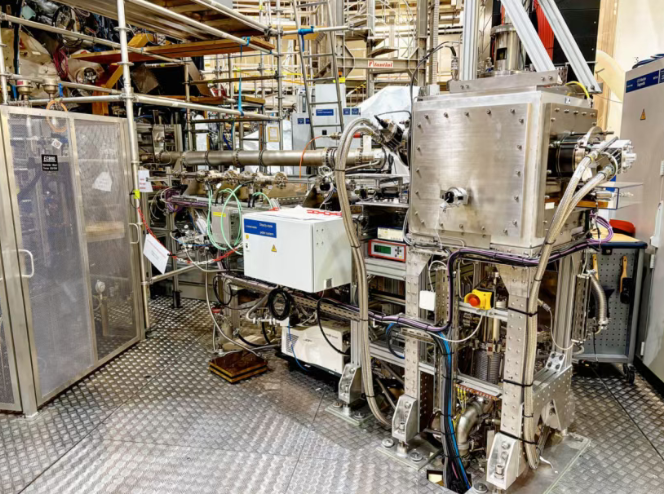
It is understood that the OP2.4 experiment will focus on three key research areas: high-performance plasmas, fast ions and turbulent transport, and long-pulse operation. The scientific team will utilize new electron cyclotron resonance heating (ECRH) modules and a steady-state pellet injector to explore methods for precisely controlling heating power and plasma profiles; simultaneously, they will attempt to use ion cyclotron resonance heating or neutral beam injection to generate a high fraction of energetic fast ions, in order to validate computer physics models and further investigate the dominant transport mechanisms within the plasma.
Unlike conventional tokamak devices, W7-X employs a fully twisted three-dimensional magnetic field design that maintains plasma stability without requiring strong induced currents. The device previously set a record in 2023 with a plasma duration of 8 minutes and an energy output of 1.3 gigajoules, and has since completed systematic upgrades and maintenance. During the 12-week OP2.4 experiment, the team plans to develop two breakthrough long-pulse scenarios: first, achieving an energy flux of 6 gigajoules with a discharge duration exceeding 500 seconds; second, combining steady-state pellet injection with neon seeding control to establish a high-performance radiative exhaust and steady-state plasma operation mode lasting up to 2 minutes.
To ensure efficient progress of the experiment, the W7-X team adopts a "unified team" model, conducting 60 to 100 discharge tests per experimental day and utilizing dozens of advanced diagnostic systems to collect data in real time and refine physics models. The measured data and scientific findings accumulated from this experiment will not only lay a solid foundation for the OP2.5 validation experiment in 2027 and the design of next-generation commercial stellarator reactors, but will also directly feed back into the commercialization process of IPP spin-off startup Proxima Fusion.
Disclaimer: Information republished from partner media, institutions or other websites is provided for reference and communication purposes only. It does not imply endorsement of its views or verification of its accuracy. Please contact us if any content infringes rights or requires correction.