
Tokamak Energy's ST40 device new gyrotron completes site acceptance test
 Scan to share
Tokamak Energy disclosed on July 29 that the new gyrotron planned for its high-field spherical tokamak device ST40 has completed site acceptance testing. The equipment, which will serve as the core component of the radio frequency heating system, has undergone key performance verification before installation on ST40.
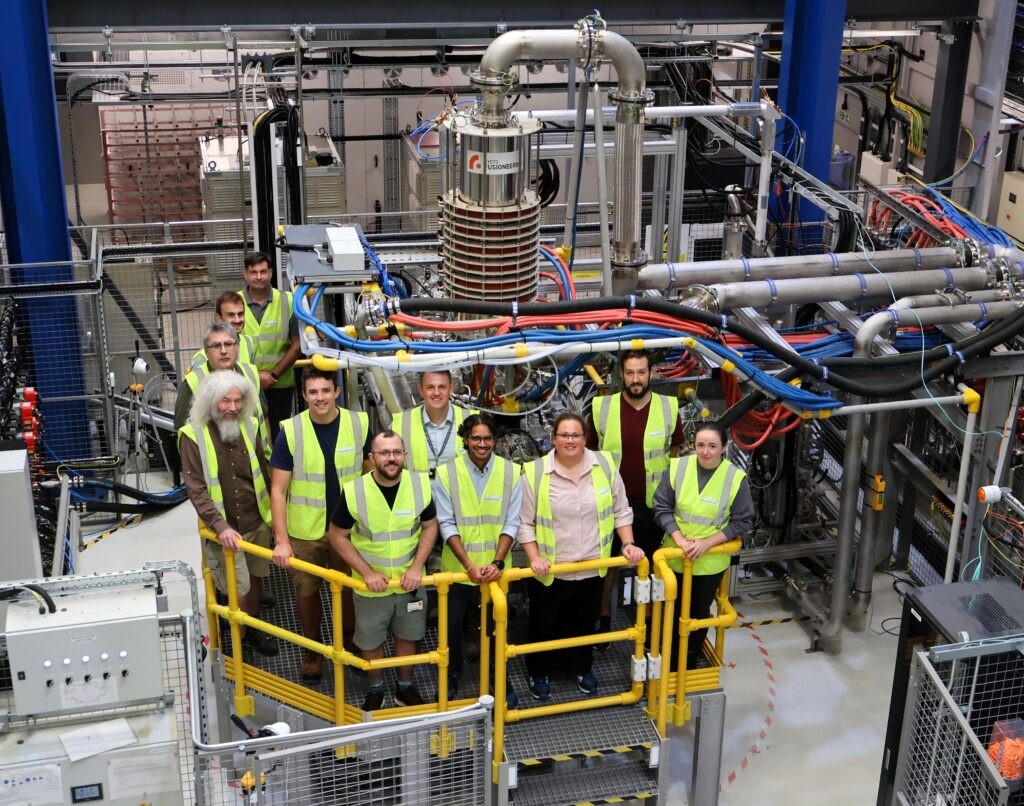
During this test, the gyrotron achieved stable 1 MW power operation at both 104 GHz and 137 GHz frequencies, with pulse lengths up to 2 seconds. The test content included repeatability, modulation capability, power control, and mode purity, and the results demonstrated that the equipment can meet the requirements for sustained performance output in relevant fusion experiments.
The gyrotron was built by Kyoto Fusioneering for Tokamak Energy, with a research, development, and manufacturing cycle of 18 months. Once the equipment is operational, it will generate high-power electromagnetic waves for heating and controlling hydrogen plasma, and will also perform functions such as plasma current initiation and drive. The relevant plasma temperature will reach several times the temperature at the center of the sun.
Tokamak Energy stated that the next phase of the project will shift to preparations for the transmitter, mirror polarizer, transmission line, and control system, followed by installation and commissioning on the ST40 device. After the gyrotron is connected, it will provide additional heating and current drive capabilities for ST40, support higher plasma performance experiments, and be used to explore operational scenarios such as plasma heating, current drive, initiation, and acceleration.
The working principle of the gyrotron involves accelerating an electron beam in a strong magnetic field to emit microwave radiation. These microwaves are transmitted via waveguides into the plasma composed of hydrogen isotopes, with their frequency tuned to match the electron cyclotron resonance frequency of the plasma. In the ST40 device, the corresponding frequency is 104 GHz or 137 GHz. The microwaves interact with the plasma, transferring energy to the electrons to achieve plasma heating and drive.
The gyrotron, which employs electron cyclotron resonance heating technology, helps alleviate the space constraints on the central solenoid in spherical tokamak devices. The central solenoid is typically used to generate plasma current. By participating in current initiation and drive, the gyrotron provides technical conditions for reducing the size of the central solenoid. Compared to neutral beam heating, the gyrotron can also be positioned farther from the device itself, whereas neutral beam heating systems usually need to be installed close to the device.
On ST40, Tokamak Energy plans to combine the existing neutral beam heating system with the gyrotron heating system to further study the gyrotron's operational characteristics, control system requirements, and the optimal ratio between the two heating methods.
This project is part of the collaboration between Tokamak Energy and UK Fusion Energy (UKFE), and the relevant experience will contribute to the technical capability accumulation for the UK's Spherical Tokamak for Energy Production (STEP) program. At the same time, this gyrotron will also participate in Tokamak Energy's ST40 upgrade plan, LEAPS. This plan focuses on lithium system-related research and is supported by the U.S. Department of Energy and the UK Department for Energy Security and Net Zero.
Disclaimer: Information republished from partner media, institutions or other websites is provided for reference and communication purposes only. It does not imply endorsement of its views or verification of its accuracy. Please contact us if any content infringes rights or requires correction.