
Germany to Establish Fusion Technology Research Center at Karlsruhe Institute of Technology
 Scan to share
The German federal government is advancing the layout for the country's first fusion reactor. According to a decision announced on July 29, 2026, by the German Federal Ministry of Research, Technology and Space (BMFTR), one of three newly established fusion research centers will be located at the Karlsruhe Institute of Technology (KIT), focusing on fuel cycles, new materials, and engineering technology research for fusion power plants.
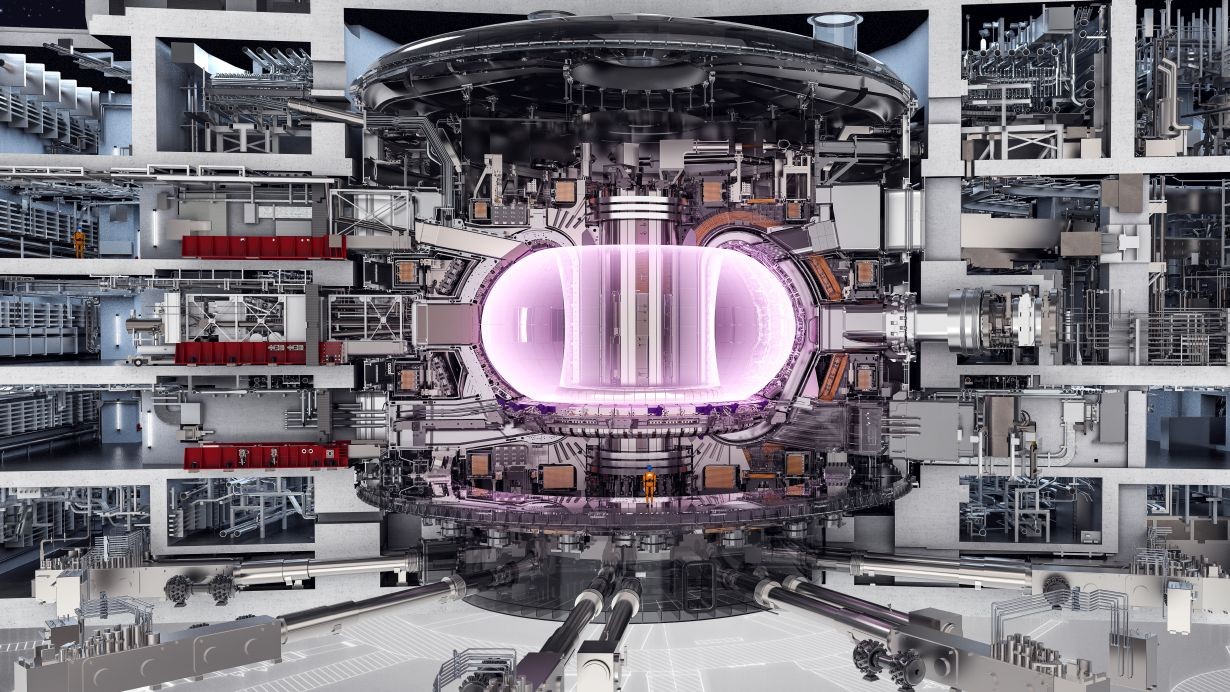
In accordance with Germany's "Fusion Action Plan," the new research centers will integrate the efforts of scientific institutions and industry to concentrate on solving key technical challenges before the application of fusion energy. The center at KIT will leverage the institute's expertise in fusion fuel cycles, high-performance materials, and core reactor components to facilitate the transition of related achievements from basic research to engineering applications.
Petra Olschowski, Minister of Science of Baden-Württemberg, stated that progress in materials research and fuel cycle technology will significantly influence the speed at which fusion technology enters the future energy system. She noted that KIT holds important advantages in fusion reactor materials and safe, sustainable fuel cycles, particularly possessing a long-term research foundation in the production and handling of tritium required for the fusion process.
Jan S. Hesthaven, President of KIT, stated that Karlsruhe possesses the professional capabilities and infrastructure needed for fusion technology research, and the new center will help further advance research into the key conditions for future fusion power plants. Christoph Kirschlechner, spokesperson for the KIT fusion project, said that the research team will develop relevant technologies in collaboration with partners, aiming to lay the foundation for safe, reliable, and economically viable fusion power plants.
The industry will also participate in the construction of this research center. The center plans to attract companies into the technology research and development phase and provide support for building the future fusion industry supply chain. As a platform converging technologies related to magnetic confinement fusion and laser fusion, the Karlsruhe center will bring together companies such as Proxima Fusion, Gauss Fusion, Focused Energy, and Marvel Fusion. The total number of participants exceeds 30, including universities, non-university research institutions, and industrial enterprises.
Among the three planned fusion research centers in Germany, two will focus on magnetic confinement fusion and laser fusion respectively, while the third is oriented towards fuel cycles, new materials development, and their engineering applications in power plants. KIT applied for and was selected to host this third type of center, primarily relying on its long-term expertise in fusion engineering technology.
Currently, KIT researchers are developing breeding blankets for producing the fusion fuel tritium, tritium safe cycle technologies, and materials capable of withstanding extreme temperatures and high neutron flux environments over long periods. Simultaneously, the institute is advancing key technology research and development, including high-frequency systems required for plasma heating and components for the continuous operation of future power plants.
Kirschlechner stated that the technologies required for fusion power plants cannot be developed in isolation; they must be integrated from a system-level perspective to form engineering solutions that can operate reliably in a power plant environment and be economically viable.
Before fusion power plants can truly supply electricity to the grid, numerous major scientific and engineering challenges in related fields still need to be resolved. KIT stated that it will continue to combine basic research, technology development, and talent cultivation, improve experimental facilities and professional team building, and create conditions for fusion technology to become an important supplement to renewable energy in the future.
Disclaimer: Information republished from partner media, institutions or other websites is provided for reference and communication purposes only. It does not imply endorsement of its views or verification of its accuracy. Please contact us if any content infringes rights or requires correction.