
China Academy of Engineering Physics Unveils Conceptual Design of Z-Pinch Fusion Facility
 Scan to share
Recently, the Institute of Fluid Physics of the China Academy of Engineering Physics, in collaboration with research teams from the Beijing Institute of Applied Physics and Computational Mathematics and the Tianfu Innovation Energy Research Institute, officially unveiled the overall conceptual design of the China Z-pinch Fusion Facility (CZFF). The related research findings have been published online in the professional academic journal *Pulsed Power* and featured as a cover recommendation, marking an important advance in China's efforts to promote the Z-pinch-driven Fusion-Fission Reactor (Z-FFR) program and the demonstration of thermonuclear ignition.
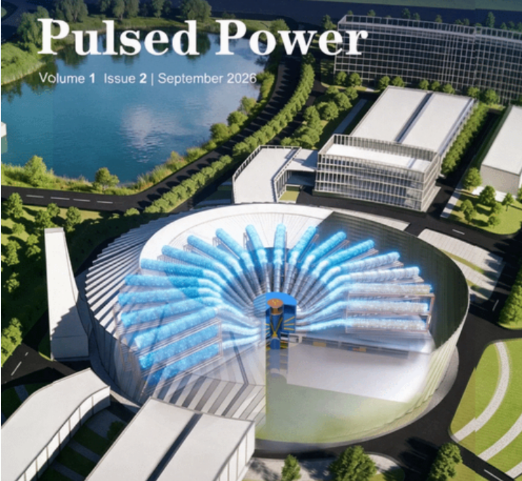
As a next-generation high-energy-density physics platform for demonstrating thermonuclear ignition and advancing the fusion energy program, the CZFF is designed with a peak current exceeding 50 megaamperes (MA). The facility is centered on a research team led by Deng Jianjun, academician of the Chinese Academy of Engineering and researcher at the Institute of Fluid Physics of the China Academy of Engineering Physics, drawing on more than two decades of deep research accumulation in the fields of pulsed power and Z-pinch technology. In terms of technical route selection, the team adopted a Linear Transformer Driver (LTD) architecture, consisting of 72 LTD modules connected in parallel and containing a total of 108,000 basic discharge units, demonstrating extremely high technical readiness and energy conversion efficiency.
In the power flow chain design of the system, the CZFF achieves efficient energy transfer from the primary power source to the target area. The entire facility converges through 72 coaxial water transmission systems in three layers, transitions to double-plate transmission lines, and then connects to a six-layer vacuum insulator stack, ultimately delivering the powerful current precisely to the load located at the center of the underground target area via magnetically insulated transmission lines (MITL) and a triple-post-hole convolute (TPHC). Circuit simulation results indicate that the driver can deliver a current pulse with a peak of approximately 54 MA and a rise time of 130 nanoseconds to the load, which is expected to produce approximately 10 megajoules (MJ) of X-ray radiation, a deuterium-tritium fusion neutron yield exceeding $10^{18}$, and a hohlraum temperature exceeding 300 electron volts (eV).
Although the conceptual design demonstrates broad application prospects, the research team also objectively analyzed in the paper the key engineering risks that urgently need to be addressed, with emphasis on the prevention of vacuum surface flashover of the vacuum insulator stack under high potential, and the suppression of loss current caused by plasma expansion in the triple-post-hole convolute region. In the future, the team plans to carry out in-depth verification and insulation structure optimization relying on existing pulsed power platforms such as the 10-MA class facility, laying a solid foundation for the ultimate realization of this revolutionary experimental platform and comprehensively supporting the high-quality development of China's fusion energy and frontier high-energy physics research.
Disclaimer: Information republished from partner media, institutions or other websites is provided for reference and communication purposes only. It does not imply endorsement of its views or verification of its accuracy. Please contact us if any content infringes rights or requires correction.