
All Four ITER Test Blanket Module (TBM) Conceptual Designs Pass Preliminary Design Review
 Scan to share
Recently, the ITER Organization officially completed the Preliminary Design Review (PDR) of four Test Blanket Module (TBM) conceptual designs. The four blanket system technical designs led by China, the EU, Japan, and Korea — core ITER member parties — all passed independent review to high standards, marking that “tritium breeding and energy extraction validation,” one of ITER's three major engineering goals, has fully entered the final engineering implementation phase, providing critical engineering pathway support for the next-generation fusion demonstration reactor (DEMO) to achieve commercial tritium self-sufficiency.
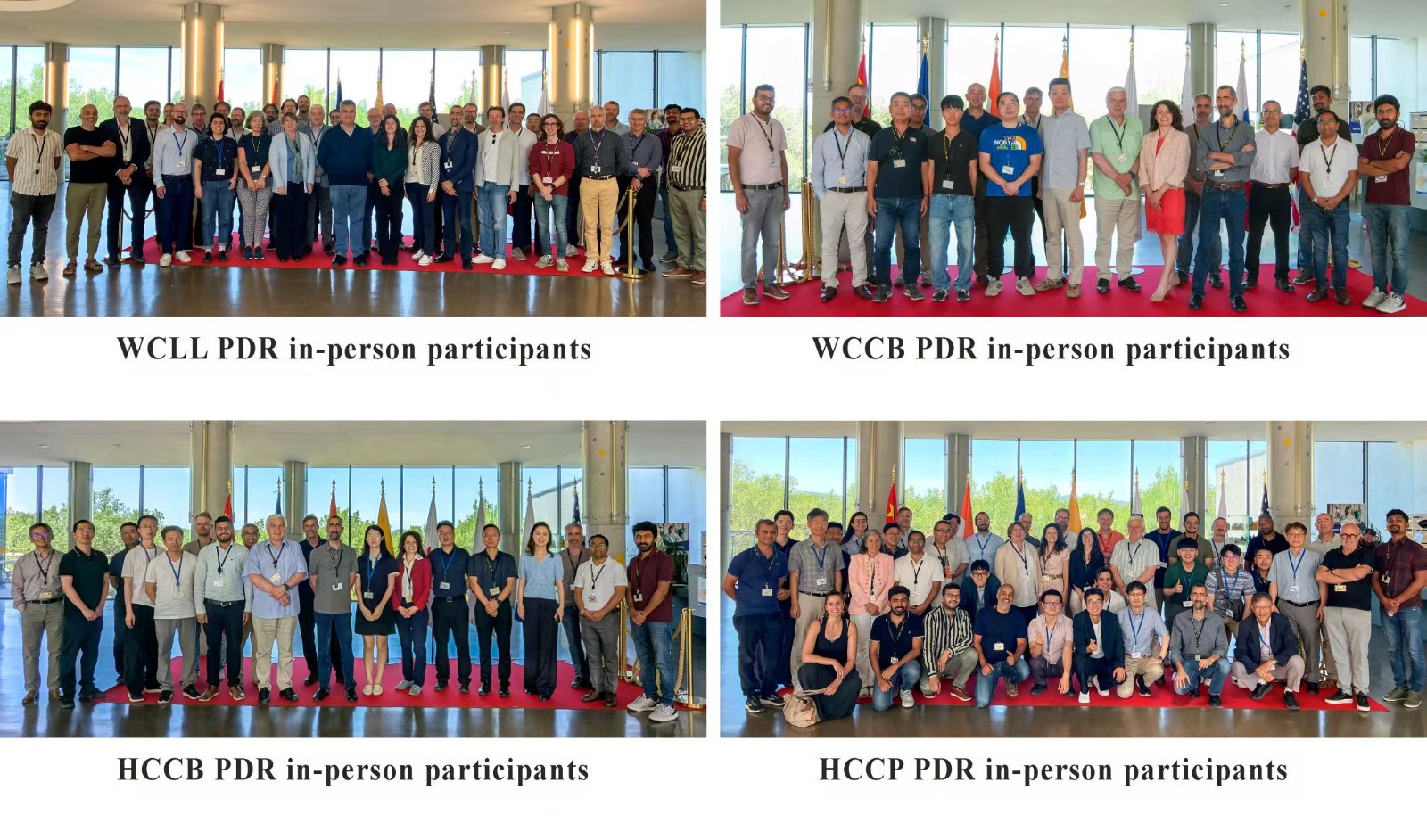
In the blueprint for magnetic confinement fusion power generation, the high-energy neutrons produced by deuterium-tritium (D-T) fusion reactions must be absorbed by the blanket behind the vacuum vessel first wall, achieving “on-site cyclic regeneration of expensive and scarce tritium fuel” through neutron-lithium reactions, while simultaneously converting fusion high-energy into usable thermal energy. As the core mission of ITER during its first deuterium-tritium operating phase (DT-1), the ITER Council selected and established four mainstream engineering designs for parallel competition and real-condition validation:
China (CN): Helium-Cooled Ceramic Breeder (HCCB);
European Union (EU): Water-Cooled Lead-Lithium (WCLL);
Japan (JA): Water-Cooled Ceramic Breeder (WCCB);
Korea and EU Joint (KO-EU): Helium-Cooled Ceramic Pebble-bed (HCCP).
In the joint review launched in summer 2026, the review committee, bringing together more than 50 top experts in nuclear engineering, fusion physics, and thermal mechanics from around the world, systematically examined each design's physical interface integration within the ITER main machine, nuclear safety and thermal-hydraulic stability under extreme conditions, and focused on demonstrating its technical applicability and scalability for the next-generation fusion demonstration reactor (DEMO). Prior to this review, each development team worked closely with the ITER Organization, delivering approximately 1,000 detailed engineering technical documents in total, comprehensively covering multi-physics coupling models, electromagnetic analysis under extreme high magnetic fields, thermal-hydraulic simulations, nuclear safety margin assessments, manufacturing feasibility process standards, as well as full-lifecycle remote handling installation, in-service inspection, and radioactive decommissioning plans.
The review committee and all participating parties unanimously agreed that the four designs not only fully meet the ITER TBM technical specifications, but also demonstrate a high degree of maturity in engineering applicability. With all designs passing the preliminary design review, the parties will now fully proceed with engineering manufacturing qualification of full-scale prototypes, high-precision nuclear safety licensing applications, and final assembly testing, accelerating the resolution of the “tritium self-sufficiency” industrial challenge that constrains the large-scale deployment of future commercial fusion power plants.
Disclaimer: Information republished from partner media, institutions or other websites is provided for reference and communication purposes only. It does not imply endorsement of its views or verification of its accuracy. Please contact us if any content infringes rights or requires correction.