

Two IPP studies reveal edge turbulence mechanisms in fusion plasmas from first principles
On August 10, 2026, two research teams at the Max Planck Institute for Plasma Physics (IPP) independently published findings that, for the first time, explain key phenomena in the extremely thin edge layer of fusion plasmas starting from fundamental physics equations. Both papers were published in Physical Review Letters, with one highlighted as an editor's suggestion. For stable operation of a fusion power plant, two requirements must be met simultaneously: on the one hand, the plasma at temperatures of around 100 million degrees Celsius must be effectively confined to achieve fusion ignition conditions; on the other hand, the generated heat must be distributed over a sufficiently large area to prevent damage to the device walls from excessive local heat loads. Whether this conflict can be resolved depends largely on a region only a few centimeters thick at the plasma edge.
2026-08-10

LLNL Research in the U.S. Reveals New Mechanisms of Laser Polarization Effects in NIF Inertial Confinement Fusion Experiments
Researchers at Lawrence Livermore National Laboratory (LLNL) have recently discovered in studies related to the National Ignition Facility (NIF) that the polarization state of lasers may influence the cross-beam energy transfer (CBET) process in inertial confinement fusion experiments and could help reduce backscatter and the risk of damage to optical components. The related paper, titled "Effects of Laser Polarization on Cross-Beam Energy Transfer in Inertial Confinement Fusion," was recently published as a featured article in the journal Physics of Plasmas. NIF experiments demand extremely high precision in laser control. The facility's 192 laser beams must be focused to a width of a few millimeters and enter the target area through holes approximately 3 millimeters in diameter located at the top or bottom of a gold hohlraum. The hohlraum is about 2 centimeters in diameter. After the lasers enter the plasma, different beams cross each other and undergo energy transfer, a process known as cross-beam energy transfer. When designing NIF inertial confinement fusion experiments, scientists carefully tune the laser wavelengths to use CBET to balance energy distribution and improve implosion symmetry.
2026-08-10
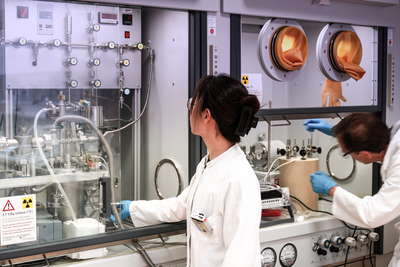
German team achieves first separation of tritium-containing hydrogen isotope mixtures using silver-exchanged zeolites
A team at the Helmholtz-Zentrum Dresden-Rossendorf (HZDR) and partners recently demonstrated a new method for separating hydrogen isotopes using silver-containing zeolites, successfully separating hydrogen isotope mixtures containing radioactive tritium through a porous solid material for the first time. The research findings were published in Nature Communications. Future fusion power plants will require not only high-temperature plasma and strong magnetic fields during operation, but also a stable fuel cycle system for recovering, separating, and reusing deuterium and tritium. Inside a fusion reactor, deuterium and tritium participate in reactions and release energy, but the fuel is not completely consumed, and the residual gas may also contain ordinary hydrogen (protium), forming a mixture of protium, deuterium, and tritium...
2026-08-07
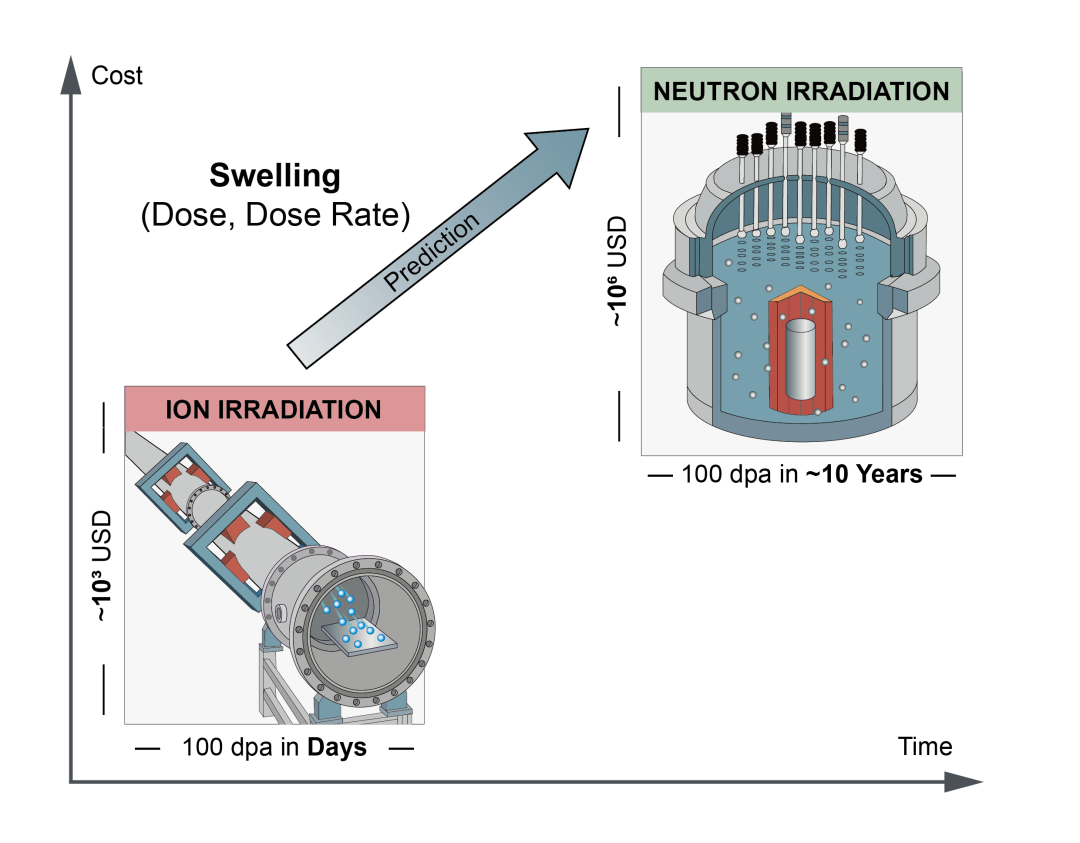
Basic research cracks an application challenge that has persisted for nearly half a century: quantitative prediction of neutron irradiation swelling via ion irradiation
Whether advanced nuclear energy systems can operate safely over the long term depends on the ability of structural materials to resist neutron irradiation damage. Neutrons create numerous atomic-scale defects in materials, which gradually aggregate into nanoscale cavities, ultimately causing material swelling, dimensional instability, and performance degradation. However, obtaining high-dose neutron irradiation data often requires years or even more than a decade, with high costs and post-irradiation sample radioactivity; in contrast, ion irradiation can simulate years of accumulated damage within days and is therefore widely adopted (approximately 95% of irradiation experimental data in existing literature come from ion irradiation). But the dose rate of ion irradiation is typically 3—4 orders of magnitude higher than that of neutron irradiation, making direct conversion between the two results difficult. Recently, the research team of Wang Chenxu and Wang Yugang from the Institute of Heavy Ion Physics, School of Physics, and the State Key Laboratory of Nuclear Physics and Nuclear Technology at Peking University, in collaboration with researchers from the University of Tennessee and other institutions, established a quantitative relationship between material swelling and irradiation dose and dose rate at fixed temperatures based on cluster dynamics simulations, theoretical derivations, and ion irradiation experiments, achieving prediction of neutron irradiation swelling using rapid ion irradiation and providing a new tool for rapid screening and lifetime evaluation of nuclear materials.
2026-08-07
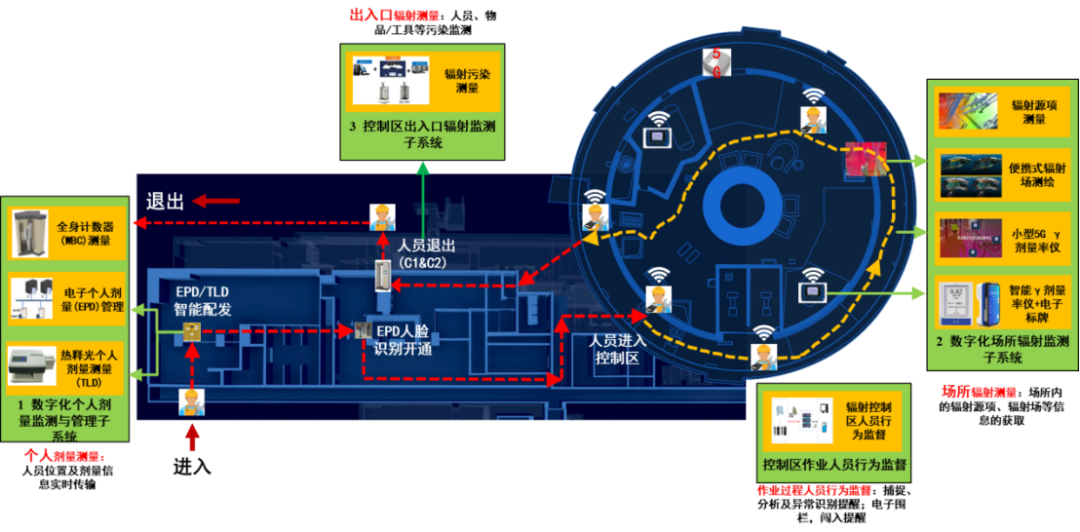
Real-Time Perception, Full-Scope Visibility! CNNC Environmental Protection's "SMARP2.0" Leads a New Paradigm in Nuclear Power Radiation Protection
In nuclear power radiation work scenarios, the ability to pre-determine radiation dose levels in various areas has long been an aspiration of countless nuclear industry workers. Now, the SMARP2.0 system developed by the China Institute for Radiation Protection (CIRP), a subsidiary of CNNC Environmental Protection, has turned this vision into reality. Recently, the China Institute for Radiation Protection, under CNNC Environmental Protection, completed the iterative upgrade of the SMARP2.0 digital radiation protection technical support system. This system can pre-calculate radiation dose levels in various areas of nuclear power operations, effectively resolving the long-standing industry challenge where frontline nuclear workers could not grasp on-site radiation conditions in advance, providing robust technical support for optimizing radiation work plans and ensuring worker radiation safety. SMARP2.0...
2026-08-07
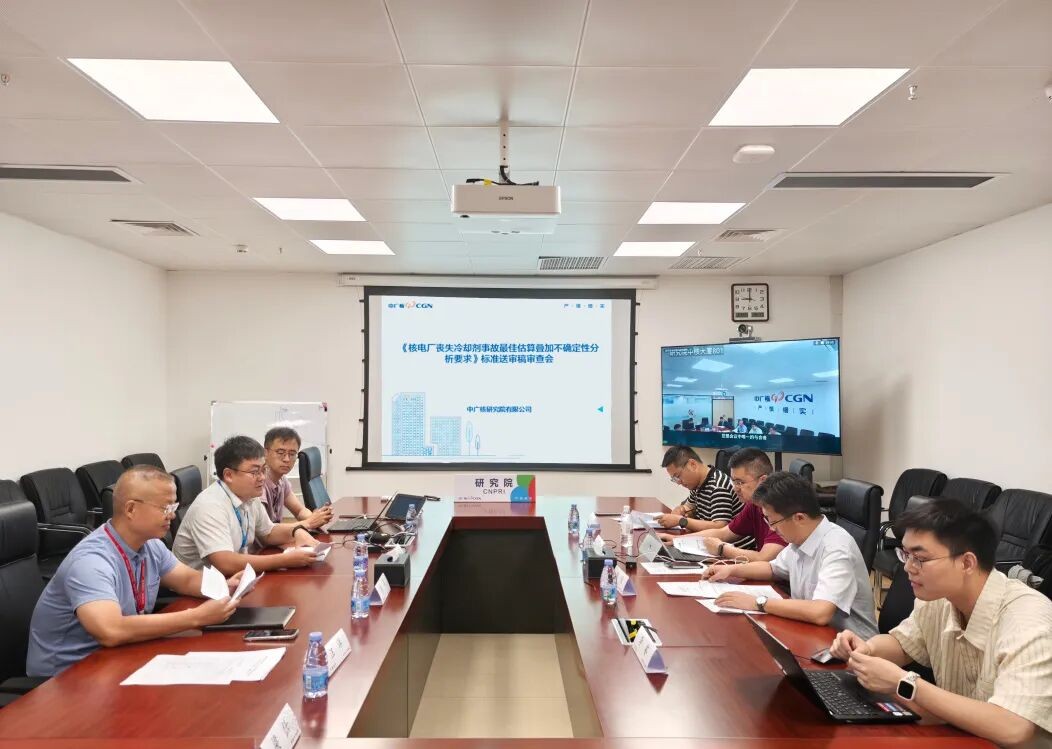
China's First Industry Standard for LOCA BEPU Analysis, Led by CGN Research Institute, Officially Released
Recently, approved by the National Energy Administration, the energy industry standard "Technical Requirements for Best Estimate Plus Uncertainty Analysis of Loss of Coolant Accident in Pressurized Water Reactor Nuclear Power Plants" (NB/T 20751-2026), led by CGN Research Institute, was officially released. The standard was developed under the leadership of the Research Institute, in collaboration with the Nuclear and Radiation Safety Center of the Ministry of Ecology and Environment, China Nuclear Power Research and Design Institute, Shanghai Nuclear Engineering Research and Design Institute, Hualong Nuclear Power Technology Co., Ltd., and China Nuclear Power Engineering Co., Ltd., among other organizations. It will come into effect on December 26, 2026. This standard is China's first BEPU analysis...
2026-08-06
Germany Establishes Three Fusion Centers, HZDR Contributes to Advancing Key Technologies for Fusion Power Plants
The German Federal Ministry for Research, Technology and Space (BMFTR) recently established three fusion centers under the German High-Tech Agenda (HTAD), aiming to pool the efforts of research institutions and industry to advance technology development for future fusion power plants. The German federal government will provide €125 million in initial funding for the related work, with a focus on laser fusion, magnetic confinement fusion, and cross-cutting areas such as fuel cycle and materials development. The Helmholtz-Zentrum Dresden-Rossendorf (HZDR) will participate in the construction of the relevant centers leveraging its research infrastructure, contributing capabilities in high-power lasers, materials research, simulation and data analysis. The SAXFUSION capability network, jointly coordinated by HZDR and the Fraunhofer Institute for Material and Beam Technology (Fraunhofer IWS), will also take on tasks of exchange, cooperation and knowledge transfer.
2026-08-06

South Korean Scholar Patents Fusion Reactor Optimization Design Method
Professor Bonggeun Hong (transliteration) of the Department of Quantum System Engineering at the College of Engineering, Jeonbuk National University, South Korea, has recently registered a patent for a fusion reactor optimization design method, aimed at supporting the engineering design and commercialization of next-generation fusion technology. [Image source: Jeonbuk National University] The design method proposed in the patent can evaluate the performance of fusion reactors in various application scenarios—including power generation, thermal energy utilization, and use as a neutron source for nuclear transmutation—while optimizing device dimensions and key component structures. Its core approach is to simultaneously consider fusion system performance and economic feasibility during the initial design phase, thereby deriving more optimal design solutions.
2026-08-06
Colorado State University produces first ultracold neutral plasma with electron temperature below 1 kelvin
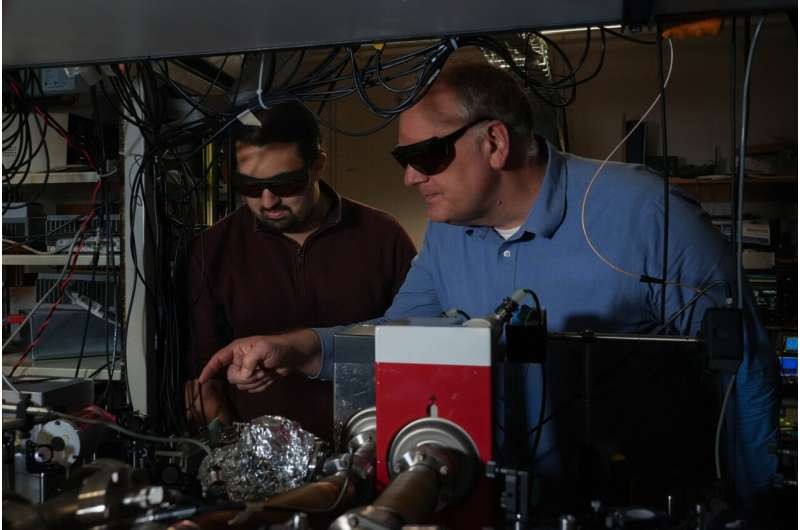
Researchers at Colorado State University have, for the first time, produced an ultracold neutral plasma by combining laser cooling techniques with strong magnetic fields. Measurements show that the electron temperature in this plasma is less than 1 kelvin above absolute zero, making it one of the lowest electron temperatures ever measured in a plasma. The research was published in Physics of Plasmas. The new method proposed in the paper helps test plasma theories under more controllable experimental conditions and improve computational models of plasma behavior in extreme environments. The researchers believe this achievement could contribute to future fusion energy...
2026-08-05

Westinghouse and Amentum Expand Cooperation to Support Scaled Deployment of APX Technology Platform
Westinghouse Electric Company announced on August 4 that it has reached a series of agreements with Amentum to expand cooperation around Westinghouse's APX technology platform, enhance the scaled deployment capability of AP1000 reactors, and advance the development and licensing of the AP300 Small Modular Reactor (SMR). Under the agreements, the two companies will collaborate to advance AP300 SMR regulatory approval from the U.S. Nuclear Regulatory Commission (NRC). Westinghouse stated that obtaining regulatory approval is a critical step for AP300's market entry, and Amentum's engineering capabilities and nuclear project experience will support these efforts. Westinghouse Electric...
2026-08-05
Antineutrinos Detected for the First Time in Spent Fuel Elements
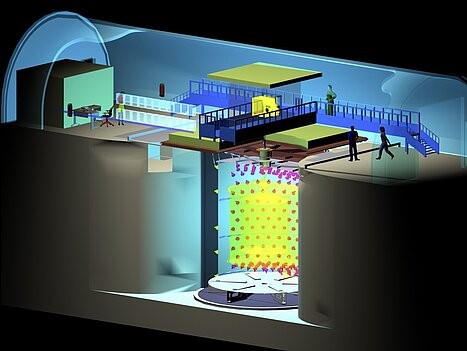
Even after a nuclear reactor has been shut down, the radioactive fuel continues to emit a faint stream of antineutrinos. The Double Chooz collaboration, led by scientists from the Max Planck Institute for Nuclear Physics (MPIK), has succeeded for the first time in measuring this elusive signal, opening up new prospects for reactor monitoring, nuclear safety, and control procedures. The Double Chooz detector. Image credit: Double Chooz collaboration. The research team conducted these measurements at the Chooz nuclear power plant in northern France. The Double Chooz detector is located approximately 400 meters underground, in close proximity to two reactor cores. Inside, the detector contains more than 30 cubic meters of liquid scintillator material...
2026-08-04

IIT Hyderabad launches nuclear technology training programme
The Indian Institute of Technology Hyderabad (IIT Hyderabad), in collaboration with Pune-based technology company Crimson Energy Experts Pvt. Ltd. (CEEPL), has launched a three-month full-time residential training programme to train engineers and industry professionals for India's expanding civil nuclear energy sector. The programme, named Anugyan-Nuclear Technology Orientation Programme (NTOP), is described as India's first industry-academia collaborative initiative dedicated specifically to engineering talent development in the nuclear energy sector, with a focus on bridging the gap between academic curricula and nuclear industry engineering practice.
2026-08-04
Study Shows Sustained Deuterium Fusion in Palladium and Titanium Metal Foils at Ultra-Low Energies
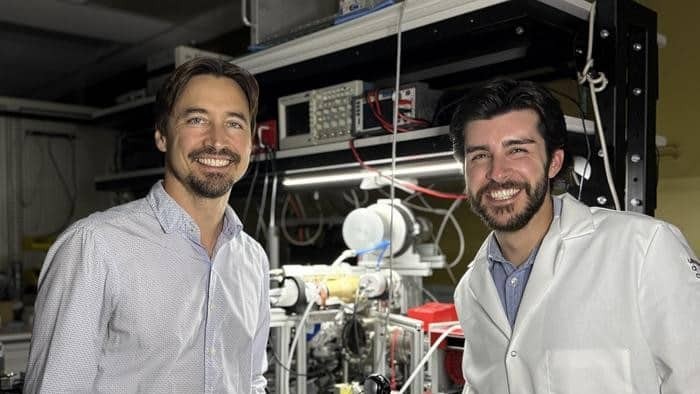
U.S. researchers have observed a low-energy deuterium fusion phenomenon in thin palladium and titanium metal foils: when the incident deuteron energy drops to levels where fusion reactions are generally expected to weaken significantly or even nearly cease, the reactions continue to occur. Experiments show that as incident energy decreases, the fusion rate does not continue to decline exponentially but instead enters a plateau region below approximately 2 keV. At the lowest detectable energy, the measured low-energy fusion rate exceeds predictions from isolated-nucleus models by more than 10^18 times. Image courtesy of Marina Light/University of California, Davis. The related research was conducted by teams at the University of California, Davis and Lawrence Berkeley National Laboratory...
2026-08-04
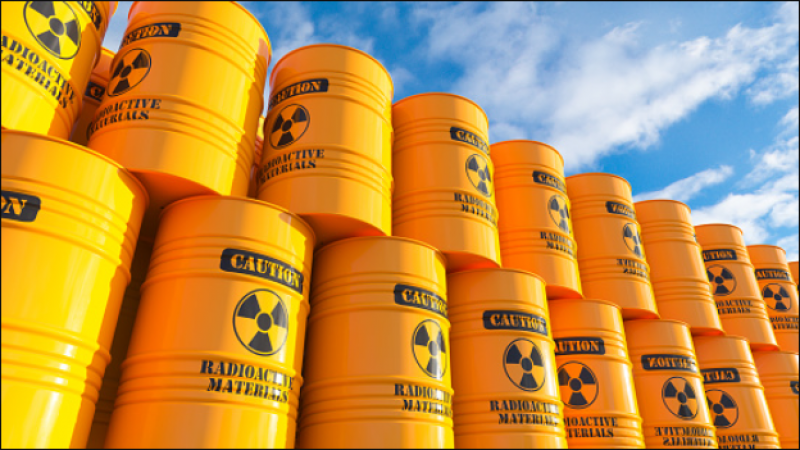
Russian Researchers Develop High-Wear-Resistant Steel Sample for Nuclear Waste Processing
Novosibirsk State Technical University (NSTU) recently announced that Russian researchers have developed a steel sample with reinforcing elements. Experimental results show that the durability of this material is approximately 4 times that of 5KhNM tool steel currently used in nuclear power plant waste processing equipment. The research focuses on improving precipitation hardening steel structures. Precipitation hardening steel is a special class of alloy material that, after quenching and holding at specific temperatures, precipitates fine, hard particles within the steel, thereby enhancing strength and wear resistance. The researchers aim to replace existing 5KhNM tool steel with new high-strength alloys...
2026-08-04
Japanese research team experimentally demonstrates that fusion plasma fluctuations can drive inward particle transport
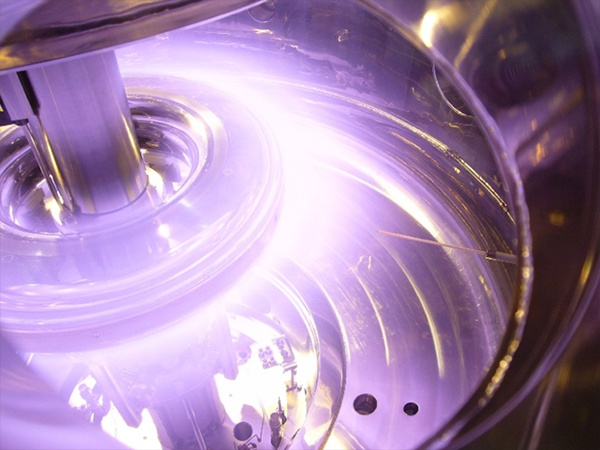
August 3, 2026, a research team from The University of Tokyo and the National Institute for Fusion Science (NIFS) under the National Institutes of Natural Sciences announced that researchers have directly observed in experiments that low-frequency electric field fluctuations in high-temperature plasma confined by a dipole magnetic field can transport particles to the central region of the plasma. Plasma produced by the levitated dipole experiment device RT-1 (Ring Trap 1) Overall view of the RT-1 device (Kashiwa Campus, The University of Tokyo) The study was conducted using the levitated dipole experiment device Ring Trap 1 (RT-1) at The University of Tokyo. RT-...
2026-08-03

Radiation protection expert Peter Bryant to lead University of Liverpool's Chadwick Institute for Nuclear Innovation
The University of Liverpool has announced that Professor Peter Bryant has been appointed as the Director of the newly established Chadwick Institute for Nuclear Innovation, with his tenure officially commencing in September 2026. The Chadwick Institute for Nuclear Innovation is named after Nobel laureate Sir James Chadwick, who served as Head of the Physics Department at the University of Liverpool and is renowned for his discovery of the neutron. The Institute will leverage the University of Liverpool's research expertise, innovative facilities, and strategic partnerships in the nuclear energy sector to advance research and talent development in nuclear innovation. Bryant has long been engaged in work related to the civil nuclear fuel cycle, with his research and management portfolio encompassing radiation protection, environmental permitting, radioactive waste...
2026-08-03
NEA Advances SFCOMPO Database Upgrade to Support Spent Nuclear Fuel Nuclide Inventory and Decay Heat Validation
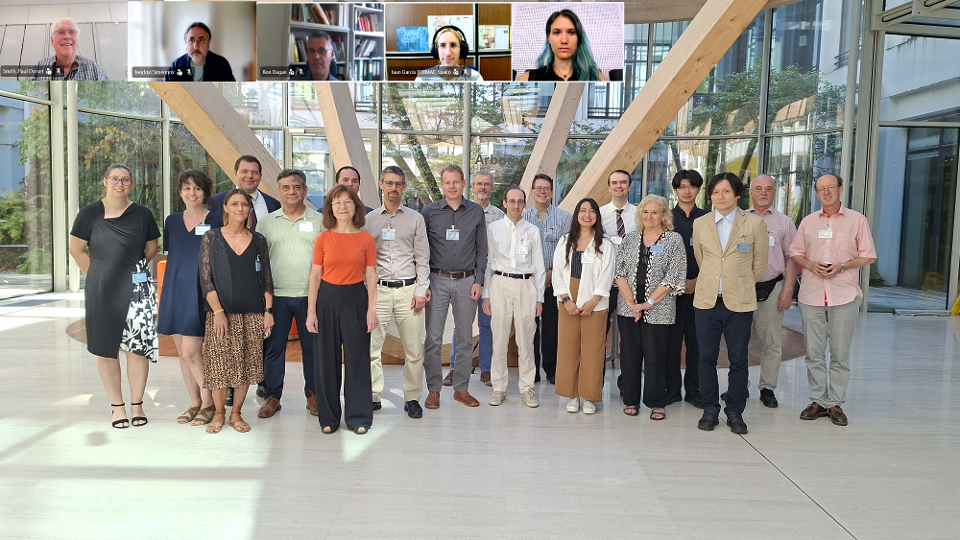
The Nuclear Energy Agency (NEA) held the ninth annual meeting of the Technical Review Group (TRG) for the International Spent Nuclear Fuel Analysis Data Database (SFCOMPO) on July 9 in Boulogne-Billancourt, France. Thirty-three experts from research institutions, regulatory bodies, waste management organizations, and industry across 12 countries attended the meeting. The experimental and evaluated data contained in SFCOMPO are primarily used to validate computational tools related to nuclear safety and the nuclear fuel cycle, with applications including reactor physics, criticality safety, radiation shielding, and radioactive waste management. Accurate characterization of spent nuclear fuel is an essential foundation for supporting decisions on storage, transportation, reprocessing, and disposal, and is also relevant to...
2026-08-01
QST completes first gyrotron 170 GHz microwave output test at ITER site
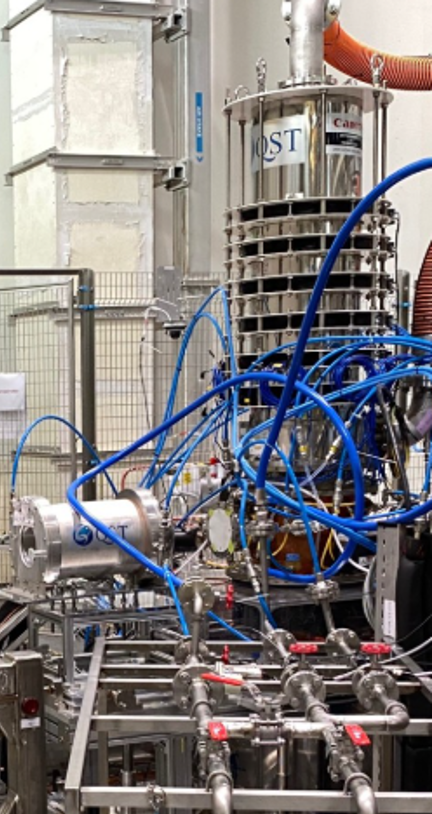
The National Institutes for Quantum Science and Technology (QST) of Japan announced on July 31 that it has completed the integration and operational testing of the first gyrotron system at the International Thermonuclear Experimental Reactor (ITER) site in southern France, successfully producing 170 GHz microwave output. This system is used for ITER plasma generation and heating, and is one of the key devices for ITER's plan to commence operations in 2034. The core equipment of this test is the gyrotron, a high-power microwave source. Gyrotron operation requires the coordinated work of peripheral equipment such as power supplies, superconducting coils, and cooling systems. QST previously completed performance testing of eight ITER gyrotron systems at the gyrotron test facility of the Naka Fusion Institute in Japan, and transported components including gyrotrons, superconducting coils, and quasi-optical matching units to the ITER site. Over the past three years, QST has advanced system installation, commissioning, and operational preparation at the site.
2026-07-31

Princeton University and PPPL Launch Collaborative Graduate Program in Plasma Science and Technology
The Princeton Plasma Physics Laboratory (PPPL), a U.S. Department of Energy (DOE) facility, and Princeton University recently launched the Collaborative Research Program in Plasma Science and Technology (CRPST). This two-year program, which began on July 1, 2026, aims to establish a more formal joint mentorship mechanism and expand opportunities for Princeton University graduate students in engineering, physics, and related disciplines to participate in research at PPPL. Under the program, selected students will be jointly mentored by a PPPL scientist and a Princeton University faculty member. Students will work at PPPL at least one day per week, participate in relevant research groups, and use laboratory facilities to advance their projects...
2026-07-30
IAEA Launches New Project to Advance Research Network on Small and Medium-Sized Fusion Devices
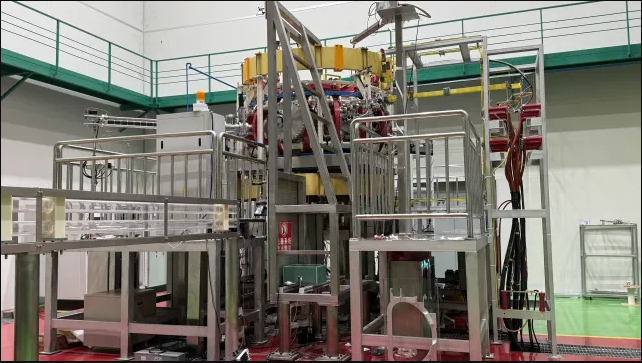
The International Atomic Energy Agency recently launched a new Coordinated Research Project, aiming to further strengthen the global network of small and medium-sized fusion devices, supporting multinational coordinated experiments, diagnostic technology development, and personnel training, providing a platform for cultivating the next generation of fusion researchers. The Tokamak TT-1 device at the Thailand Institute of Nuclear Technology (TINT) has long participated in the IAEA Coordinated Research Project on the network of small and medium-sized fusion devices, contributing to international cooperation, research, and capacity building. (Photo: JP Cayol/IAEA) This project builds upon a previous five-year collaborative research program. The previous project was named Small and Medium-Sized Magnetic Confinement...
2026-07-30
Saudi Arabia confirms signing nuclear energy cooperation agreement with the United States
The Saudi Arabian Ministry of Energy issued a statement in the early hours of July 23 (local time) announcing that Saudi Arabia has signed a cooperation agreement with the United States regarding the peaceful use of nuclear energy.The statement noted that
2026-07-23
Reading Ranking
- 1 Lightbridge Approved to Conduct Advanced Nuclear Fuel Irradiation Testing at Idaho National Laboratory
- 2 US experiment reveals diamond melting behavior under high pressure, potentially advancing inertial confinement fusion research
- 3 U.S. ZC Institute Unveils "Kardashev One" Fusion Prototype Reactor Plan to Independently Test Neutron Recovery Concept
- 4 India's Hylenr Technologies Claims Detection of Rare Earth Element Signatures in Lattice-Confined Fusion System
- 5 Princeton University and PPPL Launch Collaborative Graduate Program in Plasma Science and Technology
- 6 NEA Advances SFCOMPO Database Upgrade to Support Spent Nuclear Fuel Nuclide Inventory and Decay Heat Validation
- 7 NuCube Energy and Canadian Nuclear Laboratories Launch Microreactor R&D Collaboration
- 8 US-based Thea Energy Unveils Helios Stellarator Fusion Power Plant Design
- 9 "High-Precision Analysis Technology and Engineering Application of Multi-Physics, Multi-Scale, Strongly Coupled High-Temperature Gas-Cooled Reactor" Passes Scientific and Technological Achievement Appraisal, Reaching Internationally Leading Level
- 10 Radiation protection expert Peter Bryant to lead University of Liverpool's Chadwick Institute for Nuclear Innovation
- 11 U.S. Research Reveals Diamond Melting Mechanism at High Pressure, Potentially Enhancing Inertial Confinement Fusion Performance
- 12 Colorado State University produces first ultracold neutral plasma with electron temperature below 1 kelvin
- 13 German SIBAF Project Receives €9.7 Million to Support Fusion Materials Research
- 14 Princeton Plasma Physics Laboratory to Validate Spherical Tokamak Fusion Path with NSTX-U
- 15 Germany Establishes Three Fusion Centers, HZDR Contributes to Advancing Key Technologies for Fusion Power Plants