
NEA Advances SFCOMPO Database Upgrade to Support Spent Nuclear Fuel Nuclide Inventory and Decay Heat Validation
 Scan to share
The Nuclear Energy Agency (NEA) held the ninth annual meeting of the Technical Review Group (TRG) for the International Spent Nuclear Fuel Analysis Data Database (SFCOMPO) on July 9 in Boulogne-Billancourt, France. Thirty-three experts from research institutions, regulatory bodies, waste management organizations, and industry across 12 countries attended the meeting.
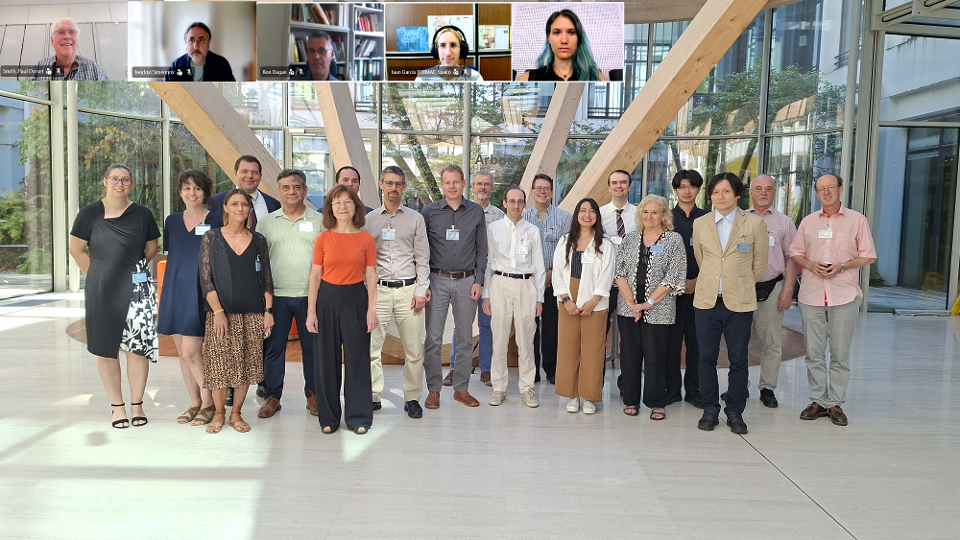
The experimental and evaluated data contained in SFCOMPO are primarily used to validate computational tools related to nuclear safety and the nuclear fuel cycle, with applications including reactor physics, criticality safety, radiation shielding, and radioactive waste management. Accurate characterization of spent nuclear fuel is an essential foundation for supporting decisions on storage, transportation, reprocessing, and disposal, and is also relevant to the development of corresponding safety, security, and safeguards measures.
The meeting reviewed progress on existing and newly added spent fuel analysis data evaluation efforts and discussed the application of these data in spent fuel characterization validation, burnup model validation, and criticality safety analysis. Experts presented the results of the destructive analysis experimental project on Forsmark Unit 3 boiling water reactor fuel, which was supported by the Spanish Nuclear Safety Council (Consejo de Seguridad Nuclear, CSN), Enusa Industrias Avanzadas, and the Spanish National Radioactive Waste Company (Empresa Nacional de Residuos Radiactivos, ENRESA).
The meeting also reported on the latest progress in the evaluation of the BM3 and BM5 datasets from the original ARIANE international experimental program. The Technical Review Group also welcomed the submission of new SFCOMPO experimental data and associated evaluation results from Belgium. These data are related to the international Rod End and Gadolinia Analysis (REGAL) experimental program led by the Belgian Nuclear Research Centre (SCK CEN), which aims to generate high-quality analytical data for validating high-burnup uranium dioxide fuel and low-burnup uranium dioxide–gadolinium oxide fuel in pressurized water reactors.
The Technical Review Group also endorsed the recently released results related to "SFCOMPO—Fukushima Daiichi Nuclear Power Station Unit 1 Sample Evaluation—Assemblies 2F1ZN2 and 2F1ZN3 (9×9-9 Type)".
The meeting focused on SFCOMPO modernization efforts, including the migration of the database and associated collaborative processes to the NEA GitLab platform and the development of a new SFCOMPO 3.0 data structure. Experts agreed that adopting version control, transparent management, and collaborative workflows would help improve the traceability of data maintenance and evaluation efforts. The meeting also discussed future application programming interface (API) requirements, data access rules, and quality metrics for submitted simulation input files.
The Technical Review Group agreed to resume research related to decay heat data, explore linkages with other relevant NEA activities, and continue to expand the coverage and long-term application value of the SFCOMPO database.
Disclaimer: Information republished from partner media, institutions or other websites is provided for reference and communication purposes only. It does not imply endorsement of its views or verification of its accuracy. Please contact us if any content infringes rights or requires correction.