
Daejeon, South Korea Ranks Second Nationwide in Low- and Intermediate-Level Radioactive Waste Storage, Spent Fuel Transfer Plan Still Not Implemented
 Scan to share
According to data released on September 12 by South Korea's Integrated Radioactive Waste Safety Management Information System, two nuclear-related facilities in Daejeon——the Korea Atomic Energy Research Institute and Korea Hydro & Nuclear Power's Nuclear Fuel Company——currently store a total of 29,587 drums of low- and intermediate-level radioactive waste, with each drum having a capacity of 200 liters. This storage volume ranks second in South Korea, surpassed only by the Gori Nuclear Power Plant's 40,087 drums.
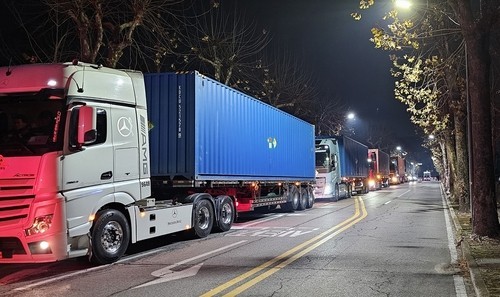
Transportation of Low- and Intermediate-Level Radioactive Waste Provided by Daejeon
The low- and intermediate-level radioactive waste stored by the Korea Atomic Energy Research Institute mainly comes from the operation of the “Hanaro” research reactor, as well as waste generated during the decommissioning of an experimental reactor in Seoul in the mid-2000s. The scale of waste storage at nuclear-related facilities in Daejeon exceeds that of most nuclear power plants. During South Korea's National Assembly audit in 2016, it was pointed out that Daejeon is the country's second-largest radioactive waste storage site and was consequently criticized as a “hidden radioactive waste disposal facility.”
The radioactivity level of low- and intermediate-level radioactive waste is lower than that of high-level radioactive waste, but in the event of a leak, it can still affect human health and the environment. Unlike most radioactive waste storage sites, which are located at nuclear power plant sites far from densely populated areas, Daejeon is a city with a population of approximately 1.44 million, and the safety issues of its nuclear facilities continue to draw local attention.
In addition to low- and intermediate-level radioactive waste, the Korea Atomic Energy Research Institute has also long stored spent nuclear fuel. From April 1987 to August 2013, the Korea Atomic Energy Research Institute received 1,699 spent fuel assemblies, totaling approximately 3.32 tons, from the Gori Nuclear Power Plant, Hanbit Nuclear Power Plant, and Hanul Nuclear Power Plant in 21 batches in order to analyze the causes of spent fuel defects and verify their performance.
In accordance with the principle of returning spent fuel to the nuclear power plants that originally received it, the Korea Atomic Energy Research Institute and Daejeon-area politicians formulated a phased transfer plan in 2017, but the relevant procedures have made no substantive progress for many years. An official from the Korea Atomic Energy Research Institute stated that because consultations with Korea Hydro & Nuclear Power (KHNP) on the spent fuel transport procedures and transport cask materials have not yet been completed, it is still impossible to formulate a specific transport plan.
Regions with nuclear power plants, such as Busan, hold the view that ownership of the relevant spent fuel has already been transferred to the Korea Atomic Energy Research Institute and therefore cannot be returned to the original nuclear power plants. This position makes it even more difficult to initiate the actual transfer procedures.
This year's plan to ship out low- and intermediate-level radioactive waste may also be affected. Since 2015, the Korea Atomic Energy Research Institute has transported approximately 800 drums of such waste annually to the low- and intermediate-level radioactive waste disposal facility in Gyeongju, North Gyeongsang Province. However, of the 694 drums of radioactive waste transported by the institute to the Gyeongju disposal facility last year, spot checks found that 32 of 69 drums were deemed non-compliant due to discrepancies between documents and contents, and the related disposal work has not yet been completed.
According to the original plan, all low- and intermediate-level radioactive waste stored in Daejeon should be transferred to the Gyeongju radioactive waste disposal facility by 2035. However, based on current progress, this target faces significant uncertainty.
The Daejeon City Council is pushing to establish a “Special Committee on Nuclear Safety” to inspect the safety management status of local nuclear facilities and formulate nuclear safety response measures. Council member Koo Bon-hwan, who proposed the relevant resolution, stated that nuclear facilities in Daejeon have experienced incidents such as fires and radioactive material leaks, and the purpose of establishing the special committee is to alleviate public concerns and promote the resolution of related issues.
Disclaimer: Information republished from partner media, institutions or other websites is provided for reference and communication purposes only. It does not imply endorsement of its views or verification of its accuracy. Please contact us if any content infringes rights or requires correction.