
Europe and Central Asia Strengthen Regional Cooperation on Radioactive Waste Management
 Scan to share
The International Atomic Energy Agency (IAEA) recently stated that over the past two years it has trained more than 200 experts in Europe and Central Asia, supporting relevant countries in enhancing their safe radioactive waste management capabilities and developing long-term management strategies tailored to their national circumstances.
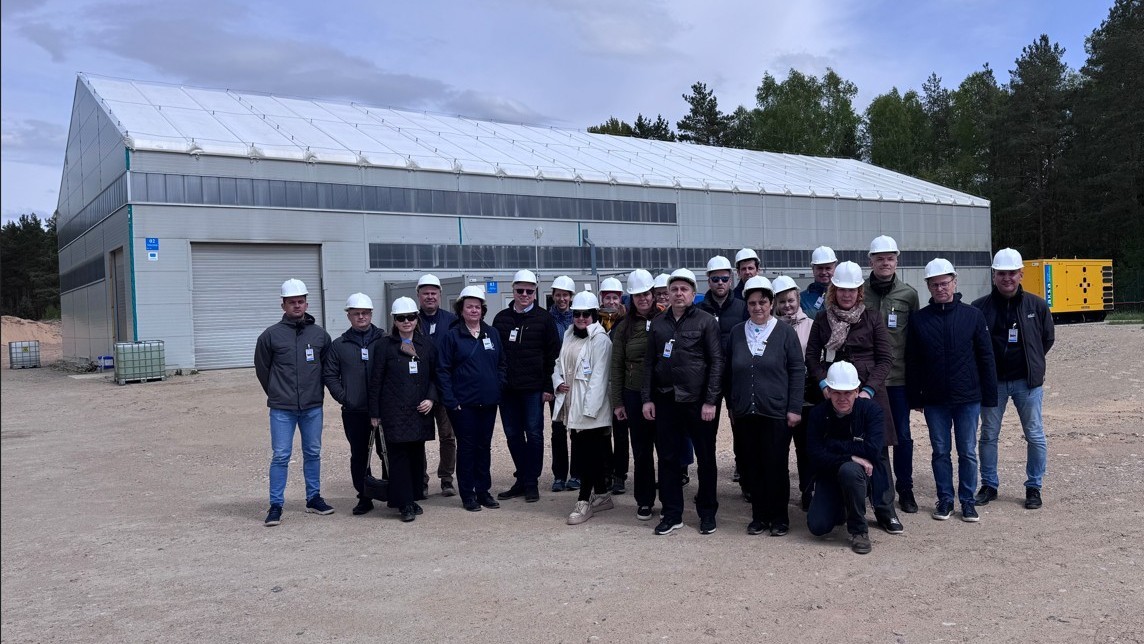
IAEA representatives visited storage and disposal facilities in Lithuania to observe successful radioactive waste management practices firsthand. (F. Dragolici/IAEA)
Radioactive waste originates from the application of nuclear technology in energy, medicine, industry, research, and other fields. Under safety management requirements, countries are responsible for the full lifecycle of radioactive waste, covering generation, characterization, treatment, conditioning, storage, and final disposal in licensed disposal facilities.
Under the relevant regional cooperation projects, representatives from multiple countries participated in hands-on training, technical seminars, and site visits, traveling to various locations across Europe to learn about radioactive waste management, decommissioning of aging facilities, and legacy waste disposal practices. Several European countries still face common challenges such as legacy waste, aging storage facilities, and insufficient disposal capacity, making cross-border experience exchange highly relevant.
Lithuania's Maišiagala radioactive waste storage facility, originally a RADON-type facility, was fully decommissioned in 2026, and the radioactive waste on site has also been removed. The IAEA funded regional experts to conduct on-site exchanges at the Maišiagala site and the Ignalina Nuclear Power Plant, covering practices in waste retrieval, characterization, sorting, packaging, and transfer. Lithuanian experts also shared technical experience from the decommissioning process, providing a reference for other countries with similar aging storage facilities.
The Republic of Moldova is advancing similar efforts. The IAEA has supported the country in infrastructure development, personnel training, and technical document preparation, with the goal of facilitating the retrieval, characterization, sorting, packaging, and safe storage of legacy radioactive waste in its RADON-type facility. Relevant officials in Moldova stated that the Lithuanian case provides direct experience for the country's preparation of legacy waste retrieval activities, helping to organize subsequent operations in line with international good practices.
Georgia, meanwhile, has gradually transitioned from a recipient country to a regional technical support provider. In recent years, with IAEA support, Georgia has established a relatively complete radioactive waste management infrastructure and accumulated experience in managing disused sealed radioactive sources. From 2024 to 2026, Georgia hosted scientific visitors from Azerbaijan, Romania, Serbia, and Tajikistan, with a focus on exchanging knowledge on disused sealed radioactive source management. In 2025, Georgian experts also traveled to Serbia to provide support for cold testing and hot testing related to the licensing of a local radioactive waste treatment facility.
In addition to technical training, the IAEA has also promoted the formation of a regional network of radioactive waste management experts. Experts from Lithuania, the Republic of Moldova, Ukraine, and other countries have maintained contact after seminars, scientific visits, and expert missions, continuing to exchange experience on legacy radioactive waste and aging storage facility management.
Networks led by the IAEA, such as LABONET and DISPONET, also provide platforms for experts from various countries to conduct ongoing knowledge exchange and technical support, assisting member states in advancing radioactive waste characterization and disposal in line with international safety standards. The IAEA stated that safe radioactive waste management typically requires sustained investment over several decades, and regional peer learning and hands-on training help countries build long-term capacity and lay the foundation for future management strategies.
Disclaimer: Information republished from partner media, institutions or other websites is provided for reference and communication purposes only. It does not imply endorsement of its views or verification of its accuracy. Please contact us if any content infringes rights or requires correction.