
Swiss Nuclear Decommissioning and Waste Disposal Funds Both Show Surpluses
 Scan to share
As of the end of 2025, the combined assets of Switzerland's nuclear facility decommissioning fund and nuclear power plant waste disposal fund approached CHF 10 billion, equivalent to approximately EUR 10.6 billion and USD 12.3 billion, up from CHF 9.65 billion at the end of 2024 and exceeding the established funding targets.
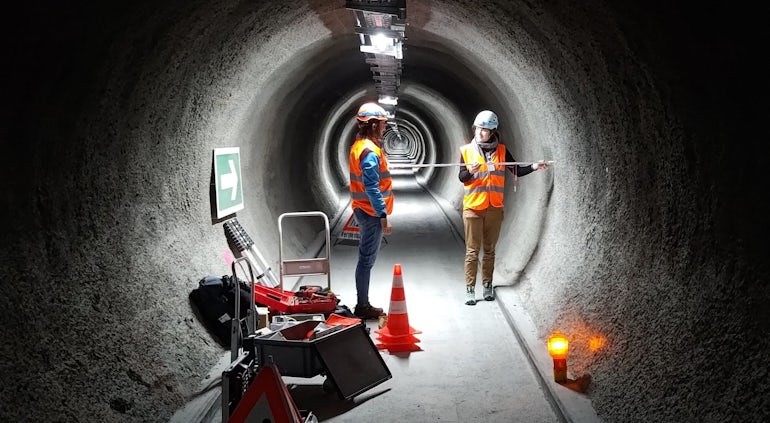
According to Swissnuclear, the decommissioning fund stood at approximately CHF 3.03 billion, up from CHF 2.98 billion in 2024, while the waste disposal fund reached approximately CHF 6.96 billion, up from CHF 6.66 billion in 2024. Based on target calculations, the decommissioning fund target is CHF 2.76 billion and the waste disposal fund target is CHF 5.9 billion, with the two funds exceeding their targets by approximately 9.8% and 17.9% respectively.
The relevant data comes from the 2025 annual report published by the Management Body for Nuclear Facility Decommissioning and Nuclear Power Plant Disposal Funds (Stenfo). This independent administrative organization is responsible for ensuring financial coverage for the safe decommissioning of nuclear power plants and radioactive waste disposal, and manages the two aforementioned funds. The decommissioning fund is primarily used for the dismantling of shut-down nuclear facilities, while the waste disposal fund is used for spent fuel and radioactive waste management.
Switzerland applies the "user pays" principle, requiring owners and operators of Swiss nuclear facilities to bear all costs associated with facility dismantling and waste management through mandatory annual contributions. Cost studies are updated every five years to recalculate contribution levels and long-term financial provisions.
Swissnuclear stated that over the long term, the performance of both funds is in line with expectations, demonstrating that nuclear power plant operators are fulfilling their financial responsibilities for decommissioning and waste disposal in accordance with the "polluter pays" principle.
Although Switzerland has a long history of nuclear power operation, a 2017 referendum decided that no new nuclear power plants would be permitted. This policy stems from a long-term adjustment process initiated following the 2011 Fukushima Daiichi nuclear accident in Japan. However, Switzerland's existing nuclear units have no definitive shutdown schedule and may continue operating as long as they meet statutory safety requirements. Swiss nuclear operators have indicated that, for reasons of electricity supply security, they are studying the possibility of operating nuclear power plants longer than previously anticipated.
The four nuclear units currently in operation in Switzerland are Beznau Units 1 and 2, Gösgen Nuclear Power Plant, and Leibstadt Nuclear Power Plant, which together account for approximately 27% of national electricity generation. The Swiss Parliament has formally approved plans to permit the construction of new nuclear power plants, and the issue is expected to be decided through a national referendum.
In the area of radioactive waste disposal, the National Cooperative for the Disposal of Radioactive Waste (Nagra) formally submitted a general licence application for a deep geological repository and a fuel assembly encapsulation facility to the Swiss Federal Office of Energy in 2024. Nagra previously proposed constructing the repository in the Nördlich Lägern region of Zurich Canton and operating the fuel assembly encapsulation facility at the existing central interim storage facility in Würenlingen, Aargau Canton.
Disclaimer: Information republished from partner media, institutions or other websites is provided for reference and communication purposes only. It does not imply endorsement of its views or verification of its accuracy. Please contact us if any content infringes rights or requires correction.