
Japan nuclear waste, geological disposal, literature survey, Hitachiomiya City
 Scan to share
Japan's Ministry of Economy, Trade and Industry (METI) is in the final stages of coordination regarding the site selection process for the final disposal of high-level radioactive waste, with plans to request Hitachiomiya City in Ibaraki Prefecture to conduct a "literature survey." The literature survey is the first phase of Japan's screening process for selecting a final disposal site for high-level radioactive waste generated from nuclear power generation. It primarily relies on existing literature and materials to assess whether candidate areas have safety concerns such as volcanoes and active faults.
Hitachiomiya City is located in the northwestern part of Ibaraki Prefecture, bordering Tochigi Prefecture, with a population of slightly over 35,000. The city does not face the sea, with the Kuji River and Naka River flowing through its territory. Forests account for approximately 60% of the city's total area, and agriculture and manufacturing are the main industries. In recent years, the city has been promoting tourism and emerging industries leveraging the natural environment, while simultaneously facing challenges such as population decline, aging, and fiscal pressure.
In the "Scientific Characteristics Map" published by the Japanese government in 2017, the entire area of Hitachiomiya City was indicated as a region "relatively likely to show favorable characteristics," with parts of the southeastern area also considered to have convenient transportation access. The map uses different colors to indicate the potential suitability of various locations nationwide as survey targets, serving to promote discussions on final disposal site selection.
In Japan, literature surveys have already been initiated or implemented in Suttsu Town and Kamoenai Village in Hokkaido, Genkai Town in Saga Prefecture, and Ogasawara Village in Tokyo. If Hitachiomiya City accepts the request, it will become the second local government to receive a survey request proactively initiated by the central government, following Ogasawara Village. Under the institutional framework, local governments that accept literature surveys are eligible for subsidies of up to 2 billion yen.
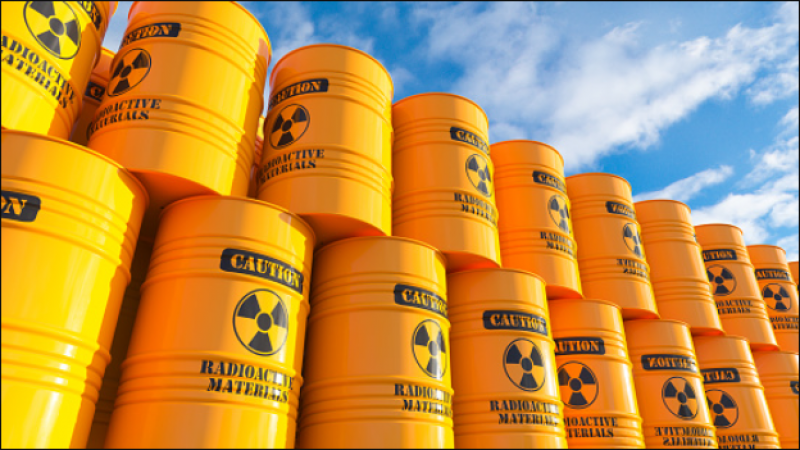
Japan's high-level radioactive waste primarily originates from the reprocessing of spent nuclear fuel. After spent fuel from nuclear power plants undergoes reprocessing to extract plutonium and other materials, high-level liquid waste is generated. This liquid waste is mixed with molten glass and solidified in stainless steel containers to form "vitrified waste." Glass material is used to immobilize radioactive waste because of its low solubility in water and its ability to stably contain a wide range of substances.
Vitrified waste has a high temperature immediately after production, and the radiation levels near its surface are extremely strong. It must first be stored temporarily in dedicated facilities until heat generation and radiation levels decrease before final disposal. As of March last year, approximately 2,500 vitrified waste packages were being stored in the reprocessing facility of Japan Nuclear Fuel Limited (JNFL) in Aomori Prefecture and the reprocessing facility of the Japan Atomic Energy Agency (JAEA) in Ibaraki Prefecture.
Japan plans to use the "geological disposal" method to manage this type of waste, which involves placing it in deep, stable rock formations underground. According to Japan's "Final Disposal Act," which took effect in 2000, disposal facilities must be constructed at a depth of more than 300 meters underground, and through engineered barriers and geological barriers, the waste must be isolated from the human living environment over the long term. The final disposal site selection process requires three phases: literature survey, preliminary survey, and detailed survey, with the entire process expected to take approximately 20 years.
Among these, the literature survey takes approximately two years; the preliminary survey takes approximately four years, during which drilling and other methods are used to understand geological and groundwater conditions; and the detailed survey takes approximately 14 years, including the construction of underground facilities to confirm whether rock mass and groundwater conditions are suitable for a disposal site. The relevant surveys and disposal work are implemented by the Nuclear Waste Management Organization of Japan (NUMO). Before proceeding to the preliminary survey and detailed survey phases, in addition to the consent of the head of the target municipality, the consent of the governor of the relevant prefecture is also required.
Previously, Suttsu Town and Kamoenai Village in Hokkaido initiated literature surveys in 2020. The related reports analyzed more than 1,800 documents on volcanoes, active faults, and other topics, concluding that the entire area of Suttsu Town and parts of Kamoenai Village could be considered candidate areas for proceeding to the next phase of preliminary surveys. Genkai Town in Saga Prefecture initiated a literature survey in June of the year before last, becoming the first municipality with a nuclear power plant to accept such a survey. Since May this year, Minami-Torishima Island, under the jurisdiction of Ogasawara Village in Tokyo, has also become a target of the literature survey.
Some local governments that have already accepted surveys have pointed out that the final disposal site selection should not be concentrated in only a few regions, and that broader discussions should be held nationwide. In its recent nuclear energy policy guidelines, the Japanese government also stated that it will continue to expand the scope of survey targets and strive to select suitable sites from a greater number of potential locations. How Hitachiomiya City responds to METI's request will be key to the next step in advancing Japan's high-level radioactive waste final disposal efforts.
Disclaimer: Information republished from partner media, institutions or other websites is provided for reference and communication purposes only. It does not imply endorsement of its views or verification of its accuracy. Please contact us if any content infringes rights or requires correction.