
Belarusian Radioactive Waste Disposal Facility Site Selection May Be Determined by Year-End
 Scan to share
Belarusian Energy Minister Denis Moroz recently stated that the site selection for Belarus's radioactive waste disposal facility is expected to be determined by the end of this year. The relevant announcement was made during events marking the 25th anniversary of the Belarusian Ministry of Energy.
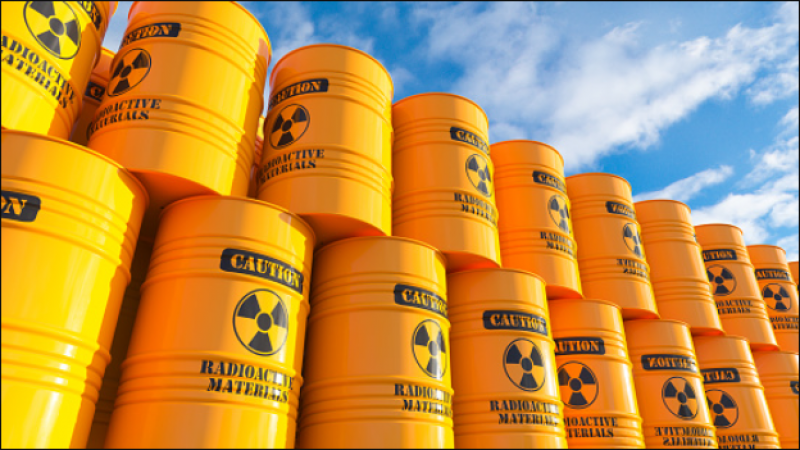
Moroz noted that Belarus began studying radioactive waste management issues before the final commissioning of its nuclear power plant. Following feasibility studies, Belarus decided to construct a radioactive waste disposal facility and established a dedicated Belarusian radioactive waste management organization to oversee the relevant work. Preliminary work on the disposal facility is currently underway. Moroz stated that radiation safety is of paramount importance to Belarus, and International Atomic Energy Agency (IAEA) documents have already stipulated procedures for disposal facility construction, which Belarus will follow accordingly.
Currently, site selection for the disposal facility is the key focus of project advancement. Belarus is evaluating three candidate sites, located in the Khoiniki district of Gomel region, the Ostrovets district of Grodno region, and the Mstsislaw district of Mogilev region.
Moroz stated that a radioactive waste disposal facility is a special-purpose installation with specific requirements for geological, hydrological, and other conditions. Belarus previously conducted a systematic analysis of potential areas nationwide, initially screening approximately 20 candidate sites. An expert group then identified three of the most promising locations, and environmental impact assessments are being conducted for these three sites. The relevant work has entered the pre-project preparation phase, with facility construction plans also being further refined.
According to the plan, the environmental impact assessment will be followed by a public discussion phase. Moroz stated that the discussion is expected to conclude in September, and a final decision on the disposal facility site will be made by the end of the year. The decision will integrate multiple criteria and numerous factors, and will be reached through a collective decision-making process.
According to the introduction, the proposed disposal facility will occupy an area of no more than 100 hectares. Moroz also explained the radioactive waste disposal method: waste will be placed in specially made concrete containers and converted into a stable, solid form through cement solidification, vitrification, or other methods to reduce the impact of water and other external factors. The containers holding the waste will be placed in dedicated compartments, which will be backfilled with inert materials, primarily sandy materials, and then sealed once full.
Moroz stated that the proposed disposal facility in Belarus will not include a waste retrieval plan. After disposal is completed, the waste will remain in place for long-term storage, with no human intervention expected to be required for the next 600 to 700 years.
Disclaimer: Information republished from partner media, institutions or other websites is provided for reference and communication purposes only. It does not imply endorsement of its views or verification of its accuracy. Please contact us if any content infringes rights or requires correction.