
Japan Requests Hitachiomiya City in Ibaraki Prefecture to Conduct Literature Survey for High-Level Radioactive Waste Disposal Site
 Scan to share
Japan's Ministry of Economy, Trade and Industry (METI) on August 31 requested Hitachiomiya City in Ibaraki Prefecture to conduct a literature survey, as the first step in siting a final disposal facility for high-level radioactive waste generated from nuclear power plant operations. If Hitachiomiya City agrees, it will become the fifth municipality in Japan to accept such a literature survey, and the second time the Japanese government has proactively requested a survey from a local government, following Minamitorishima in Ogasawara Village, Tokyo.
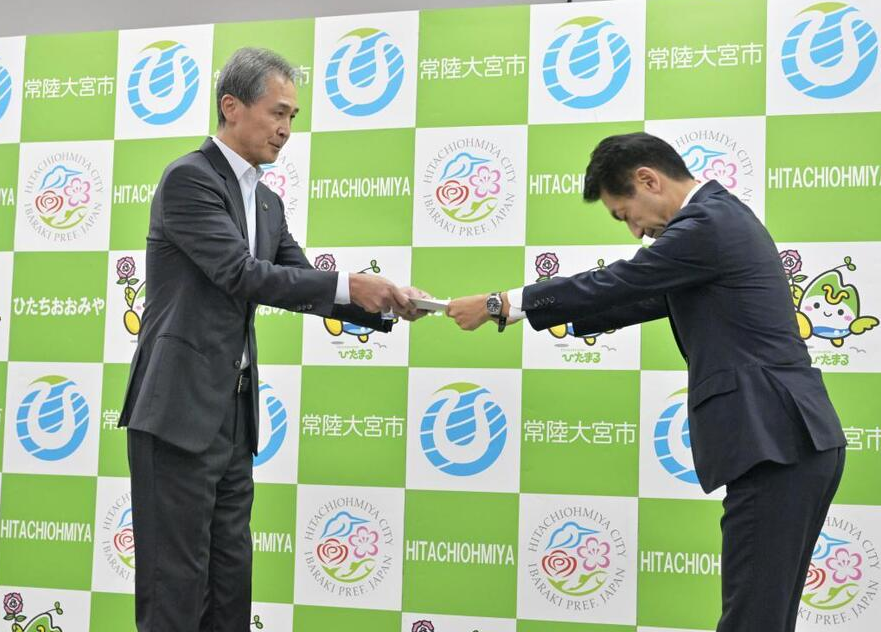
On the same day, Takashi Kume, Vice Commissioner of Japan's Agency for Natural Resources and Energy, visited the Hitachiomiya City government and submitted the survey request to Mayor Sadanori Suzuki. Suzuki stated that he personally takes a positive stance toward accepting the literature survey, and noted that the city faces issues such as rapid population decline and a weak local economy, adding that if the area has favorable geological conditions, participation in the national geological disposal policy would be of "significant importance." He said he would make a decision after hearing the views of the city assembly, with the matter possibly being discussed at the regular assembly meeting as early as September.
According to the "Scientific Characteristics Map" published by the Japanese government in 2017, the area around Hitachiomiya City has no volcanoes or active faults and was assessed as a region with a "relatively high possibility of confirming favorable characteristics." METI also noted that unused land suitable for related surface facilities exists in the city. Previously, some local residents had submitted requests to the Nuclear Waste Management Organization of Japan (NUMO) to conduct a literature survey, which is one of the backgrounds behind the government's approach this time.
Japan's high-level radioactive waste primarily originates from liquid waste generated during nuclear fuel reprocessing, which is vitrified into glass solidified forms. Due to the intense radiation released over long periods, Japan plans to employ geological disposal, placing the waste in metal containers wrapped with buffer materials such as clay, and ultimately burying it in stable bedrock at depths exceeding 300 meters, isolating it from the human living environment for the long term.
The siting process for Japan's final disposal facility is divided into three stages: literature survey, preliminary survey, and detailed survey, with the entire process expected to take approximately 20 years. The literature survey typically lasts about two years and primarily confirms geological conditions such as active faults and volcanic activity based on publicly available data; the preliminary survey includes drilling and other work, requiring about four years; and the detailed survey involves assessments for underground facility construction, requiring approximately 14 years. The Japanese government emphasizes that a literature survey does not equate to a decision to construct a disposal facility, and no radioactive waste will be transported to the site during the survey period. Municipalities accepting the literature survey can receive up to 2 billion yen in subsidies.
Currently, Japan has already conducted literature surveys in Suttsu Town and Kamoenai Village in Hokkaido, and Genkai Town in Saga Prefecture, while Ogasawara Village in Tokyo has also agreed to a literature survey for Minamitorishima. The results of the literature surveys in Suttsu Town and Kamoenai Village were published in 2024, with some areas designated as candidate sites for preliminary surveys. However, since advancing to the next stage requires consent from the local mayor and prefectural governor, no municipality in Japan has yet launched a preliminary survey.
Minister of Economy, Trade and Industry Ryosei Akazawa stated that siting the final disposal facility is a long-term challenge Japan must address, and the government will provide explanations to residents of relevant areas, including Hitachiomiya City, and continue advancing discussions. Ibaraki Prefectural Governor Kazuhiko Oigawa stated that Hitachiomiya City is still studying how to respond to the government's request, and the prefectural government will monitor the city's subsequent decision.
Disclaimer: Information republished from partner media, institutions or other websites is provided for reference and communication purposes only. It does not imply endorsement of its views or verification of its accuracy. Please contact us if any content infringes rights or requires correction.