
Japan Plans to Introduce Physical AI into Fukushima Daiichi Nuclear Power Station Decommissioning
 Scan to share
The Japanese government and Tokyo Electric Power Company (TEPCO) are preparing to introduce Physical AI technology into the decommissioning operations at the Fukushima Daiichi Nuclear Power Station to enhance the autonomous operational capabilities of robots in high-radiation environments. This technology enables artificial intelligence to autonomously control robots based on on-site conditions, performing tasks such as inspection, data collection, and cleanup.
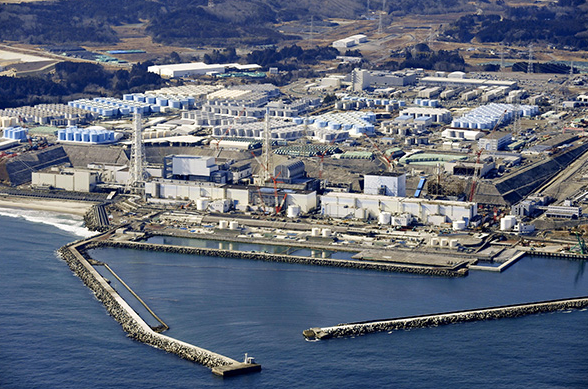
To advance this effort, an advisory organization involving the government, businesses, universities, and research institutions is planned to be established within the year, with discussions centered on technology development, equipment application, and on-site verification. The organization is expected to be led by relevant government ministries and TEPCO, and will include AI startups, robot manufacturers, and university researchers.
In the decommissioning process at the Fukushima Daiichi Nuclear Power Station, the removal of debris remaining inside Units 1 through 3 is regarded as one of the most challenging tasks. TEPCO plans to complete the debris cleanup for Unit 3 by 2037. Before the cleanup equipment is put into operation, detailed inspections of the reactor and building interiors are still required, along with the removal of obstacles hindering the work.
Due to the high radiation levels in the relevant areas, personnel cannot directly enter the site to perform work. Japan is therefore considering the use of Physical AI-equipped devices with autonomous judgment and action capabilities to replace human workers in high-risk areas.
The equipment planned for deployment on-site includes reconnaissance drones for interior building searches, detection robots for collecting radiation and image data, and robotic arms capable of cutting and retrieving components such as pipes in high-radiation areas. Japan's Ministry of Economy, Trade and Industry (METI) plans to allocate approximately 400 billion yen to support related research, development, and demonstration projects.
Disclaimer: Information republished from partner media, institutions or other websites is provided for reference and communication purposes only. It does not imply endorsement of its views or verification of its accuracy. Please contact us if any content infringes rights or requires correction.