
Hitachiota City, Ibaraki Prefecture, Japan to Reconsider Literature Survey for Final Disposal Site of High-Level Radioactive Waste
 Scan to share
The Hitachiota City Council in Ibaraki Prefecture, Japan, held a closed-door meeting on September 9 to hear council members' opinions on the Ministry of Economy, Trade and Industry's request for the city to conduct a literature survey for selecting a final disposal site for high-level radioactive waste. After the meeting, sources said that two council members expressed support and two expressed opposition, and the city council failed to reach a consensus, deciding to hold another meeting on September 16 for discussion.
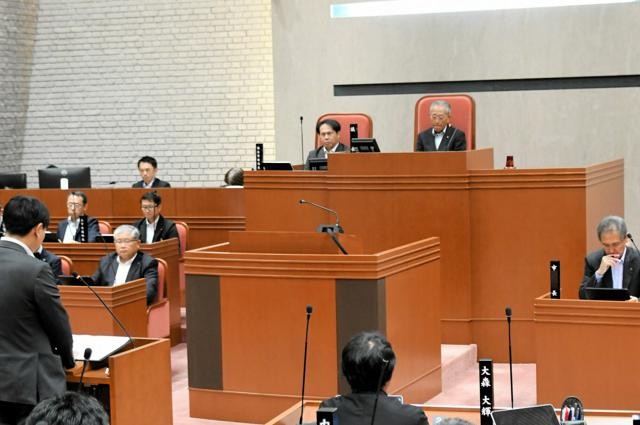
The closed-door meeting was initiated by Hitachiota Mayor Sadayuki Suzuki, with the aim of providing reference for the city government to judge whether to accept the literature survey. The Ministry of Economy, Trade and Industry made the request to the city on August 31. Suzuki previously said he would “actively consider” conducting the literature survey and hoped to make a decision as soon as possible before the city council's regular session ends on the 18th of this month.
The literature survey is the first stage of Japan's process for selecting a final disposal site for high-level radioactive waste. It mainly involves reviewing relevant literature and materials over about two years to confirm whether there are geological or other unsuitable factors in the candidate area. Local governments that accept the literature survey can receive grants of up to 2 billion yen. If Hitachiota agrees to implement it, it will become the fifth local municipality in Japan to enter the literature survey, after Suttsu Town and Kamoenai Village in Hokkaido, Genkai Town in Saga Prefecture, and Ogasawara Village in Tokyo.
At a public question-and-answer session held by the city council on September 8, three council members had already expressed their support and opposition respectively. Independent council member Yuya Mako believed that high-level radioactive waste disposal is “a problem for society and the country that benefits from nuclear power,” and said that the literature survey itself does not involve radioactive materials and in principle would not cause reputational damage. Independent council member Toshiyuki Kurata was concerned that the survey could affect urban policy and the development of local specialty products, hindering regional development. Council member Sadao Komuro also opposed the government's push for the survey and demanded that the city government reject the request.
On September 4, Hitachiota held a seminar for city council members, at which representatives from the Ministry of Economy, Trade and Industry and the Nuclear Waste Management Organization of Japan (NUMO), which is responsible for the final disposal project, introduced an overview of the literature survey. Nobuo Akiyama, chairman of the Hitachiota City Council, said that among the council members there were both supporters and opponents, but all believed that citizens' opinions should be fully heard and the relevant situation should be explained to citizens.
Disclaimer: Information republished from partner media, institutions or other websites is provided for reference and communication purposes only. It does not imply endorsement of its views or verification of its accuracy. Please contact us if any content infringes rights or requires correction.