
Hitachiota City, Ibaraki Prefecture, Japan to Reconsider Literature Survey for Final Disposal Site of High-Level Radioactive Waste
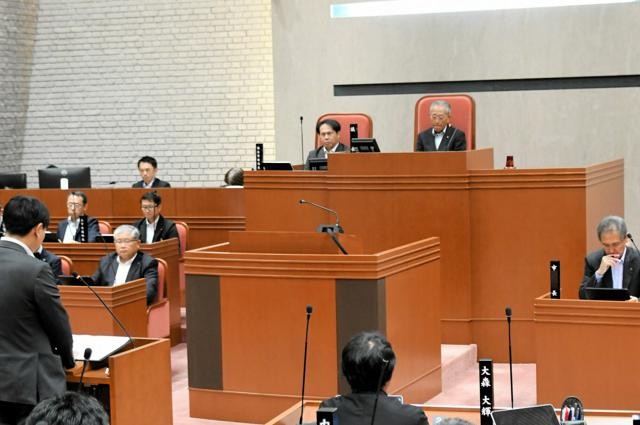
The Hitachiota City Council in Ibaraki Prefecture, Japan, held a closed-door meeting on September 9 to hear council members' opinions on the Ministry of Economy, Trade and Industry's request for the city to conduct a literature survey for selecting a final disposal site for high-level radioactive waste. After the meeting, sources said that two council members expressed support and two expressed opposition, and the city council failed to reach a consensus, deciding to hold another meeting on September 16 for discussion. The closed-door meeting was initiated by Hitachiota Mayor Sadayuki Suzuki, with the aim of providing reference for the city government to judge whether to accept the literature survey. The Ministry of Economy, Trade and Industry made the request to the city on August 31. Suzuki previously said he would "actively consider" conducting the literature survey and hoped...
2026-09-10
GAO: DOE Nuclear Cleanup "End-State Contract Model" Exceeds Budget by $500 Million in Six Years and Misses Goals
A report released by the U.S. Government Accountability Office (GAO) on July 29 shows that the Office of Environmental Management (EM) at the U.S. Department of Energy has accumulated over $500 million in cost growth on nuclear waste cleanup contracts since 2020, yet the agency cannot fully explain the reasons for these increases. EM is responsible for cleaning up 15 sites in the United States contaminated by nuclear weapons production and energy research. To address long-standing contract management problems, EM adopted the End-State Contract Model (ESCM) starting in fiscal year 2020, breaking cleanup work into smaller task orders under larger master contracts, with the goal of improving cost predictability, accelerating cleanup progress, and enhancing performance outcomes...
2026-08-12
Paraguay's Nuclear Power Generation Debate Heats Up: Regulator Supports Private Sector Participation
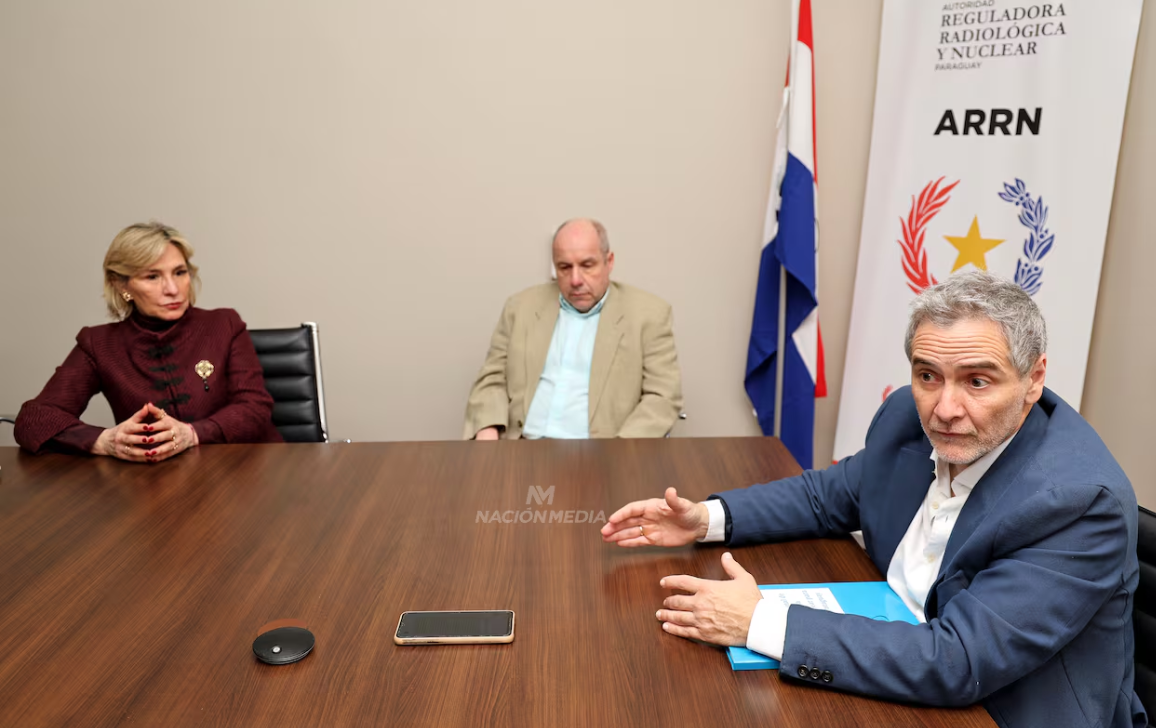
Paraguay's Radiation and Nuclear Regulatory Authority (ARRN) has welcomed the open attitude shown by the National Electricity Administration (ANDE), stating that allowing or encouraging private sector participation in nuclear power generation projects would bring new discussion space to the country's energy mix. This stance indicates that nuclear energy is no longer just a long-term technical vision but has begun to enter the public agenda of policy, investment, and regulatory coordination. Paraguay has long relied on hydropower resources, with major projects such as Itaipu and Yacyretá giving it an advantage in clean electricity. However, with domestic industrialization, growing electricity consumption, and changes in the regional energy market, sole reliance on hydropower also faces pressures from seasonality, hydrological conditions, and long-term demand...
2026-08-10
Canadian laboratory validates molten salt separation process with real spent fuel, extracting nearly 90% of plutonium in 24 hours
A chemical experiment in Canada involving real commercial reactor spent fuel has achieved noteworthy progress. Canadian Nuclear Laboratories, in shielded hot cells at Chalk River, used irradiated spent fuel from CANDU reactors to validate the first phase of Moltex Energy's waste-to-stable-salt process. The experiment showed that within 24 hours, 89.4% of the plutonium was transferred into the molten salt; by 60 hours, this proportion rose to 94.3%. Meanwhile, the vast majority of uranium remained outside the salt phase, indicating that the process exhibits strong selectivity in separating target elements. This process, named WATSS, is not a plutonium purification route but rather a group separation technology. In addition to large quantities of uranium, spent fuel contains fission products as well as transuranic elements such as plutonium and americium, the latter being a significant source of long-term radiological risk. WATSS uses high-temperature chloride molten salt and specific reducing metals to convert transuranic oxides into salt-soluble forms, while most uranium oxides remain solid. In this experiment, researchers used niobium as the reducing metal; after 24 hours, only 0.05% of uranium entered the salt, dropping to 0.02% after 60 hours, demonstrating that it does not carry large amounts of uranium into the molten salt system.
2026-08-09
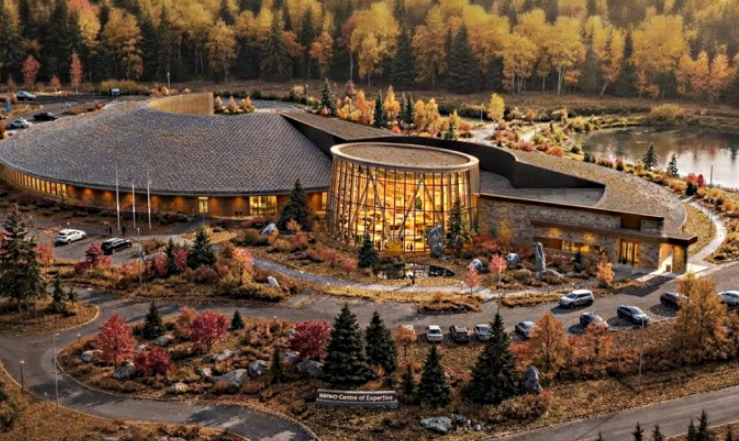
Canadian Nuclear Waste Management Organization Publishes Final Design for Centre of Expertise in Ontario
The Nuclear Waste Management Organization (NWMO) has published the final design for its Centre of Expertise, to be located in the Township of Ignace, Ontario. Ignace is one of the host communities for Canada's deep geological repository project for used nuclear fuel. With an investment of approximately CAD 50 million and expected to open in 2028, the centre is positioned as a key platform supporting the construction and long-term operation of the repository. According to the NWMO, the Centre of Expertise design incorporates input from the local community and will feature flexible multi-purpose spaces, educational areas, public viewing galleries, interactive exhibits, and learning zones, while emphasizing integration with the natural environment and a location that facilitates connection to community amenities...
2026-08-07
Trump Administration Revives Spent Fuel Disposal Plan, Seeks State Cooperation
The Trump administration is reshaping spent fuel policy, attempting to restart a long-stalled permanent disposal program through a combination of administrative and legislative measures. This initiative aims to address the growing accumulation of spent fuel, a long-standing issue that has lacked an effective solution. To fund the Nuclear Waste Fund and restore the Department of Energy's access to its $50 billion in resources, the draft legislation proposes reinstating surcharges on nuclear power plants. The core of this policy shift lies in seeking state government participation and cooperation, hoping that states will proactively assume a leading role in spent fuel disposal. While at least two states have already expressed willingness to serve as potential candidate sites, long-time advocates and researchers monitoring the issue warn that significant political resistance and logistical challenges lie ahead.
2026-08-06
GAO Report Urges DOE-EM to Learn from Canada, UK, France, and Belgium in Reshaping Nuclear Waste Cleanup Strategy
The U.S. Government Accountability Office (GAO) noted in a new report that countries such as Canada, France, and the United Kingdom have taken proactive measures in recent years to accelerate nuclear waste cleanup. The report recommends that the U.S. Department of Energy's Office of Environmental Management (DOE-EM) engage in strategic exchanges with these countries to identify and evaluate alternative approaches that could reduce risks, lower costs, or expedite cleanup activities. Currently, DOE-EM estimates its cleanup mission could cost between $641 billion and $840 billion and may not be completed until 2100. The report found that while DOE-EM has some level of exchange with other countries on nuclear cleanup, such exchanges are not strategic and lack proactive learning...
2026-08-04
Behind India's Nuclear Power Expansion: Where Does Radioactive Waste Go? Government Details Management Process in Parliament for First Time
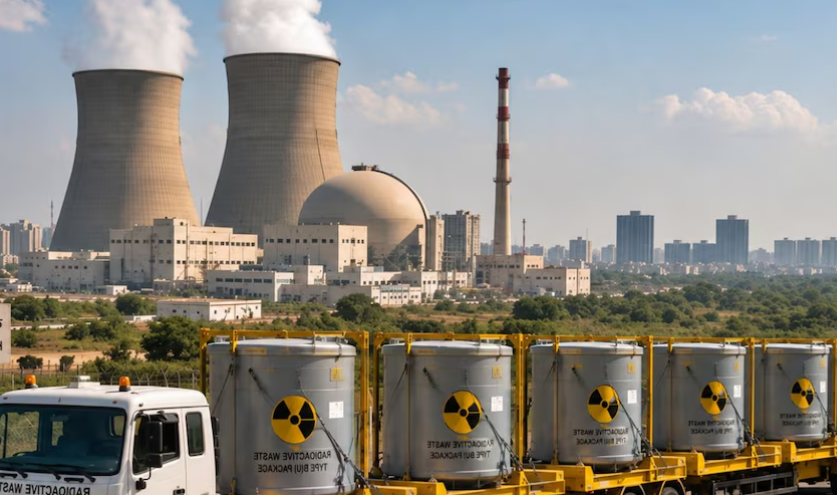
India is rapidly advancing its nuclear power expansion, but the safe disposal of radioactive waste is the least-publicized challenge. The government has for the first time detailed in Parliament how it handles hazardous waste. In a written reply, the Department of Atomic Energy disclosed that all nuclear power plants in India generate an average of 0.15 cubic meters (approximately 150 liters) of solid radioactive waste per megawatt (MW) of capacity annually, including waste from operational and decommissioning phases, equivalent to about 1.5 household bathtubs in volume; radioactive waste quantities and disposal records are regularly reported to the Atomic Energy Regulatory Board (AERB). The operation and maintenance of nuclear power plants generate various types of radioactive waste, including spent filter cartridges, protective clothing, tools, equipment, and other items that come into contact with radioactive materials. Waste is categorized into gaseous...
2026-08-03
Reading Ranking
- 1 Hitachiota City, Ibaraki Prefecture, Japan to Reconsider Literature Survey for Final Disposal Site of High-Level Radioactive Waste
- 2 GAO Report Urges DOE-EM to Learn from Canada, UK, France, and Belgium in Reshaping Nuclear Waste Cleanup Strategy
- 3 Behind India's Nuclear Power Expansion: Where Does Radioactive Waste Go? Government Details Management Process in Parliament for First Time
- 4 Canadian laboratory validates molten salt separation process with real spent fuel, extracting nearly 90% of plutonium in 24 hours
- 5 Trump Administration Revives Spent Fuel Disposal Plan, Seeks State Cooperation
- 6 Canadian Nuclear Waste Management Organization Publishes Final Design for Centre of Expertise in Ontario
- 7 Paraguay's Nuclear Power Generation Debate Heats Up: Regulator Supports Private Sector Participation
- 8 GAO: DOE Nuclear Cleanup "End-State Contract Model" Exceeds Budget by $500 Million in Six Years and Misses Goals