
Fukushima Daiichi Nuclear Power Station begins 23rd discharge of treated nuclear-contaminated water
 Scan to share
At 11:29 on August 31, Fukushima Daiichi Nuclear Power Station began its fifth discharge of treated nuclear-contaminated water in fiscal year 2026 and the 23rd overall. The operation is scheduled to last 19 days, concluding on September 18, with an estimated discharge of approximately 7,800 tonnes of nuclear-contaminated water diluted with seawater, equivalent to the capacity of about 8 storage tanks. The total tritium content is estimated at approximately 1.2 trillion becquerels.
The reactors of Units 1 to 3 at Fukushima Daiichi still contain nuclear fuel that melted and solidified during the accident, known as "fuel debris." Groundwater and rainwater that come into contact with this fuel debris form contaminated water.
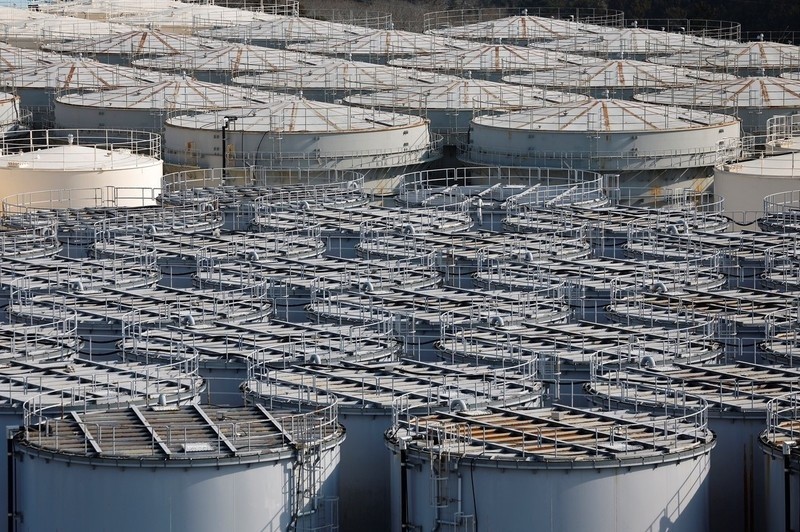
Since the discharge of treated nuclear-contaminated water began in August 2023, Fukushima Daiichi has cumulatively released approximately 173,000 tonnes, equivalent to about 173 storage tanks' capacity. One of the main objectives of the discharge plan is to reduce the footprint occupied by more than 1,000 storage tanks on the site, freeing up space for subsequent decommissioning work. As of August 20, the total volume of nuclear-contaminated water and other stored water had decreased by approximately 8% compared to before the discharge began. The related stored water also includes water that has not yet met discharge standards and remains in the treatment process.
As some storage tanks are emptied, the dismantling of tanks on the site is also progressing. Twelve welded tanks located in the "J9 area" began dismantlement in February 2025 and were completed in September of the same year. Tanks in the "J8 area," used for storing water in the treatment process, are scheduled to be dismantled starting in January 2026. These areas will subsequently be used for the construction of facilities related to the retrieval of fuel debris from Unit 3.
Currently, the nuclear-contaminated water is primarily discharged into the ocean using the elevation difference between the storage tanks and sea level. According to regulations, discharge must be halted if there is a risk of backflow due to rising sea levels, or if the safety status of equipment needs to be confirmed. Fukushima Daiichi has specified that discharge will be manually stopped in the event of an earthquake of magnitude 5 or higher, a tsunami warning, a tornado probability level 2 warning, or a storm surge warning. Previously, manual stoppages were implemented during the March 2024 earthquake, the July 2025 tornado and tsunami warnings, and the December 2025 tsunami warning.
Equipment-related incidents have also occurred during the discharge process. In April 2024, a worker damaged an underground cable during outdoor excavation work, causing a power outage that forced the discharge of nuclear-contaminated water to stop for approximately six and a half hours. Regarding surrounding environmental monitoring, no major issues such as radioactive substances exceeding standards have been observed to date.
According to the plans of the Japanese government and Tokyo Electric Power Company (TEPCO), the decommissioning of Fukushima Daiichi is targeted for completion by 2051; additionally, the tritium content in the storage tanks at the plant is expected to be reduced to zero by 2051.
Disclaimer: Information republished from partner media, institutions or other websites is provided for reference and communication purposes only. It does not imply endorsement of its views or verification of its accuracy. Please contact us if any content infringes rights or requires correction.