
South Korea's KNR System Develops Heavy-Duty Bipedal Robot for Nuclear Facility Decommissioning Applications
 Scan to share
South Korean robotics company KNR System recently announced the completion of the lower-body development and basic locomotion verification for its large-scale industrial “super-humanoid” robot. The robot's leg structure can support loads of up to 3 tons and move at a speed of 3 to 4 kilometers per hour. The company plans to release the full model by the end of 2026 and has already initiated whole-body system integration work.
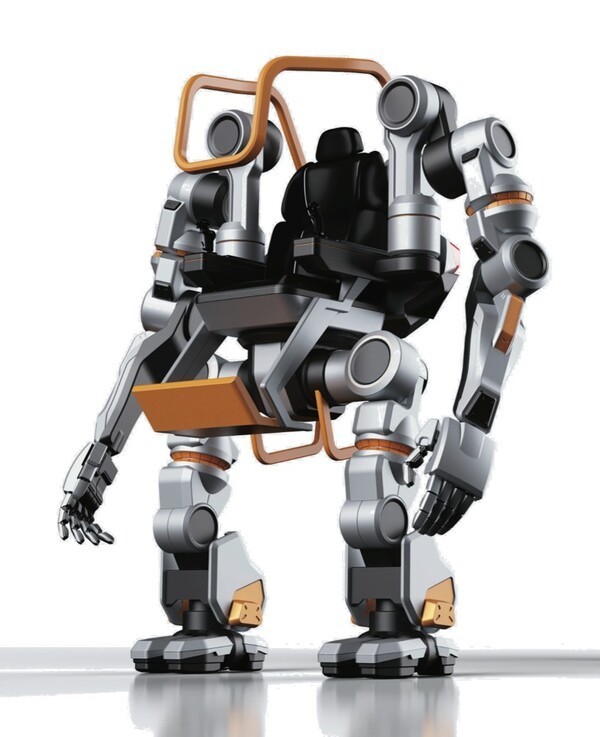
KNR System is developing a super-humanoid robot design. Image source: KNR System
According to reports, the newly developed robot legs stand approximately 2.9 meters tall, with a maximum load capacity of 3 tons and a dual-arm payload of 600 kilograms. Each side is equipped with 12 joints, utilizing 10,000 Nm-class high-output hydraulic rotary actuators and ultra-precision servo valves. The knee joints feature a 135-degree linkage structure with human-like design to support squatting motions and balance control.
KNR System plans to combine its previously developed manipulators with the newly completed lower-body platform to produce a rideable heavy-duty bipedal robot, with remote-controlled and autonomous driving variants to be gradually introduced starting in 2027. Industry insiders believe that, leveraging its high-output hydraulic servo control technology, this platform can undertake heavy-load handling tasks in heavy industrial settings and compensate for the torque density limitations of traditional motor-driven humanoid robots.
In high-risk operational fields such as nuclear facility decommissioning, related analyses suggest that such rideable, remotely operable hybrid robots could be deployed for extreme-environment operations, combining fine manual manipulation capabilities with the strength of heavy equipment. The hydraulic rotary actuators deliver high output force per unit volume, and when paired with real-time shock-absorbing linkage mechanisms, can be used to absorb sudden torque fluctuations and ground reaction forces generated during the handling of heavy steel structures.
According to available data, if this robot is further integrated with bidirectional human-machine interactive haptic control technology, as well as radiation-resistant and environmental adaptability design experience accumulated during heavy-water reactor decommissioning demonstration projects, its future applications could extend to high-risk nuclear facility decommissioning sites and plant construction areas where personnel access is difficult.
Disclaimer: Information republished from partner media, institutions or other websites is provided for reference and communication purposes only. It does not imply endorsement of its views or verification of its accuracy. Please contact us if any content infringes rights or requires correction.