
Taishan Nuclear Power Plant Deploys Specialized Underwater Robot for Cold Source Intake to Enhance Water Intake Operation and Maintenance Safety
 Scan to share
Recently, at the seawater reservoir of Taishan Nuclear Power Plant, the cold source operation and maintenance team remotely operated a specialized underwater robot to complete an underwater inspection. After entering the water, the robot descended steadily, maintained stable posture at a depth of approximately 10 meters, transmitted clear real-time images, and maintained normal communication links throughout the process, successfully completing the preventive underwater inspection of the seawater reservoir interception net.
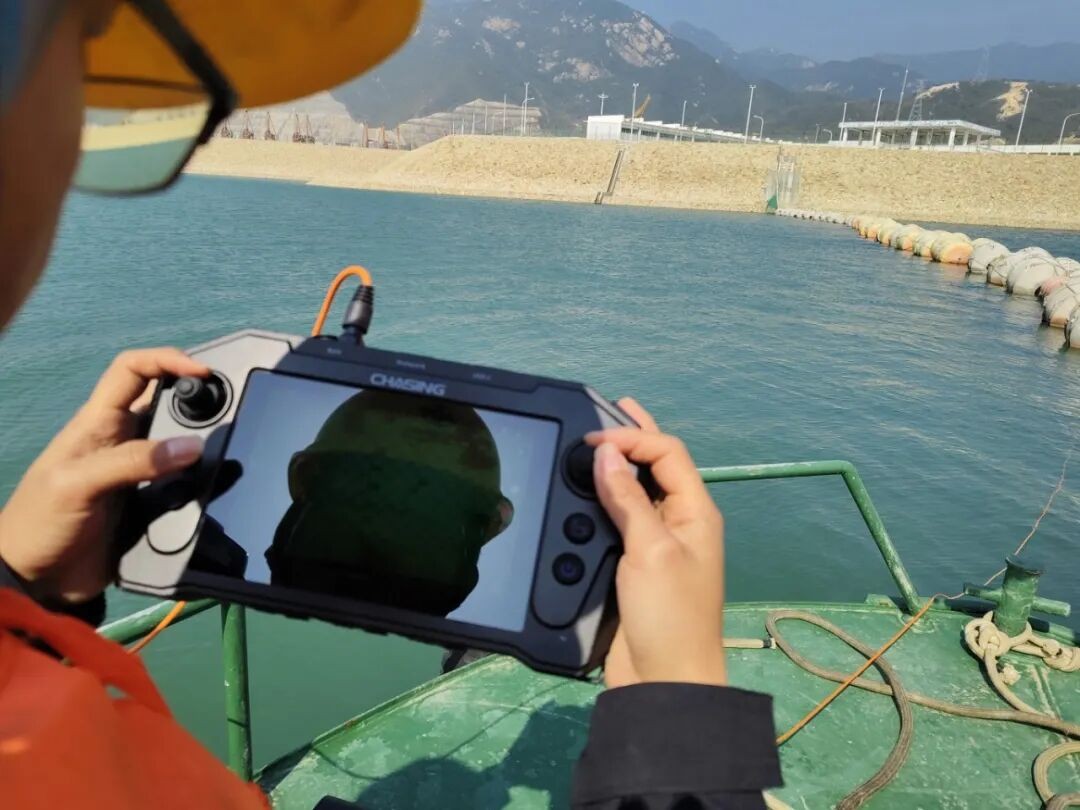
Underwater inspection of the interception net conducted via the underwater robot
Since its first underwater operation on March 12 this year, the robot has replaced manual labor in dozens of underwater interception net inspections, becoming an important initiative for Taishan Nuclear Power Plant to enhance the intrinsic safety level of cold source water intake operation and maintenance and to advance intelligent operation and maintenance.
The cold source interception net is a critical facility ensuring the safety of unit cold source water intake, and its condition and structural gaps directly affect the reliability of cold source water intake. During high-risk periods for the cold source, operation and maintenance personnel are required to conduct underwater inspections of the interception net weekly to confirm facility integrity and operational status.
Previously, such operations relied primarily on divers and faced multiple constraints. The cold source water intake channel at Taishan Nuclear Power Plant is relatively long, with multiple interception facilities deployed along the intake open channel and seawater reservoir, resulting in a heavy inspection workload; diving operations require special operation permits and are classified as first-level high-risk operations with stringent on-site safety control requirements; additionally, the intake open channel is significantly affected by meteorological and sea conditions such as wind speed and wave height, and at certain times diving inspections cannot be conducted due to unsatisfactory operating conditions.
To address these challenges, the cold source operation and maintenance team carried out technical research focused on reducing the frequency of high-risk manual operations and enhancing intrinsic safety levels. Preliminary research showed that many general-purpose underwater robots could not adapt to the site conditions of the Taishan intake open channel, characterized by high sediment content and complex hydrological environments. The team subsequently conducted multi-cycle field measurements of key parameters such as flow velocity, surge, and underwater turbidity in the intake area, and repeatedly debugged operational parameters including propulsion power, supplementary lighting systems, camera imaging, and anti-current attitude control.
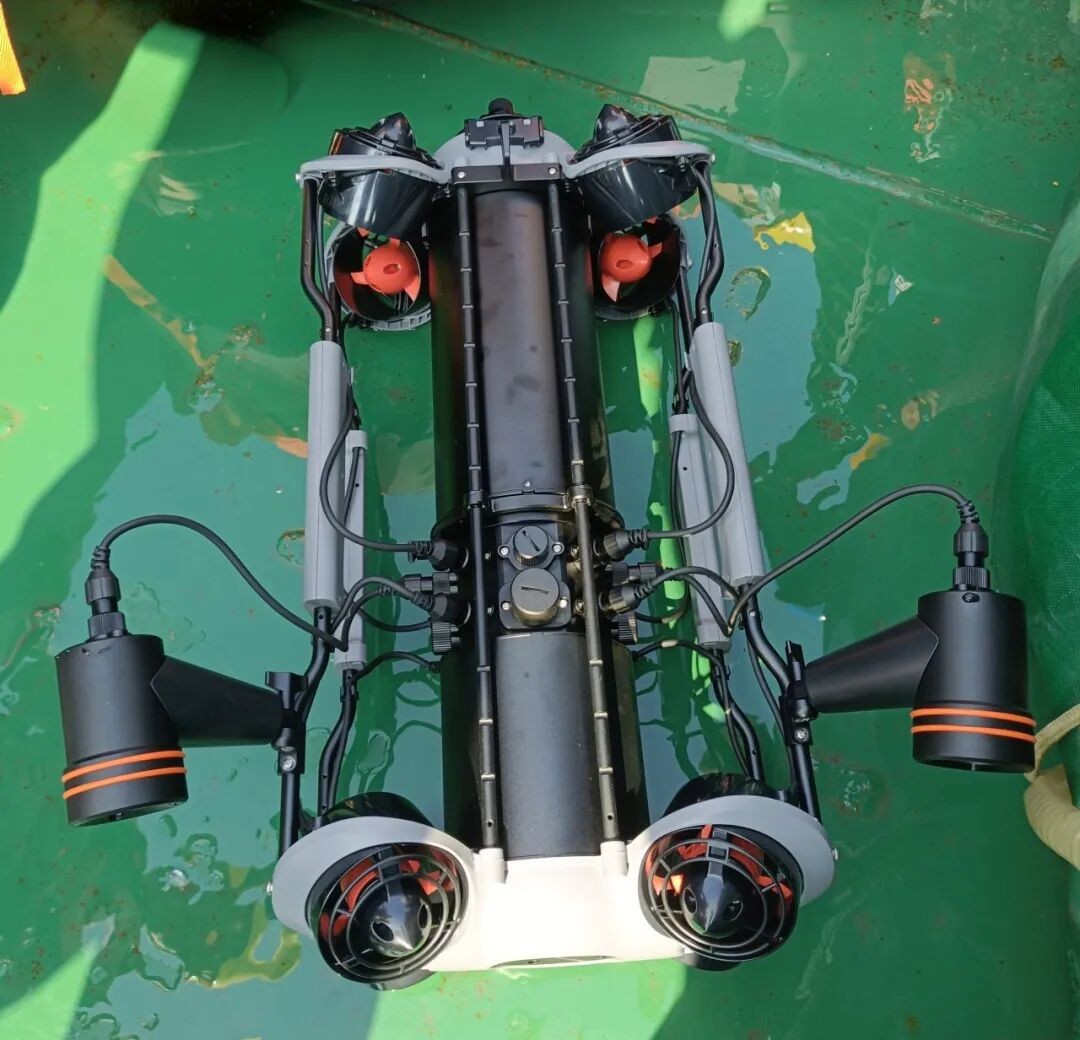
During the equipment selection and modification process, the team drew on mature equipment application experience from fields such as aquaculture and nearshore underwater inspection, and carried out customized optimization based on the hydrological characteristics of the Taishan cold source and the risk of debris entanglement, progressively resolving issues such as strong current disturbance, blurred underwater imaging, and damage from debris scraping. The robot deployed can conduct visual inspections of the trash net body and underwater components, strengthening inspection capabilities for concealed underwater areas.
According to reports, the underwater robot features waterproofing, corrosion resistance, and resistance to water current impact, enabling it to adapt to complex operating conditions including the long, deep intake open channel and seawater reservoir with high sediment content. It integrates functions such as underwater high-definition imaging, defect identification and positioning, and real-time mobile communication. The equipment also reserves expansion interfaces, allowing for the future integration of underwater robotic arms, underwater sonar, and water quality monitoring devices based on operational requirements, providing conditions for expanding from single-purpose inspection to multi-dimensional intelligent monitoring.
The application of the underwater robot has reduced the frequency of manual diving operations and also mitigated the impact of adverse weather and complex environments on inspection windows. Taishan Nuclear Power Plant stated that it will continue to advance intelligent operation and maintenance construction, explore digital and intelligent application scenarios for equipment operation and maintenance, and enhance the safety assurance capability of the cold source water intake system.
Disclaimer: Information republished from partner media, institutions or other websites is provided for reference and communication purposes only. It does not imply endorsement of its views or verification of its accuracy. Please contact us if any content infringes rights or requires correction.