
Hiconics Signs Contract for Main Helium Circulator Variable Frequency Drive Project at Xuwei Nuclear Heating and Power Generation Plant
 Scan to share
Recently, Hiconics signed a contract for the main helium circulator variable frequency drive project for the high-temperature gas-cooled reactor at the Jiangsu Xuwei Nuclear Heating and Power Plant, and will supply multiple sets of HC2000W four-quadrant water-cooled high-voltage VFDs for the project. This marks the second application of Hiconics' VFD technology in drive scenarios for key equipment related to Generation IV nuclear power, following the HTGR demonstration project at Huaneng Shandong Shidao Bay Nuclear Power Plant.
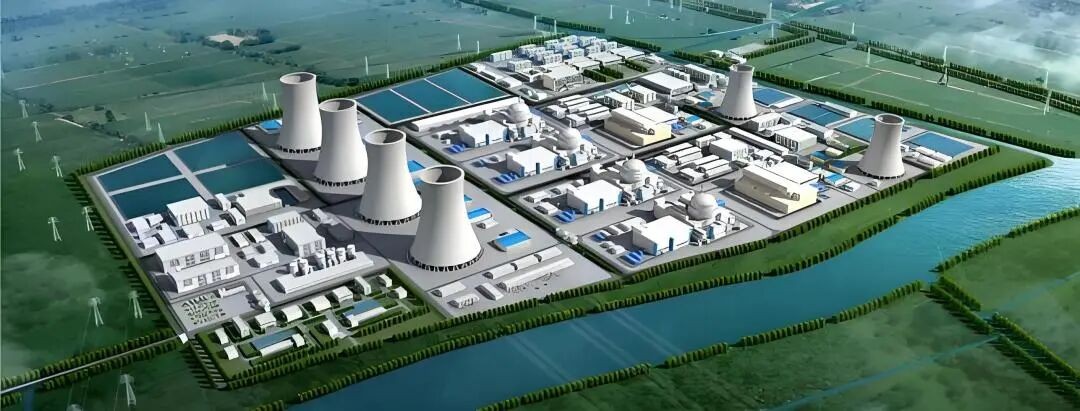
The Jiangsu Xuwei Nuclear Heating and Power Generation Project is a comprehensive nuclear energy utilization project that adopts a coordinated operation model of “nuclear reactor — turbine generator unit — heating system,” focusing primarily on industrial heating while also supplying electricity. Phase I of the project plans to construct two “Hualong One” pressurized water reactors and one HTR-PM600S high-temperature gas-cooled reactor, along with supporting steam heat exchange stations. Once completed, the project is expected to provide a stable supply of industrial steam to the Lianyungang petrochemical base annually, with a maximum power generation capacity of up to 11.5 billion kWh and an annual reduction of 19.6 million tonnes of CO2 emissions.
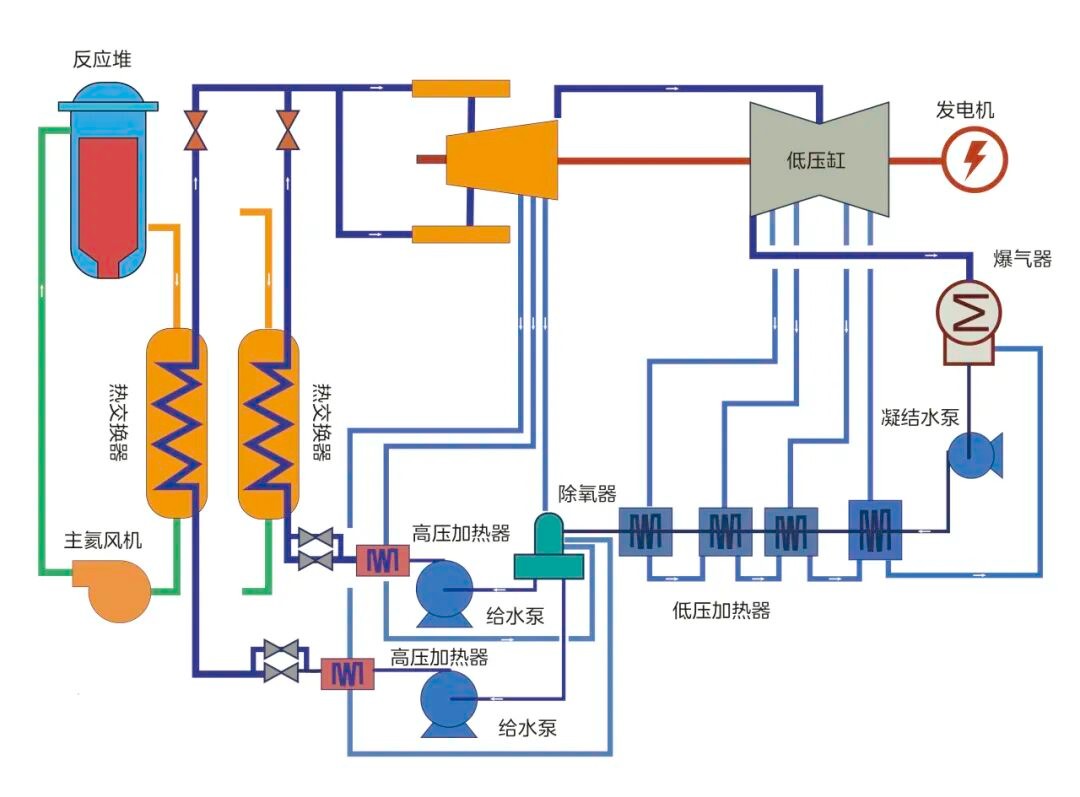
In the high-temperature gas-cooled reactor system, the main helium circulator is one of the key core components, and the reliability of its drive system is closely related to the safe operation of the reactor. The HC2000W four-quadrant water-cooled high-voltage VFD supplied by Hiconics for this project is developed specifically for the operating characteristics of nuclear island equipment. It features bidirectional energy control capability and can accommodate the operational requirements of the main helium circulator during reactor startup/shutdown, load changes, and emergency conditions.
The main helium circulator operates in both motoring and generating states under different conditions. During normal operation, the VFD drives the motor to operate the circulator; under emergency conditions, the system requires rapid braking. Compared with conventional resistor-based braking solutions, the four-quadrant VFD can, during operation in the second and fourth quadrants, convert the rotational kinetic energy of the main helium circulator into electrical energy and feed it back to the grid, achieving regenerative braking and energy recovery. This shortens braking time and maintains stable circulator speed during mode transitions.
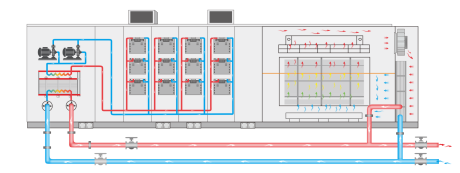
In terms of heat dissipation, the HC2000W employs a fully enclosed water-cooling system that integrates the four-quadrant power topology with a water-cooled structure. The cooling medium circulates within a sealed piping loop, and heat is released through heat exchangers, which mitigates the impact of on-site humidity, salt spray, and dust on equipment operation, thereby improving thermal stability in complex environments.
The product is also equipped with multi-level redundant design. Its key control systems adopt a hardware/software redundant architecture covering controllers and communication buses, enabling automatic switchover upon fault occurrence. At the system level, multiple motors are independently driven with a normally operating hot standby system. When any VFD system trips due to a fault, rapid switching can be accomplished through flying-start technology to ensure the continued stable operation of the associated motors.
Previously, the HC2000W four-quadrant water-cooled high-voltage VFD had completed relevant test validation in the main helium circulator project of the HTGR demonstration project at Huaneng Shandong Shidao Bay Nuclear Power Plant. Its continued application in the Xuwei project indicates that this type of high-voltage VFD equipment is achieving engineering-scale extension in the drive field of key HTGR equipment.
Disclaimer: Information republished from partner media, institutions or other websites is provided for reference and communication purposes only. It does not imply endorsement of its views or verification of its accuracy. Please contact us if any content infringes rights or requires correction.