
Unit 7 reactor at China's Tianwan Nuclear Power Plant reaches Minimum Controlled Power Level
 Scan to share
According to reports, the reactor of Unit 7 at the Tianwan Nuclear Power Plant, built through China-Russia cooperation and using a Russian design, has reached the Minimum Controlled Power Level (MCP). This marks the first time the reactor has entered a self-sustaining controlled chain nuclear reaction state in the core. All technical operations were carried out in accordance with design requirements and the startup plan, under the joint supervision of experts from Russian and Chinese operating, design, and regulatory organizations.
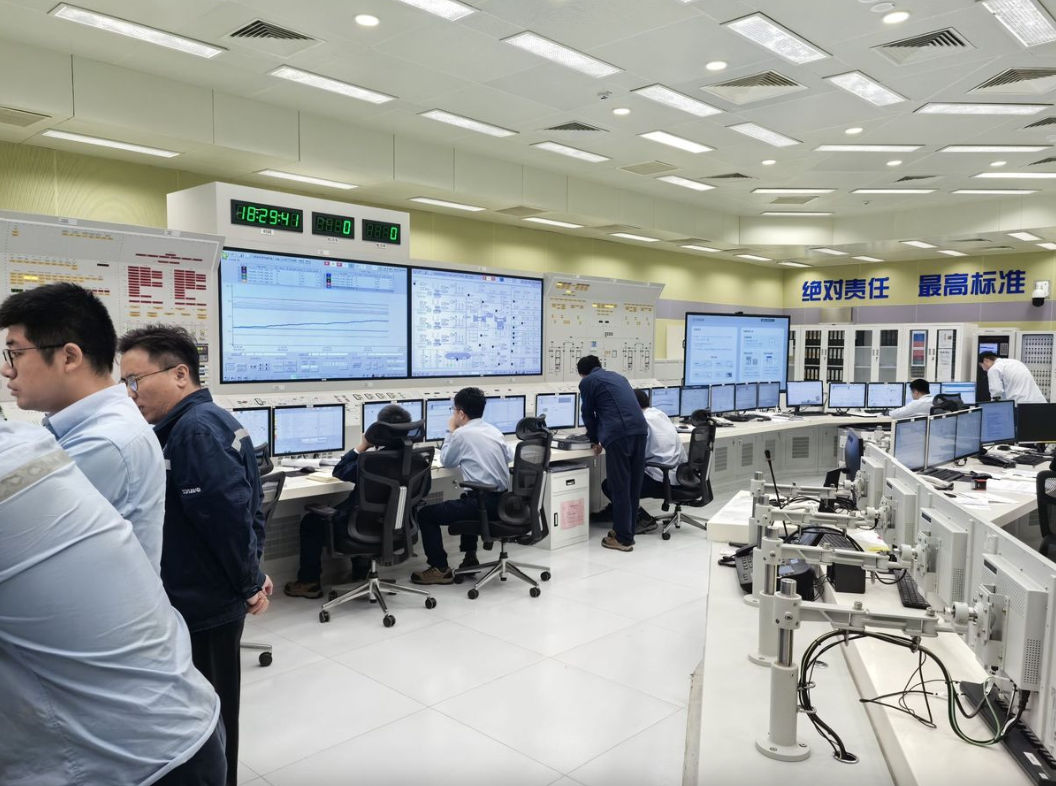
Alexey Likhachev, Director General of Rosatom, stated that the Tianwan Nuclear Power Plant is a model project of Russia-China cooperation. Units 1 and 2, built according to the Russian scheme, have been in operation for 20 years, and Units 3 and 4 are about to mark their tenth anniversary of commissioning; more than five years after the start of construction of Units 7 and 8, the startup of the reactor "heart" of Unit 7 is the result of efficient collaboration between the two sides.
It is understood that Unit 7 began loading nuclear fuel on August 12, 2026. After reaching the Minimum Controlled Power Level, experts will inspect the control and protection systems and evaluate the neutron-physical characteristics of the fuel. After completing all tests, the unit will enter the power ascension phase, achieve grid connection of the generator, and gradually rise to 100% rated power.
The Tianwan Nuclear Power Plant is the largest economic cooperation project between Russia and China. On June 8, 2018, the two sides signed an intergovernmental protocol and framework contract in Beijing for the construction of Units 7 and 8, using VVER-1200 reactors. On the Russian side, the contract was signed by the engineering division of Rosatom, and on the Chinese side, by an enterprise under China National Nuclear Corporation (CNNC). The Russian side is responsible for the design of the Nuclear Island and the supply of key equipment. Construction of Units 7 and 8 began on May 19, 2021. The previous four VVER-1000 units have been operating successfully and have continuously supplied power to China's grid.
Another major Russia-China nuclear energy cooperation project is the Xudabao NPP in Huludao, Liaoning. In 2019, the two sides signed a contract for the construction of Units 3 and 4 with VVER-1200 reactors and the supply of nuclear fuel. The Russian side is responsible for Nuclear Island design, key equipment supply, and installation and commissioning guidance. The two units are planned to enter commercial operation in 2027—2028.
In May 2026, Russia and China signed three interdepartmental memoranda of understanding, with cooperation areas including talent for the peaceful use of atomic energy, Controlled Thermonuclear Fusion, Nuclear Medicine, Accelerator technology, and New Photonic and Quantum Technologies. The engineering division of Rosatom ranks first in the world in terms of global orders and the number of nuclear power plants under simultaneous construction, with about 80% of revenue coming from overseas projects.
It is reported that Unit 7 of Tianwan reaching the Minimum Controlled Power Level is a key milestone in the commissioning process of Units 7 and 8, will lay the foundation for subsequent grid connection and full-power operation, and will also accumulate startup experience for follow-up projects such as Xudabao, further consolidating the foundation of Russia-China cooperation in nuclear power construction and cutting-edge nuclear technology.
Disclaimer: Information republished from partner media, institutions or other websites is provided for reference and communication purposes only. It does not imply endorsement of its views or verification of its accuracy. Please contact us if any content infringes rights or requires correction.