
UK think tank calls for clear nuclear reactor technology roadmap to support nuclear expansion
 Scan to share
On September 8, 2026, UK think tank Policy Exchange released a white paper stating that the UK government needs to more clearly articulate which nuclear reactor technologies it will rely on to advance the so-called nuclear “golden age”, and to strengthen the supply chain and achieve economies of scale through batch construction.
Policy Exchange's Nuclear Enterprise Committee is composed of experts from government, industry, and academia. The committee believes that the UK's civil nuclear strategy is at a critical stage, and related decisions will affect the country's energy system for decades to come.
The white paper points out that given that new small modular reactor technologies are still in the early stages of development, the UK government should retain the option of building another large-scale nuclear power station before 2030. At the same time, the UK has credible domestic developers and a strong manufacturing base that can support the development of the small modular reactor program, but the program needs to reach a certain scale to compete in international markets and be economically viable.
The committee believes that the UK government must identify which technologies are best suited to the country's needs, while recognizing that other major economies are advancing nuclear programs with greater coordination and batch construction models. The white paper states that if the UK adopts a “let a hundred flowers bloom” approach, it may undermine the actual benefits of innovation-driven cost reduction.
The white paper recommends that the UK government commit to a batch construction approach for new nuclear technologies and set out in its revised deployment plan the key technology choices it believes can support this approach.
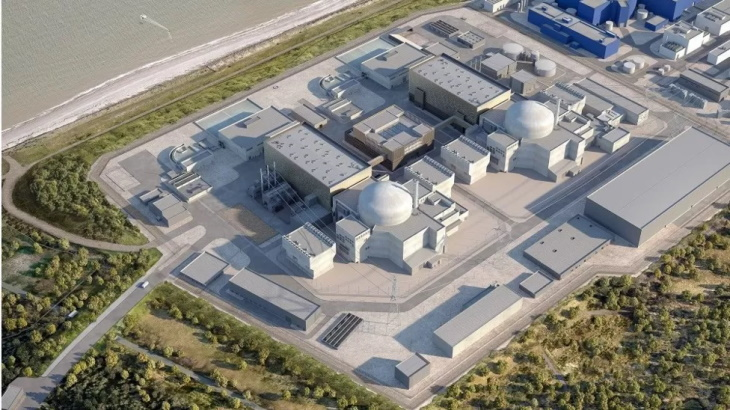
According to data from the International Atomic Energy Agency (IAEA), the UK currently has 9 commercial nuclear power stations, generating approximately 11% of the country's total electricity. Apart from the Sizewell B nuclear power station, which was recently granted a life extension to 2055, the UK's existing nuclear units are expected to be progressively shut down before 2030. The UK also plans to build two new units at Sizewell C, while two units at Hinkley Point C are currently under construction.
The UK government has proposed increasing nuclear power capacity to 24 gigawatts by 2050, approximately four times current levels, with small modular reactors forming part of the strategy to achieve this target.
The committee notes that there are currently many reactor designs available, but with significant differences in maturity, fuel requirements, supply chain conditions, and industrial implications. For the white paper, this presents a “choice problem” for the UK, rather than an automatic solution to its nuclear deployment challenges.
The white paper argues that high-temperature gas-cooled reactors and molten salt reactors have strong alignment with the UK's industrial decarbonization goals. However, the committee cautions that the UK may fall behind countries that have already invested in demonstration projects. To address this risk, the UK needs to put forward a more focused plan and participate in shaping global standards through regulatory innovation and research and development funding.
The white paper also states that advanced fast neutron reactors hold long-term strategic value for the UK. The UK has a substantial plutonium inventory, and fast neutron reactors could offer a pathway to convert related waste into usable fuel while reducing the burden of waste disposal. However, the UK needs to assess its own appetite for the associated risks.
The committee states that fast neutron reactors require significant venture capital and demand a higher level of international cooperation. The UK must decide whether to treat them as a national strategic asset or rely on international partners to provide future fuel cycle solutions.
The white paper also recommends that the UK government reconsider its international and diplomatic efforts around nuclear energy in order to influence global supply chains, fuel markets, and international standards. In addition, the government needs to examine how to provide financing arrangements to unlock private sector investment.
Disclaimer: Information republished from partner media, institutions or other websites is provided for reference and communication purposes only. It does not imply endorsement of its views or verification of its accuracy. Please contact us if any content infringes rights or requires correction.