
Idaho National Laboratory Moran Test Bed Completes Deployment Preparation for Spent Fuel Decladding Skid
 Scan to share
A mobile skid dedicated to processing and stripping spent nuclear fuel cladding has been officially declared ready for operation at the Idaho National Laboratory (INL) Moran Nuclear Fuels Test Facility. The fabrication of this skid system was funded by the Athena Initiative launched in 2022 under the National Nuclear Security Administration (NNSA) “Nonproliferation Stewardship Program”, aimed at providing critical research support for the United States' nonproliferation strategy.
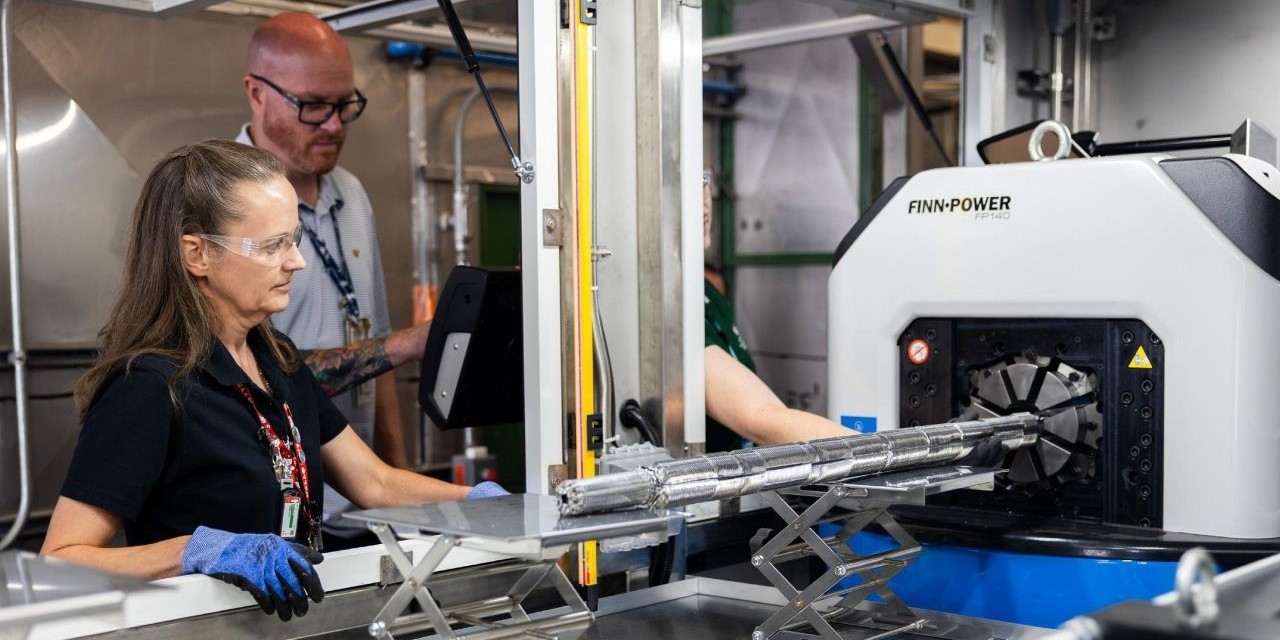
The Moran Test Bed is located in the former PBF-622 building within the Idaho National Laboratory Critical Infrastructure Test Range Complex. It is a pilot-scale research facility focused on in-depth study of the Plutonium Uranium Reduction Extraction (PUREX) process. Although PUREX wet reprocessing technology has been widely applied in commercial spent fuel cycles in some overseas countries, the United States' commercial reprocessing route was effectively terminated in the 1970s due to nuclear proliferation risk concerns; the decladding of spent fuel at the Moran facility is intended to provide validation support for building nuclear security infrastructure and training nonproliferation professionals in nuclear materials.
The skid system was collaboratively designed and fabricated over 20 months by Idaho National Laboratory together with Integrated Solutions & Designs and Campbell Technical Services. It was delivered to the laboratory in April 2026 and successfully completed months of comprehensive demonstration and validation. Before experiments can be conducted, the metal cladding on the outer layer of nuclear fuel, used for corrosion protection and as a barrier against fission product release, must be effectively separated from the inner uranium fuel pellets; this skid equipment achieves efficient mechanical removal of cladding through multiple processes including crimping, chopping, and decladding applied to spent fuel rods.
In the initial operational phase, the unit will first be used to process Magnox fuel from the gas-cooled reactor type developed in the United Kingdom in the mid-20th century. The skid equipment successfully completed functional validation of crimping and chopping on Magnox fuel on May 5 and June 2 of this year. Although the world's last Magnox reactor was retired at the end of 2015, legacy spent fuel is still used by multiple parties for conversion into Mixed Oxide Fuel (MOX) or for scientific research testing; the batch of fuel used for testing at Idaho National Laboratory was transported from the National Technical University of Athens (NTUA) in Greece through coordinated scheduling by the NNSA Mobile Packaging Program and the Office of Nuclear Materials Verification.
Unlike the zirconium alloy commonly used in conventional commercial light water reactor fuel, Magnox fuel cladding uses a special alloy composed of metals such as magnesium and aluminum. Kevin Lyon, Senior Manager of Radiochemistry and Nuclear Measurements at Idaho National Laboratory, emphasized that the skid equipment adopts a highly versatile and modular design, and key electromechanical units can be flexibly disassembled, adjusted, repositioned, or technologically upgraded in the future, and is not limited to processing only the single Magnox fuel type. According to long-term planning, in addition to the already operational Moran platform, Idaho National Laboratory will also rely on the “Athena Initiative” to build a second high-actinide Transuranic (TRU) glovebox test platform named “Beartooth”, which is expected to be officially commissioned in 2028.
Disclaimer: Information republished from partner media, institutions or other websites is provided for reference and communication purposes only. It does not imply endorsement of its views or verification of its accuracy. Please contact us if any content infringes rights or requires correction.