
US Advances Development of Nuclear-Powered Lunar Rover and Awards Transportation Contract
 Scan to share
Recently, the National Aeronautics and Space Administration (NASA) decided to advance the development of the nuclear-powered lunar rover PROMISE and awarded a lunar surface transportation contract to Blue Origin. Blue Origin will use the Mark 1 lander to deliver the six-wheeled rover to the lunar south pole and complete its deployment. The base contract value is $94 million, with an additional contract option worth $140 million contingent on performance.
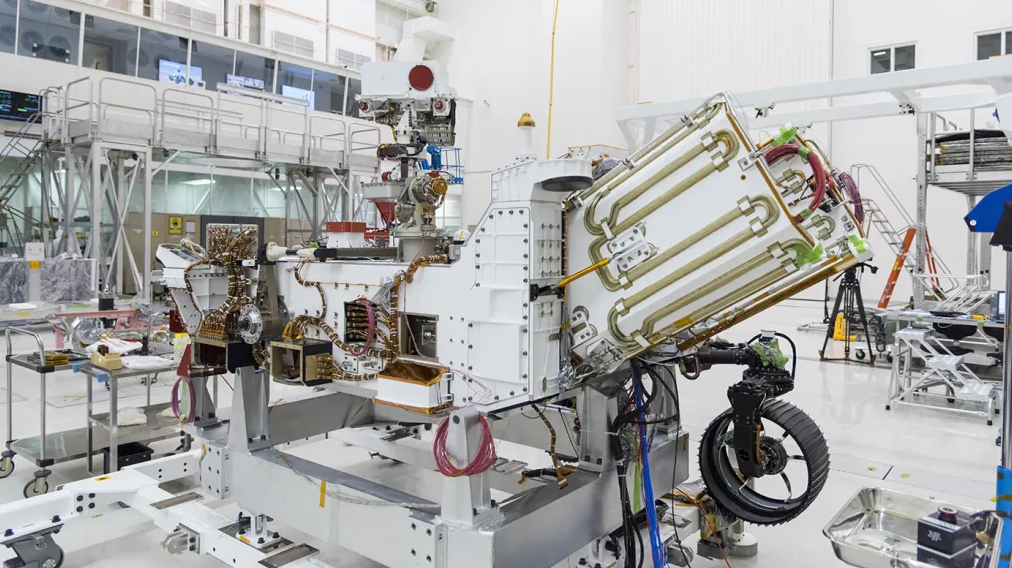
NASA's Jet Propulsion Laboratory (JPL) is responsible for the rover's overall development, and will modify the chassis, electronics, and drive systems based on the engineering test platform of the Curiosity Mars rover, and integrate spare parts and test components from the Curiosity and Perseverance missions. Reusing existing hardware, software, and rover operating protocols will help shorten the vehicle integration and testing cycle. The mission currently targets a launch in late 2028, with a primary exploration period planned for 18 months.
The rover will carry a spare Multi-Mission Radioisotope Thermoelectric Generator (MMRTG), generating electricity from the heat released by the natural decay of plutonium-238. Some craters at the lunar south pole lack sunlight for extended periods, and the radioisotope power source can provide electricity for the rover to operate during the long lunar night and in permanently shadowed regions, enabling onboard instruments to conduct observations in these low-temperature areas.
PROMISE will carry a drill capable of extracting samples from about 1 meter below the lunar surface, and use spectrometers to analyze lunar regolith composition and explore resources such as water ice. The mission will also test radiation-tolerant computing systems and autonomous navigation technologies. The acquired surface and shallow subsurface information will be used to assess resource potential and provide references for subsequent landing site selection and lunar surface infrastructure layout.
Disclaimer: Information republished from partner media, institutions or other websites is provided for reference and communication purposes only. It does not imply endorsement of its views or verification of its accuracy. Please contact us if any content infringes rights or requires correction.