
Two IPP studies reveal edge turbulence mechanisms in fusion plasmas from first principles
 Scan to share
On August 10, 2026, two research teams at the Max Planck Institute for Plasma Physics (IPP) independently published findings that, for the first time, explain key phenomena in the extremely thin edge layer of fusion plasmas starting from fundamental physics equations. Both papers were published in Physical Review Letters, with one highlighted as an editor's suggestion.
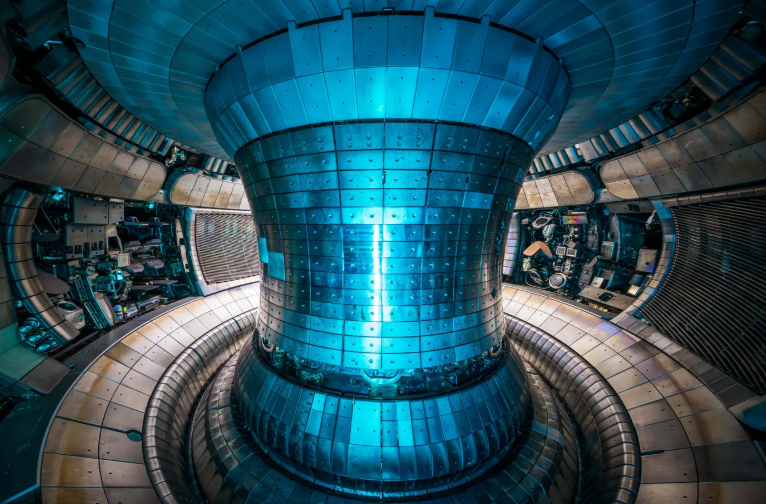
For stable operation of a fusion power plant, two requirements must be met simultaneously: on the one hand, the plasma at temperatures of around 100 million degrees Celsius must be effectively confined to achieve fusion ignition conditions; on the other hand, the generated heat must be distributed over a sufficiently large area to prevent damage to the device walls from excessive local heat loads. Whether this conflict can be resolved depends largely on a region only a few centimeters thick at the plasma edge.
In tokamak devices, there is an invisible boundary at the plasma edge known as the separatrix. Inside the separatrix, magnetic field lines are closed and the plasma is confined in the core region; outside the separatrix, field lines lead to actively cooled components. Ideally, a steep pressure gradient forms at the edge—the so-called "pedestal"—which acts as a thermal insulating layer and directly affects overall device performance. However, if the pedestal becomes too strong, the plasma may release large amounts of energy in bursts, depositing heat concentrated on small areas of the wall, posing a risk to future fusion power plants.
Dr. Kaiyu Zhang and his team in the IPP Tokamak Theory division simulated an operating regime that avoids bursty energy release—the quasi-continuous exhaust regime. In this regime, the plasma does not expel energy in low-frequency, large-amplitude bursts, but instead continuously releases small portions of heat.
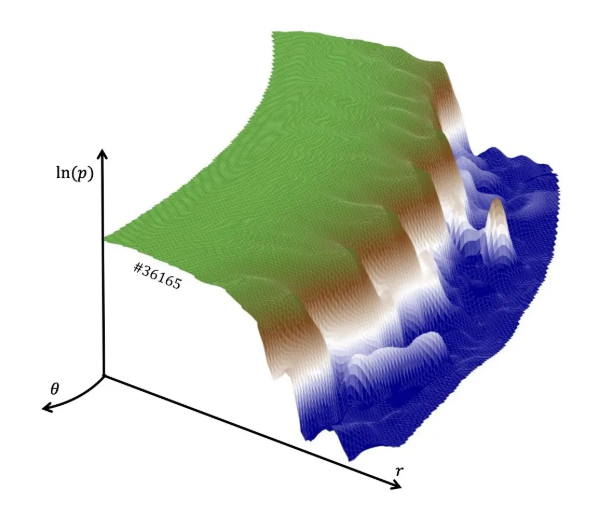
The simulations show that a wavelike structure propagates along the separatrix, causing the pedestal boundary to oscillate rhythmically. At the same time, finger-like plasma blobs are continuously detached from both sides of the separatrix. These blobs are about 1 centimeter in diameter but can extend more than 10 meters along magnetic field lines, propagating outward at speeds of approximately 1000 meters per second, spreading heat over a larger area.
The researchers demonstrated that this process originates from the interaction of two different types of instabilities at the separatrix. When this interaction was removed from the calculations, the plasma blobs responsible for carrying heat disappeared. The density and temperature distributions obtained from simulations match experimental measurements from the ASDEX Upgrade tokamak at IPP in Garching, and the theoretical model was not adjusted artificially to match experimental results. Zhang Kaiyu stated that the team can now explain from physical principles why heat is lost in the form of small blobs.
The other paper, led by Dr. Baptiste Frei, provides an explanation for a long-standing question in fusion research: when all other conditions remain unchanged, merely reversing the magnetic field direction in a tokamak can double the heating power required to reach the high-confinement mode (H-mode) with good thermal insulation.
Simulation results based on ASDEX Upgrade indicate that edge plasma turbulence generates flows by itself, and these flows in turn shear the turbulent structures, thereby regulating turbulence intensity in a feedback loop. This feedback process is not equally effective under both magnetic field directions. Only when turbulent structures are tilted at a specific angle that allows efficient energy transfer to the flows do shear flows form more readily and suppress turbulence; under the unfavorable magnetic field direction, energy transfer is weaker, turbulence is stronger, and the stabilizing shear flows are shallower.
The simulations also show that the divertor geometry plays an important role in this mechanism. The researchers found similar features in simulations of other devices, suggesting that the mechanism may be of general applicability. Frei stated that, in a sense, reversing the magnetic field changes how turbulence operates and also changes how easily the plasma enters H-mode.
The two studies address different questions but converge on the same conclusion: at the plasma edge, turbulence is not merely a disturbance to be suppressed. Through self-organization processes, it participates in regulating the plasma's thermal insulation performance and heat exhaust pathways.
For the design of the International Thermonuclear Experimental Reactor (ITER) and future demonstration fusion power plants, quantitative understanding of such edge turbulence mechanisms is crucial. In the past, related predictions relied primarily on empirical scaling laws derived from existing experiments; however, for fusion power plants not yet built, extrapolation based solely on empirical data carries uncertainties. These two IPP studies, with simulation results based on first principles, provide new physical foundations for the design of edge plasmas in future fusion devices.
Disclaimer: Information republished from partner media, institutions or other websites is provided for reference and communication purposes only. It does not imply endorsement of its views or verification of its accuracy. Please contact us if any content infringes rights or requires correction.