
U.S. ZC Institute Unveils "Kardashev One" Fusion Prototype Reactor Plan to Independently Test Neutron Recovery Concept
 Scan to share
ZC Institute, a fusion energy company headquartered in Atlanta, USA, announced on September 4 the launch of the "Kardashev One" (Kardashev One) program, aiming to develop a fusion prototype reactor to explore recovering energy lost to radiation and neutron escape during fusion reactions. As an early validation step of the program, ZC Institute has commissioned Professor Jason Cassibry and his team at the University of Alabama in Huntsville (UAH) to conduct independent testing of the related field distortion technology.
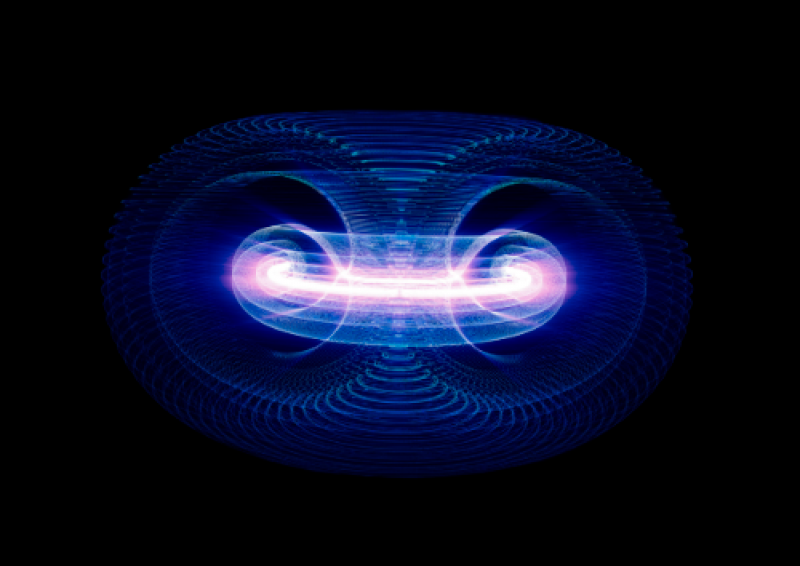
According to ZC Institute, existing fusion approaches, including inertial confinement fusion and magnetic confinement fusion, lose energy in forms such as electromagnetic radiation and neutron escape. While magnetic fields can confine charged particles, they struggle to confine neutral particles like neutrons and electromagnetic radiation, with the associated energy typically dissipating to the reactor wall, increasing engineering maintenance and material damage pressures. The company states that the core objective of the "Kardashev One" concept is to attempt to redirect escaping neutrons and radiation back into the fusion reaction zone, thereby improving system efficiency and reducing long-term impacts on the reactor wall.
The technology underpinning this program originates from the team of Dr. Chance M. Glenn, founder of Morningbird Space. According to available information, in October 2024, Glenn generated and detected measurable laboratory-scale spacetime distortions at the Alabama A&M University laboratory using high-voltage electrostatic discharge spark gaps and laser interferometry techniques, with the related research published in a peer-reviewed journal. His team has also claimed to have demonstrated that electrostatic discharge devices can deflect photons using similar technology. ZC Institute has obtained a license for this electrostatic discharge technology from Morningbird Space and plans to further verify whether it can deflect neutrons in the same way it deflects photons.
Under the arrangement, Glenn will bring the field distortion device to the University of Alabama in Huntsville, where Professor Cassibry's laboratory will serve as an independent third-party testing site. The team is currently building the neutron generation equipment required for the assessment and will submit a data report to ZC Institute following the tests. The testing is expected to take place this fall, with a focus on evaluating whether the claimed field distortion effects of the device hold up, and whether escaping neutrons and radiation can be guided back into the plasma rather than being absorbed by the reactor wall.
ZC Institute stated that if the method proves effective through independent testing, it could in the future help simplify fusion reactor designs and alleviate engineering challenges posed by neutron damage and radiation losses. However, the company also acknowledged that significant work remains between concept validation and actual reactor deployment, including demonstrating that the effect can be scaled up and achieving the goal of usable energy exceeding consumed energy.
ZC Institute stated that if the neutron management tools meet expectations, they could potentially be used not only in terrestrial fusion power plants but also in compact, high-power fusion systems for advanced space propulsion concepts. The company is currently collaborating with personnel from Morningbird Space, the University of Alabama in Huntsville, and other institutions to advance scientific validation of the "Kardashev One" fusion reactor prototype concept.
Disclaimer: Information republished from partner media, institutions or other websites is provided for reference and communication purposes only. It does not imply endorsement of its views or verification of its accuracy. Please contact us if any content infringes rights or requires correction.