
Search Results
Keyword:nuclear fusion
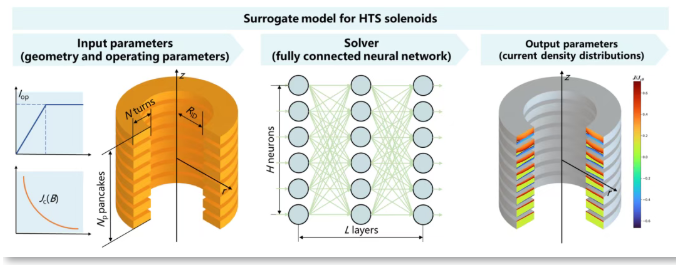
Neural Network Surrogate Model Speeds Up Superconducting Magnet Simulation
Recently, a domestic research team has achieved an important breakthrough in the field of electromagnetic analysis and design of high-temperature superconducting magnets. The research paper "A Surrogate Model for High-Temperature Superconducting Magnets to Predict Current Distribution with Neural Networks," completed by Professor Qu Timing's team, has been officially accepted by the top journal in the superconductivity field, *Superconductivity*. This research innovatively introduces deep learning into the electromagnetic analysis of high-temperature superconducting magnets and successfully constructs a neural network-based surrogate model, providing a brand-new technical pathway for solving complex current distribution prediction and rapid optimization of magnet parameters...
2026-11-09
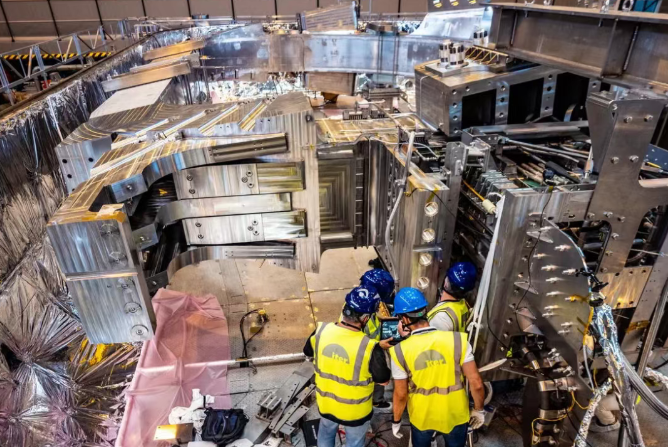
ITER Organization Successfully Completes Half-Current Test of Toroidal Field Magnet
Recently, the magnet cold test facility of the ITER Organization successfully completed the cryogenic cold test of the second Toroidal Field (TF) coil. The heavy superconducting coil, numbered 17, was cooled to an extreme environment of 4K (minus 269 degrees Celsius) and then successfully energized to 34 kiloamperes (kA), reaching half of its 68kA rated operating current. The coil was then officially removed from the test bench and transferred to the assembly process of the main tokamak device. As a standard unit of the ITER toroidal field magnet system, a single D-shaped TF coil is approximately 17 meters tall, about 9 meters wide, and weighs 330 tonnes, with windings made of advanced niobium-tin...
2026-11-09
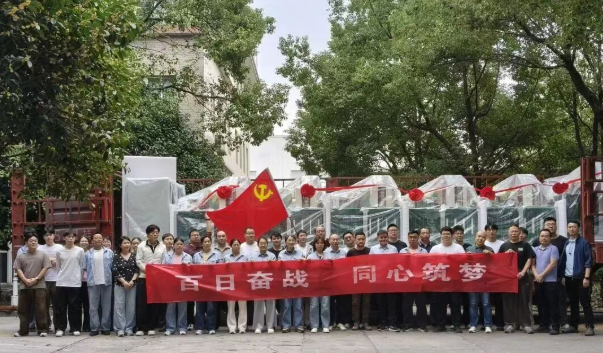
Guorui Zhaovolt Achieves Mass Production and Delivery of FRC Fusion Power Supplies
Recently, Wuhu Guorui Zhaovolt Electronics Co., Ltd. (hereinafter referred to as Guorui Zhaovolt) announced that its all-solid-state pulse power supply, developed specifically for Field-Reversed Configuration (FRC) nuclear fusion devices, has achieved mass production and delivery. This batch of products will be successively shipped to multiple fusion experimental device construction sites across China, providing core power supply support for research institutions and commercial fusion enterprises, marking a new milestone for China in the engineering and mass manufacturing of high-voltage, high-current pulsed power technology. As a new-generation pulsed magnetic confinement nuclear fusion technology, FRC, with its advantages of simple device structure, low construction cost, high modularity, fast iteration speed, and outstanding miniaturization potential...
2026-11-09
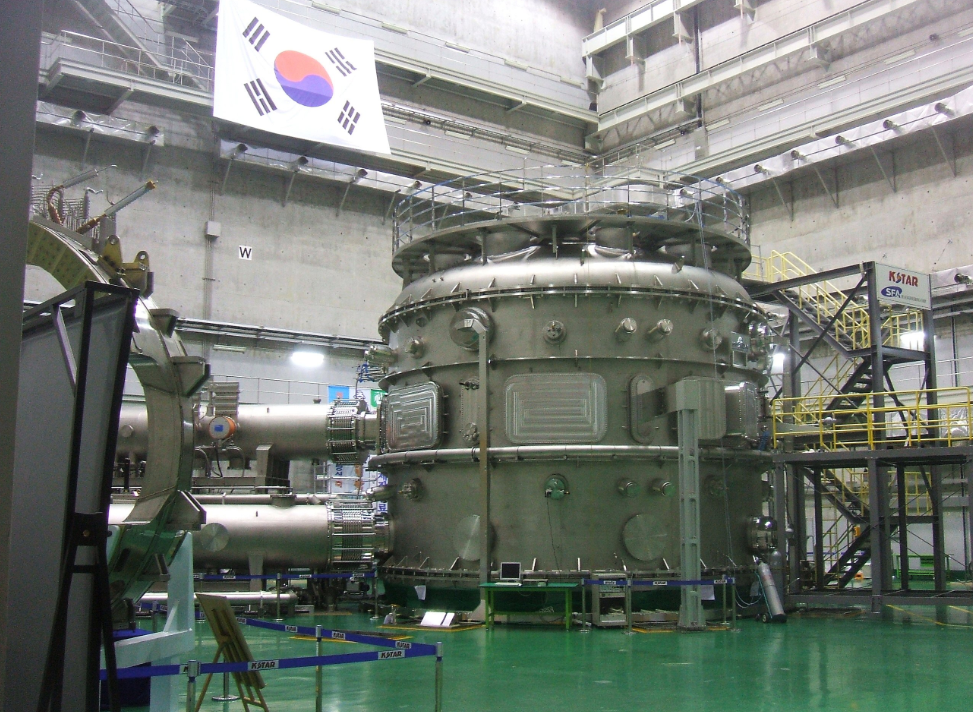
South Korea's Key Nuclear Fusion Technology and Demonstration Facility Project Passes Review
Recently, South Korea's nuclear fusion key technology development and demonstration infrastructure construction project passed the preliminary feasibility review of national R&D projects. The special program is scheduled to be implemented from 2027 to 2036, with a total investment of 1.4813 trillion won, of which the central government plans to bear 1.2877 trillion won, accounting for approximately 87% of the total. The funds will be used for key technology R&D for fusion reactors and the construction of demonstration facilities, with both tasks incorporated into the same ten-year implementation period. The R&D work will first focus on how to form and sustain plasma within a fusion reactor. The heating system is responsible for inputting energy into the plasma, the current drive system is used to sustain the plasma current, and the superconducting magnets provide the magnetic field required to confine the plasma...
2026-11-09
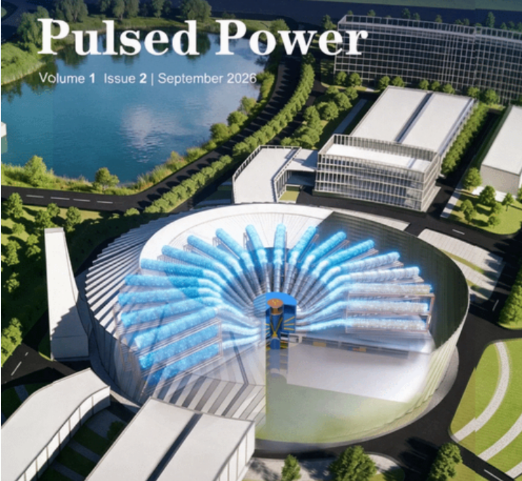
China Academy of Engineering Physics Unveils Conceptual Design of Z-Pinch Fusion Facility
Recently, the Institute of Fluid Physics of the China Academy of Engineering Physics, in collaboration with research teams from the Beijing Institute of Applied Physics and Computational Mathematics and the Tianfu Innovation Energy Research Institute, officially unveiled the overall conceptual design of the China Z-pinch Fusion Facility (CZFF). The related research findings have been published online in the professional academic journal *Pulsed Power* and featured as a cover recommendation, marking an important advance in China's efforts to promote the Z-pinch-driven Fusion-Fission Reactor (Z-FFR) program and the demonstration of thermonuclear ignition. As a next-generation high-energy-density physics platform for demonstrating thermonuclear ignition and advancing the fusion energy program, CZFF...
2026-11-09

US Blue Laser Fusion Completes $34 Million Financing
Recently, Blue Laser Fusion (BLF) completed a private placement totaling $34 million, with approximately $25 million closed in the first tranche. The financing is combined with a business combination and reverse merger arrangement, providing funding support for the company's subsequent engineering R&D, manufacturing capability development, and technology deployment. Laidlaw & Company served as the sole placement agent for the transaction. This capital operation involves the co-acquisition of Unite Acquisition 2 Corp., with the combined entity operating under the name Blue Laser Fusion and becoming a publicly reporting company. Through this arrangement, the company is adjusting its corporate structure and capital structure, integrating its existing laser...
2026-11-07
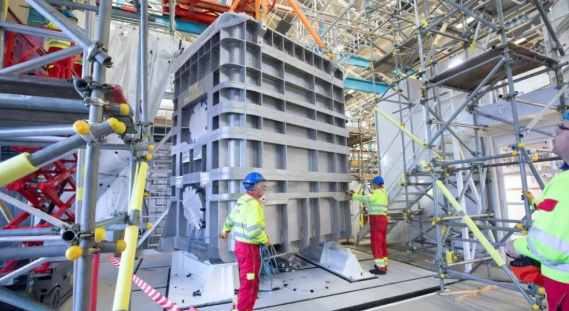
UK fusion device completes key lift of twelve-tonne dual-beam box
Recently, the UK's MAST Upgrade spherical tokamak device completed a key engineering operation: the lifting and positioning of a 12-tonne dual-beam box, creating conditions for the installation of new neutral beam heating equipment. The device is located at the Culham campus and operated by the UK Atomic Energy Authority (UKAEA). It is expanding its experimental capabilities through a heating system upgrade to support the physics and engineering research required for future fusion power plants. The dual-beam box features a two-tier layout and is designed to house two new neutral beam injectors. The equipment transfers energy by injecting high-energy neutral atoms into the plasma. After the upgrade is completed, the device's neutral beam heating power is expected to increase from 4.4 MW to 8.8 MW, and the plasma...
2026-11-07
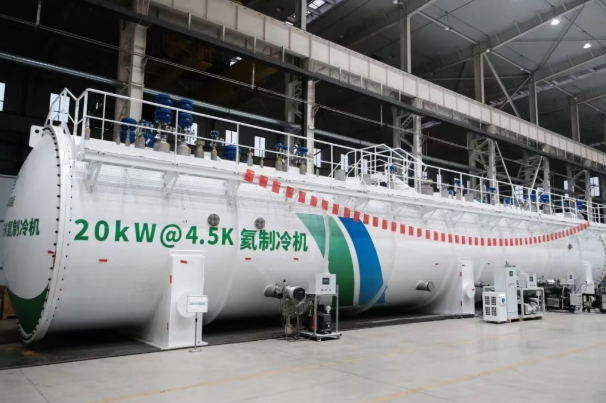
Zhongke Qingneng Completes Development of China's First Ultra-Large Helium Refrigerator
Recently, Henan Zhongke Qingneng Technology Co., Ltd., in collaboration with the Institute of Plasma Physics of the Chinese Academy of Sciences, successfully held in Hefei the development summary meeting for the 20kW@4.5K ultra-large helium refrigerator, marking that this first domestically produced ultra-large equipment has officially passed expert panel review and is ready for rollout and delivery. Helium refrigerators are indispensable core cryogenic equipment for frontier large-scale scientific facilities such as magnetic confinement controlled nuclear fusion devices. For a long time, key core technologies such as 20kW ultra-large cooling capacity equipment in the 4.5K temperature range and high-power cryogenic turbo-expanders have been monopolized by a few leading international enterprises such as France's Air Liquide and Germany's Linde Group. This time, the joint R&D team successfully broke through a series of bottleneck technologies, including high-power deep cryogenic refrigeration processes, cold box integration, and independent development of key rotating components, achieving full localization of the complete unit and key parts, with the procurement cost per unit significantly lower than that of imported comparable products. The successful development of this equipment has enabled China to achieve a historic transformation from "following" to "running abreast" in the field of core equipment for fusion reactor cryogenic systems, providing an independently controllable "cryogenic heart" for strategic emerging industries prioritized in China's 15th Five-Year Plan, such as controlled nuclear fusion energy, large superconducting accelerators, large-scale quantum infrastructure, and deep space exploration. Project leader Lu Xiaofei pointed out that this is a major leap from quantitative accumulation to qualitative transformation in China's deep cryogenic systems engineering. Pan Weiwei, General Manager of Zhongke Qingneng, stated that since its establishment, the company has built a diversified product family covering all temperature ranges. In the future, the company will continue to increase R&D investment, accelerate the construction of a full-chain ecosystem covering R&D, manufacturing, and operations, fully serve national strategic emerging industries and future industries, and provide strong technical support for China to seize the competitive high ground in high-tech industries.
2026-11-06

UK Parliament Recommends Improving Fusion Planning Policy and Public Engagement Mechanisms
Recently, the House of Commons Energy Security and Net Zero Committee completed its scrutiny of the draft National Policy Statement for fusion energy EN-8, proposing recommendations including supplementary nuclear non-proliferation guidance, strengthened early public engagement, and clarified community benefit arrangements. The scrutiny focused on the institutional conditions required for fusion to develop from research devices to commercial facilities; the relevant opinions have been submitted for government response and do not yet constitute implemented new policy. Nuclear non-proliferation is a key area the Committee requires to be further improved. As fusion device scale expands, mechanisms for identifying and assessing facility-related risks also need to develop accordingly. The Committee recommends that the government provide guidance to developers preparing construction projects as soon as possible...
2026-11-05
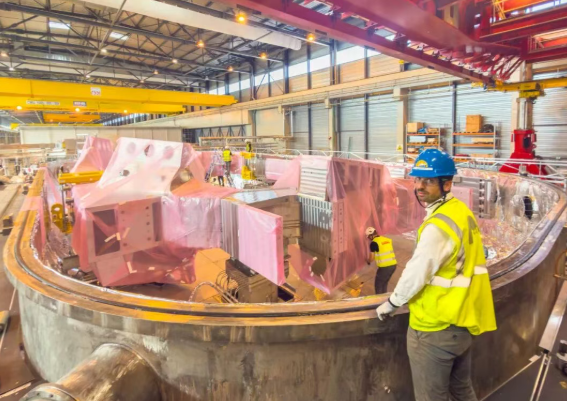
ITER Successfully Completes Half-Rated Current Test of Toroidal Field Coil #17
Recently, ITER's D-shaped superconducting toroidal field coil #17, weighing approximately 330 tonnes, was successfully energized to 34 kA (half of its 68 kA rated operating current) in the Magnet Cold Test Facility and has been smoothly transported out of the facility, ready to enter the tokamak assembly phase. It is reported that during the test, the magnet was cooled to a superconducting operating temperature of 4 K (minus 269 degrees Celsius). ITER Chief Mechanical Engineer Adrien Dedecker stated that reaching 34 kA and verifying that its actual performance is consistent with model predictions is not only a key step in magnet testing, but also accumulated valuable operational experience for subsequent integrated commissioning. The team used this opportunity to fully compare and confirm the coil structural deformation data under electromagnetic loads.
2026-11-04

The National Development and Reform Commission Deploys the 15th Five-Year Plan to Designate Nuclear Fusion as a Future Industry
Recently, the National Development and Reform Commission (NDRC) held the first press conference of the "Striving for the 15th Five-Year Plan" series, systematically introducing the strategic planning and key task deployments for cultivating and strengthening new growth drivers during the 15th Five-Year Plan period, marking the official unveiling of China's macro-level blueprint for emerging and future industries in the next stage. It is reported that Ren Zhongbao, Deputy Director of the Department of Innovation and High-Tech Development, stated at the meeting that the CPC Central Committee and the State Council, after comprehensively assessing technological trends, have explicitly designated fusion energy, together with quantum technology, biomanufacturing, hydrogen energy, brain-computer interfaces, embodied intelligence, and sixth-generation mobile communications, as the main directions for future industry development during the 15th Five-Year Plan period. The state will adhere to a nationwide coordinated approach and support regions with favorable conditions in selecting sub-sectors for development in accordance with local conditions.
2026-11-04

Xeonova Pulsed Field-Reversed Configuration Fusion Validation Device X-3 Begins Installation
Recently, Xeonova, a fusion startup established under the authority of the University of Science and Technology of China, has officially entered the on-site construction and equipment installation phase for its self-developed X-series pulsed compression Field-Reversed Configuration (FRC) high-parameter validation device XEONOVA-3 (X-3). It is noted that the Field-Reversed Configuration (FRC) possesses unique advantages such as high beta, compact structure, and low cost, and is becoming an important development direction in the international controlled nuclear fusion field. Professor Sun Xuan, founder of Xeonova, pointed out that the X-3 device adopts the overall technical route of "high-flux FRC formation + staged wall compression + magnetic compression implosion," aiming to validate the formation, compression, and high-repetition-rate pulsed operation capabilities of high-parameter FRCs...
2026-11-03
Startup "Marathon Fusion" Announces Transmutation of Mercury into Gold Using Thermonuclear Fusion Neutrons
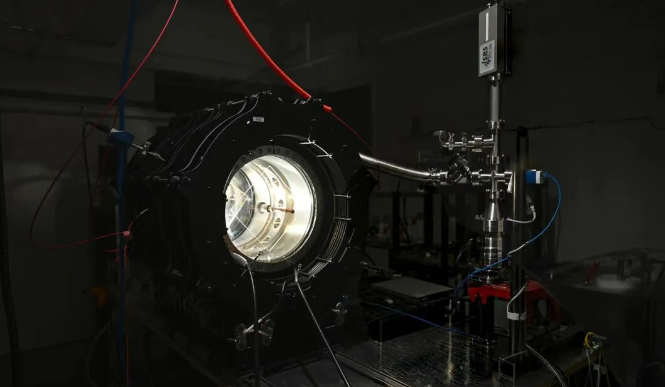
Recently, San Francisco-based startup Marathon Fusion announced that it has successfully used high-energy neutrons produced by deuterium-tritium (D-T) thermonuclear fusion reactions to transmute the element mercury into gold, claiming that its yield reached ten times the previously recorded level at CERN. It is reported that the technology is based on high-energy neutrons released by D-T fusion reactions striking mercury-198 nuclei, stripping one neutron to convert them into the radioactive isotope mercury-197, which subsequently decays to ultimately form gold-197, the only stable isotope of gold. Marathon Fusion published gamma-ray spectroscopy as characteristic evidence for the presence of mercury-197; however, the specific mass of gold produced remains at...
2026-11-02

Exploring the Frontier of Advanced Fusion Physics: Physical Mechanisms and Engineering Challenges of D–³He Secondary Neutron Suppression under the Synergy of Hot Tails and Spin Polarization
In the process of controlled nuclear fusion advancing from theoretical exploration to commercial validation, the choice of fuel pathway has always been the core variable determining the engineering feasibility and economics of a reactor. For a long time, the deuterium–helium-3 (D–³He) reaction has been regarded as an ideal "low-neutron" ultimate fusion scheme because its primary products are only charged particles (helium-4 and high-energy protons), it does not directly produce neutrons, and it possesses the potential for direct energy conversion. However, under the traditional thermal equilibrium plasma framework, D–³He is not a truly neutron-free fuel. In October 2026, the U.S. Princeton Plasma Physics Laboratory (PP...
2026-10-31
Top-Out of the Experimental Hall of Startorus Fusion's NTST Fusion Device and Delivery of the Dewar
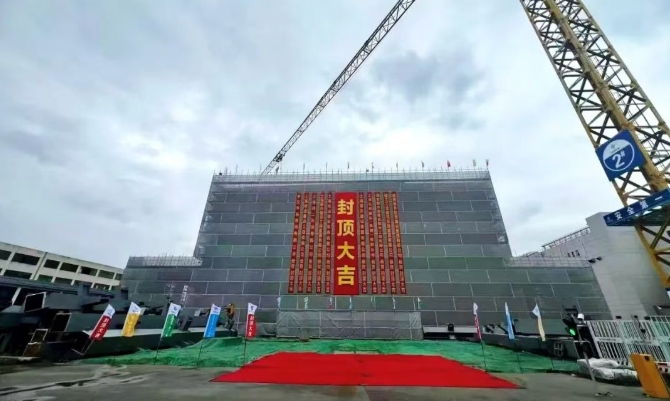
Recently, Startorus Fusion's self-developed native negative triangularity spherical tokamak (NTST) device has achieved two breakthrough milestones: the main structure of the device's experimental hall at the experimental base in Xuxing Town, Jiading District, Shanghai, has been successfully topped out, and the device's core component—the Dewar—has completed manufacturing and factory acceptance and been officially delivered. It is reported that the Dewar, as the outermost core structure of the fusion device's main machine, can provide a high-vacuum insulation environment and a precise installation reference for the entire system, and is a key facility for ensuring the stable operation of magnet coils at cryogenic temperatures. The Dewar was independently designed overall by Startorus Fusion and jointly manufactured with Wuxi Huali Fusion Energy Equipment Co., Ltd. Its structure and interfaces...
2026-10-31