
Urenco Officially Commissions Uranium Oxide Storage Facility at Gronau, Germany: Deepening Long-Term Safe Management of Depleted Uranium By-Products
 Scan to share
Global nuclear fuel enrichment services giant Urenco recently announced the official commissioning of a specialized uranium oxide storage facility located at its Gronau enrichment plant site in North Rhine-Westphalia, Germany. The formal commissioning of this facility marks the completion of a key piece in Urenco's layout for the full lifecycle harmless disposal of depleted uranium tails and strategic resource reserves.
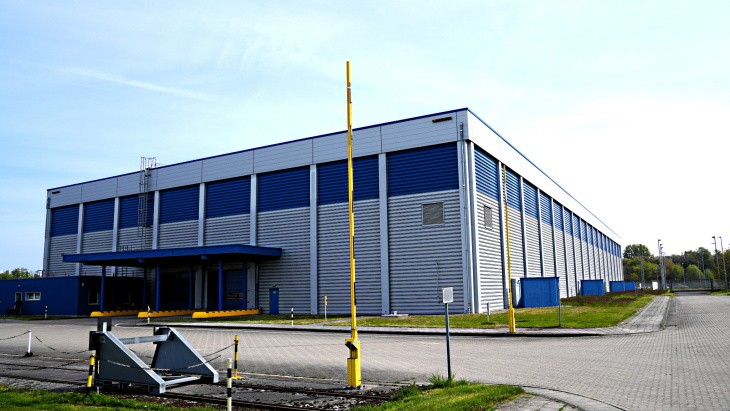
The construction permit for this storage facility originated from the expansion approval issued by the North Rhine-Westphalia nuclear regulatory authority to the Gronau enrichment plant in 2005, which authorized the plant's annual enrichment capacity ceiling to reach 4.5 million separative work units (SWU). As a precondition for environmental and nuclear safety regulatory approval, the state government explicitly required Urenco to construct within the plant site a dedicated sealed storage warehouse capable of accommodating up to 59,000 tonnes of uranium oxide.
This facility constitutes the core pillar of the safe closed-loop management strategy for uranium enrichment by-products——depleted uranium tails (Tails). Over the coming years, the depleted uranium in the form of uranium hexafluoride (UF₆) generated during the centrifugal separation process at the Gronau enrichment plant will be sorted and transferred to the Orano Group's Pierrelatte facility in France and Urenco's Tails Management Facility (TMF) at Capenhurst in the United Kingdom. At these specialized chemical facilities, the highly corrosive and volatile uranium hexafluoride will undergo deep deconversion into triuranium octoxide (U₃O₈).
Triuranium octoxide is internationally recognized by the nuclear energy community as the most suitable physicochemical form for long-term safe storage. This compound is insoluble in water, non-flammable, extremely chemically stable, and does not volatilize even under high-temperature conditions. After conversion to U₃O₈ form at overseas specialized facilities, the depleted uranium material originating from the Gronau plant site will be transported back to the newly built storage facility at Gronau for safe controlled containment lasting decades or longer.
The storage warehouse project was already completed in accordance with plans as early as 2014, and with all legal procedures and on-site operational verifications now fully compliant, the plant site formally possesses all statutory qualifications and engineering conditions to receive and store U₃O₈. Under current German nuclear energy and environmental regulations, depleted uranium is not simply classified as ultimate radioactive waste, but rather categorized as a “potentially reusable strategic material resource.” The Gronau expansion safety analysis report clearly states that a certain proportion of unseparated uranium-235 isotopes remains in the depleted uranium tails, and with the future development of advanced reactors and breeder technology, strategic potential for secondary extraction or recycling still exists.
Jörg Harren, General Manager of Urenco Germany, pointed out that the official commissioning of the U₃O₈ storage facility fulfills the company's long-standing commitment to its plant site safety strategy. The facility, relying on the most mature nuclear engineering and materials science technology currently available, ensures the highest level of environmental safety and physical containment while responsibly preserving resource options for future advanced nuclear energy systems.
Disclaimer: Information republished from partner media, institutions or other websites is provided for reference and communication purposes only. It does not imply endorsement of its views or verification of its accuracy. Please contact us if any content infringes rights or requires correction.