
Russian Researchers Develop High-Wear-Resistant Steel Sample for Nuclear Waste Processing
 Scan to share
Novosibirsk State Technical University (NSTU) recently announced that Russian researchers have developed a steel sample with reinforcing elements. Experimental results show that the durability of this material is approximately 4 times that of 5KhNM tool steel currently used in nuclear power plant waste processing equipment.
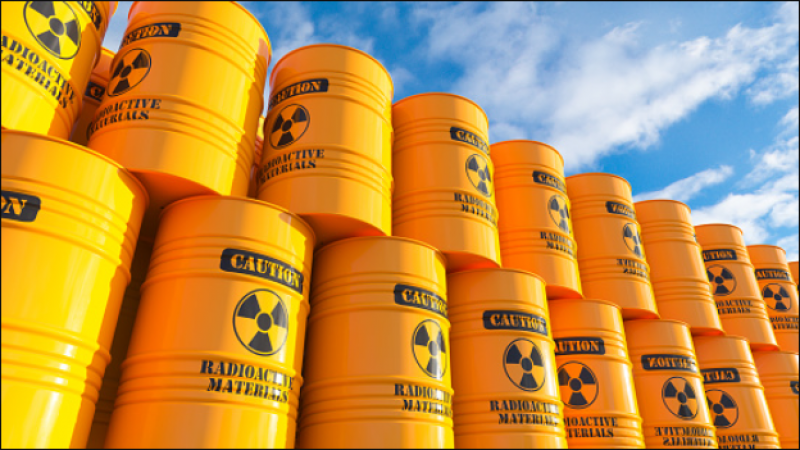
The research focuses on improving precipitation hardening steel structures. Precipitation hardening steel is a special class of alloy material that, after quenching and holding at specific temperatures, precipitates fine, hard particles within the steel, thereby enhancing strength and wear resistance. The researchers aim to replace existing 5KhNM tool steel with new high-strength alloys for manufacturing components related to the disposal of spent nuclear fuel assemblies.
The research team stated that, using a dry friction test rig that simulates wear mechanisms, experiments have confirmed that the durability of the studied steel is approximately 4 times that of 5KhNM steel.
Project developer Dmitry·Kotov noted that this type of material can be used in nuclear power plant waste processing facilities. Currently, such facilities typically use systems made of 5KhNM alloy to crush and subsequently dispose of spent fuel assemblies. If the new steel under development replaces existing materials in the future, the service life of friction pair components could be extended severalfold.
Kotov stated that equipment used for crushing operations is typically non-repairable and must be replaced as a whole, making the extension of critical component life practically significant. To manufacture guide devices for relevant mechanisms, he is studying two promising materials. In addition to carbon, these materials incorporate alloying elements such as chromium, tungsten, and vanadium.
It is understood that Kotov previously conducted research on precipitation hardening steel at the Design and Technology Division of the Lavrentyev Institute of Hydrodynamics of the Siberian Branch of the Russian Academy of Sciences. As a next step, the research team plans to continue structural and tribological studies of the material, and based on these, manufacture full-scale prototypes for testing on actual waste processing production lines.
Disclaimer: Information republished from partner media, institutions or other websites is provided for reference and communication purposes only. It does not imply endorsement of its views or verification of its accuracy. Please contact us if any content infringes rights or requires correction.