
Rosatom Plans to Export Floating Nuclear Power Plants to Four African Countries
 Scan to share
Recently, Alexey Likhachev, CEO of Rosatom, stated at the Third Russia-Africa Summit held in Moscow that the company is in in-depth consultations with four African coastal countries—Egypt, Togo, Namibia, and Tanzania—regarding the deployment of 100 MW offshore floating nuclear power plants (FNPPs).
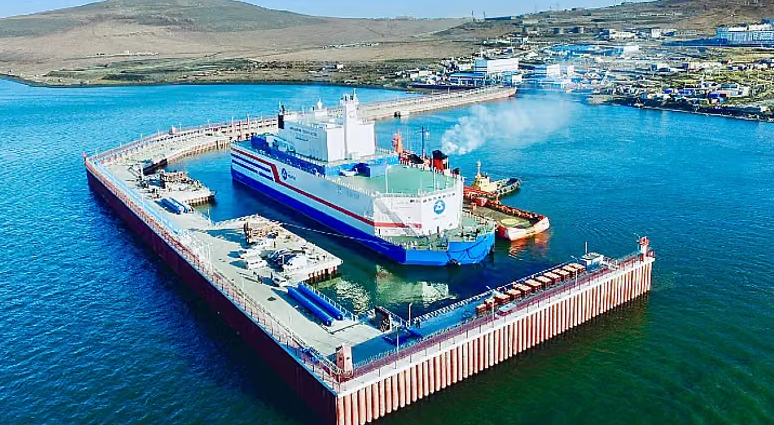
It is reported that the floating nuclear power plants offered by Rosatom to the African market are equipped with two RITM-200M reactors adapted for tropical climates, with a total installed capacity of approximately 100 MW and a design life of up to 60 years. The project plans to adopt a Power Purchase Agreement (PPA) business model, with Rosatom responsible for the construction, operation and maintenance, and fuel replacement of the power generation units, while the host country only needs to purchase electricity and provide basic grid connection, without the need to build complex onshore nuclear facilities domestically.
Currently, there is only one commercially operating floating nuclear power plant in the world, namely Rosatom's "Akademik Lomonosov" located in the Chukotka region of Russia. Rosatom's assessment indicates that 38 coastal countries in Africa have deployment potential, and floating nuclear power plants can flexibly provide stable baseload electricity for coastal cities, mining bases, and seawater desalination plants, making them an ideal entry point for emerging countries lacking nuclear energy infrastructure to introduce nuclear energy with low barriers.
Although no final commercial contract has been signed yet, Togo has signed a memorandum of understanding with Rosatom during the summit to establish a joint working group. This development not only marks Russia's accelerated efforts to expand into international markets with its next-generation SMR and offshore nuclear energy technologies, but also demonstrates its strategic intent to deepen full-industry-chain nuclear cooperation with Africa through the "buy electricity, not reactors" managed service model.
Disclaimer: Information republished from partner media, institutions or other websites is provided for reference and communication purposes only. It does not imply endorsement of its views or verification of its accuracy. Please contact us if any content infringes rights or requires correction.