
Egyptian and Russian Heads of State Meet to Discuss Expansion of El Dabaa Nuclear Power Plant
 Scan to share
Recently, Egyptian President Abdel Fattah el-Sisi met with Russian President Vladimir Putin at the Kremlin during the third Russia-Africa Summit held in Moscow. El-Sisi stated that Egypt hopes to further expand strategic nuclear energy cooperation with Russia and explicitly proposed plans to build new nuclear reactors after 2030.
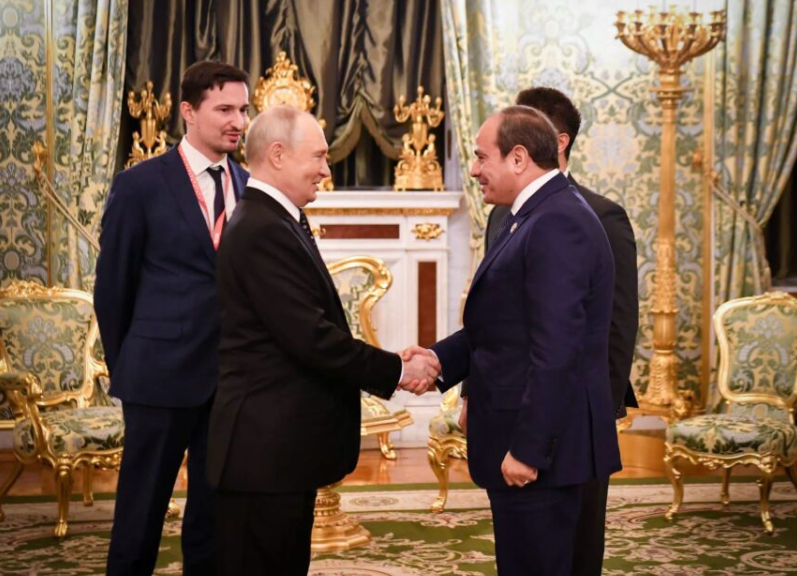
It is reported that El-Sisi reaffirmed Cairo's firm commitment to the construction timeline and payment obligations of the El Dabaa Nuclear Power Plant project. The reactor pressure vessel for Unit 2 of the nuclear power plant was successfully installed on July 9 this year. In addition to large nuclear power units, Egypt has also expressed a strong interest in introducing research reactors, small modular reactors (SMRs), and floating nuclear power plants (FNPPs), and hopes to deepen cooperation with Russia in the fields of uranium mining and rare metal extraction.
To further consolidate the foundation of bilateral cooperation, El-Sisi particularly noted that Egypt is fully prepared to provide comprehensive incentives, exemptions, and policy support to the Russian industrial zone within the Suez Canal Economic Zone. Putin emphasized the increasingly close bilateral economic ties, disclosing that trade volume between the two countries exceeded the US$10 billion mark in 2025 and continued to grow by 14% year-on-year in the first eight months of 2026, with Egypt contributing a considerable share of Russia-Africa trade.
In the fields of economy, trade, and cultural exchange, the two leaders jointly agreed to prepare for the 16th session of the Intergovernmental Joint Commission scheduled to be held in Egypt in 2027, and to deepen collaboration in multiple key areas including food supply, health, education, and scientific research. Meanwhile, Putin noted that Russian tourism to Egypt is showing strong recovery momentum, with over 1.2 million Russian tourists visiting Egypt in the first half of 2026 alone, and the full-year figure is expected to reach a historic high.
At the diplomatic and geopolitical level, the two sides built on the consensus reached during the BRICS Summit in New Delhi in September this year and conducted in-depth exchanges of international views. The two heads of state unanimously emphasized the urgency of easing tensions in the Middle East and restoring regional stability. Regarding the situation in the Horn of Africa, El-Sisi explicitly stressed the inviolability of national sovereignty and water resource security, and solemnly opposed any unilateral actions in the eastern Nile River basin; on the Ukraine crisis, El-Sisi reaffirmed Egypt's support for resolving the dispute through political negotiations to mitigate the spillover effects of the conflict on the world.
This Moscow meeting between the Egyptian and Russian heads of state not only consolidated the smooth progress of the El Dabaa Nuclear Power Plant, the flagship nuclear energy project in the Middle East, but also extended bilateral cooperation to the entire nuclear technology industrial chain, including small modular reactors, floating nuclear power plants, and upstream uranium resource development. This marks a new step forward in Rosatom's strategic nuclear energy layout in North Africa and the Middle East, setting a new benchmark for global transnational nuclear energy cooperation.
Disclaimer: Information republished from partner media, institutions or other websites is provided for reference and communication purposes only. It does not imply endorsement of its views or verification of its accuracy. Please contact us if any content infringes rights or requires correction.