
Radiation protection expert Peter Bryant to lead University of Liverpool's Chadwick Institute for Nuclear Innovation
 Scan to share
The University of Liverpool has announced that Professor Peter Bryant has been appointed as the Director of the newly established Chadwick Institute for Nuclear Innovation, with his tenure officially commencing in September 2026.
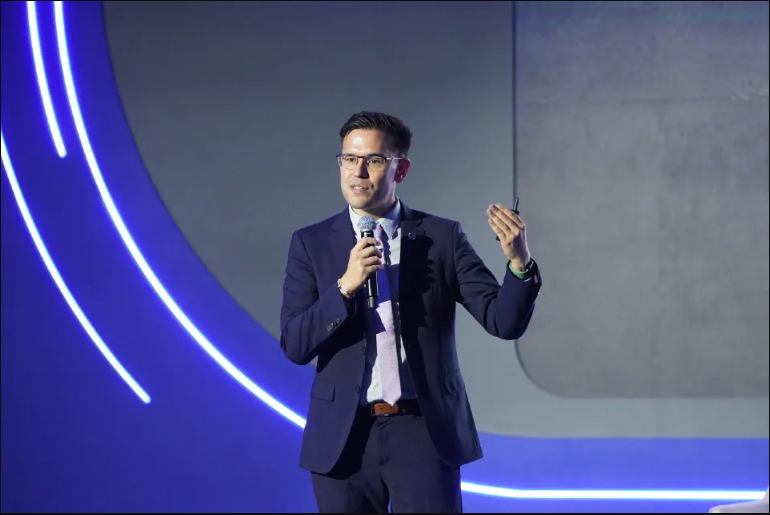
The Chadwick Institute for Nuclear Innovation is named after Nobel laureate Sir James Chadwick, who served as Head of the Physics Department at the University of Liverpool and is renowned for his discovery of the neutron. The Institute will leverage the University of Liverpool's research expertise, innovative facilities, and strategic partnerships in the nuclear energy sector to advance research and talent development in nuclear innovation.
Bryant has long been engaged in work related to the civil nuclear fuel cycle, with his research and management portfolio encompassing radiation protection, environmental permitting, radioactive waste management, emergency planning, and nuclear policy. He has held senior positions at Sizewell C nuclear power station and Électricité de France (EDF), and has extensive experience across academia, government, industry, and international standards organizations.
Currently, Bryant serves as Chief Executive Officer of the World Nuclear Transport Institute (WNTI), where he focuses on fostering collaboration among governments, regulators, industry, and international organizations to support the safe, secure, and sustainable transport of nuclear and radioactive materials. He is also a member of the International Commission on Radiological Protection (ICRP), provides advisory services to the International Atomic Energy Agency on stakeholder engagement and nuclear policy, and serves on the UK government's Radioactive Waste Management Committee. In addition, he holds an honorary professorship at the University of Liverpool, contributing to research and teaching in radiation protection and nuclear policy.
Bryant stated that the future of nuclear innovation depends not only on high-level research but also on effectively connecting research with policy, industry, and society. He believes the Chadwick Institute has the opportunity to bring together diverse stakeholders, accelerate the innovation process, cultivate future talent, and support the safe, secure, and sustainable deployment of nuclear technology.
The University of Liverpool noted that Bryant's experience in radiation protection, nuclear policy, and partnership network development will help shape the Institute's vision and drive nuclear innovation, talent development, and industry partnership building.
It is understood that the Chadwick Institute for Nuclear Innovation will be collaboration-centric. The University of Liverpool has already signed formal memoranda of understanding with organizations including Sizewell C nuclear power station, Mirion Technologies, the World Nuclear Transport Institute, and the International Commission on Radiological Protection, establishing a platform for collaborative research, technological innovation, and skills development.
Disclaimer: Information republished from partner media, institutions or other websites is provided for reference and communication purposes only. It does not imply endorsement of its views or verification of its accuracy. Please contact us if any content infringes rights or requires correction.