
U.S. Research Reveals Diamond Melting Mechanism at High Pressure, Potentially Enhancing Inertial Confinement Fusion Performance
 Scan to share
A research team at Lawrence Livermore National Laboratory (LLNL) in the U.S. recently published a study in Nature Physics reporting that the latest dynamic compression experiments have, for the first time, directly recorded atomic structural changes during diamond melting under extreme high pressure. The experiments showed that under high-pressure conditions, solid diamond can float in liquid metallic carbon, similar to ice floating on water.
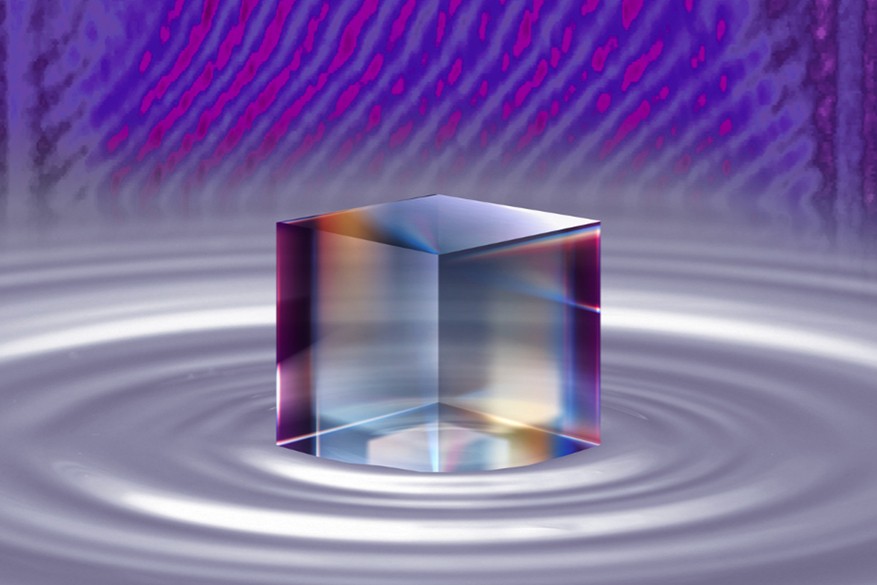
Diamond is not only a high-hardness carbon material but is also used as the fuel target capsule shell in inertial confinement fusion experiments. When intense lasers drive the capsule implosion, the compression and melting behavior of the diamond shell can affect whether the fusion fuel reaches the required high-temperature, high-pressure state. Meanwhile, the planetary science community has long focused on the high-pressure behavior of carbon in the deep interiors of ice giant planets, as phenomena such as "diamond rain" may exist inside planets like Neptune and Uranus.
The researchers reported that they subjected tiny diamond samples to shock compression, heating them to temperatures exceeding the solar surface, pressures higher than those at the centers of Neptune and Uranus, and reaching conditions roughly three times the pressure of Earth's core. During this process, the team simultaneously measured the samples' atomic structure, temperature, density, and optical reflectivity.
For a long time, experimentally observed diamond melting points differed from quantum mechanics simulation predictions by approximately 20%. About 20 years ago, LLNL researchers discovered that diamond density increases upon melting at high pressure, meaning that liquid carbon at high pressure is denser than solid diamond. However, theoretical simulations have since struggled to reproduce the experimental results.
To address this issue, the LLNL team conducted laser-driven dynamic compression experiments at the Laboratory for Laser Energetics (LLE) at the University of Rochester. The researchers used the Omega Laser Facility to vaporize the outer layer of the sample, generating a strong shock wave that rapidly propagated through the diamond interior. Since the high-pressure state lasted only about one billionth of a second, the team had to acquire critical data, including X-ray diffraction, within an extremely short timeframe.
The researchers stated that this is the first time X-ray diffraction technology has been used to directly probe shock-compressed diamond through its melting process. The new diagnostic approach corrected previous melting point measurement deviations, bringing experimental results into general agreement with simulations and closing a data gap that had persisted for about 20 years.
The experiment also addressed a question raised in another high-pressure study. Previously, Sandia National Laboratories, using the Z machine to shock-compress diamond samples, had observed experimental signatures that could point to an intermediate crystalline phase. The latest study, however, shows that under the single-shock conditions of this experiment, carbon maintained its diamond structure until melting without undergoing an intermediate phase. The researchers believe this may be related to the extremely short shock duration experienced by the sample, where the material entered the melting process before structural transformation could complete.
This result has direct relevance to inertial confinement fusion experiments. In fusion experiments at the National Ignition Facility (NIF), laser-generated shock waves drive tiny diamond capsules inward, compressing the internal fusion fuel to extreme conditions. If the initial shock wave can melt the diamond shell into a uniform, smooth fluid, it could reduce implosion defects and increase the probability of successful fusion reactions.
LLNL researchers stated that the new data indicate that even with slightly lower initial shock velocities, diamond target capsules may still achieve complete melting. Slower shocks help improve the compressibility of the fusion fuel, potentially yielding higher energy output under the same laser energy conditions. Model predictions suggest that, provided other degradation mechanisms are controlled, this approach could achieve an energy gain of approximately threefold.
The study also provides new evidence for interior models of ice giant planets. Since the deep environments of Neptune and Uranus cannot be directly probed, related understanding relies primarily on laboratory high-pressure experiments and theoretical models. Diamond melting data under extreme pressure helps improve assessments of carbon crystallization, sinking, and the formation of "diamond rain."
The LLNL team's next step is to use the National Ignition Facility to study diamond behavior under even more extreme conditions, focusing on the response of diamond capsules during later stages of implosion and the stability limits of their structure under multiple shock wave interactions.
Disclaimer: Information republished from partner media, institutions or other websites is provided for reference and communication purposes only. It does not imply endorsement of its views or verification of its accuracy. Please contact us if any content infringes rights or requires correction.