
South Korean Scholar Patents Fusion Reactor Optimization Design Method
 Scan to share
Professor Bonggeun Hong (transliteration) of the Department of Quantum System Engineering at the College of Engineering, Jeonbuk National University, South Korea, has recently registered a patent for a fusion reactor optimization design method, aimed at supporting the engineering design and commercialization of next-generation fusion technology.
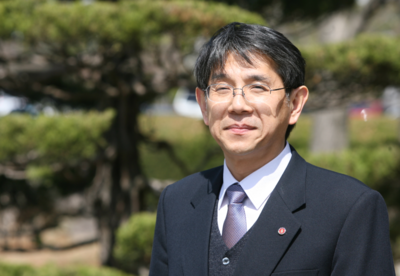
[Image source: Jeonbuk National University]
The design method proposed in the patent can evaluate the performance of fusion reactors in various application scenarios—including power generation, thermal energy utilization, and use as a neutron source for nuclear transmutation—while optimizing device dimensions and key component structures. Its core approach is to simultaneously consider fusion system performance and economic feasibility during the initial design phase, thereby deriving more optimal design solutions.
According to related introductions, this technology helps improve the design efficiency and economic feasibility of fusion reactors, enabling R&D teams to quickly assess the technical and economic prospects of a solution at an early stage, reducing the time and cost of design iterations, and shortening the R&D cycle toward commercialization to a certain extent.
The "K-Systems" program employing this patented technology is a design support system that calculates the optimal design specifications and estimated construction costs of a fusion reactor on a single platform, while conducting integrated analysis of performance, economics, and structural configurations. The system enables comparison and selection among multiple design conditions, providing a reference for research institutions and enterprises in making fusion device design decisions.
The technology can also be used to pre-assess the technical and economic feasibility of different tritium breeding blanket configurations. The tritium breeding blanket is a key component in fusion reactors used to produce tritium, the fusion fuel. The ability to validate relevant configurations during the design phase helps reduce trial-and-error, lower R&D risks, and improve the development efficiency of innovative fusion reactors.
Hong's design method is applicable not only to fusion power generation devices but also to the design review and economic assessment of next-generation fusion systems. As fusion technology R&D continues to advance, this method is expected to evolve into a design decision-making platform supporting enterprises in developing innovative fusion reactors, laying the foundation for subsequent engineering and commercialization applications.
Disclaimer: Information republished from partner media, institutions or other websites is provided for reference and communication purposes only. It does not imply endorsement of its views or verification of its accuracy. Please contact us if any content infringes rights or requires correction.