
US Oak Ridge National Laboratory Develops 3D-Printed Composite Molds, Significantly Shortening Construction Cycles for Advanced Nuclear Power Plants
 Scan to share
According to reports, the US Oak Ridge National Laboratory (ORNL) and its partners have successfully developed new 3D-printed composite molds that can shorten the production cycle of specialized concrete formwork for nuclear facilities from approximately six months to about two weeks. The project, titled “Advanced Composite Formwork for Accelerated High-Precision Nuclear Infrastructure Construction,” was awarded the 2026 CAMX Combined Strength Award for its breakthroughs in additive manufacturing and advanced materials.
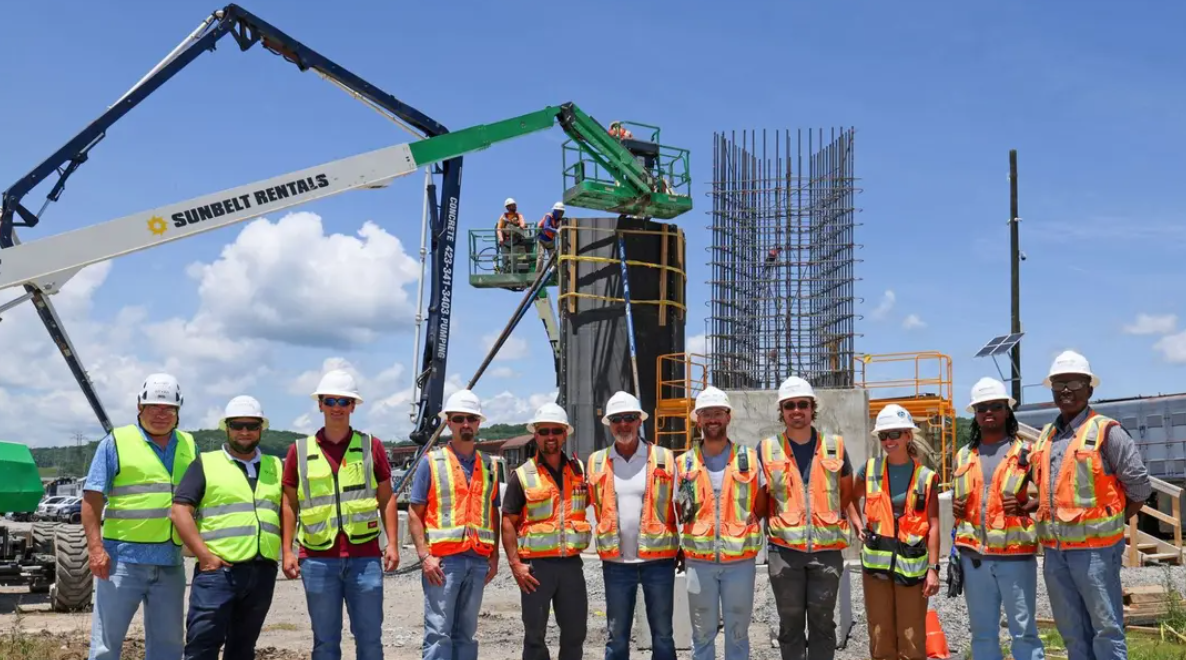
It is understood that the technology has been fully demonstrated at Kairos Power's campus in Oak Ridge, Tennessee, aimed at providing precision concrete forming support for its Hermes Low-Power Demonstration Reactor currently under construction. By combining large-scale 3D printing with precision machining, the research team produced components with complex geometries that are difficult to achieve with traditional steel molds, achieving critical surface precision of one-sixteenth of an inch and perfectly withstanding the enormous pressure generated during concrete pouring, effectively supporting grout-free assembly of radiation shielding panels.
In specific engineering practice, Kairos Power worked closely with its construction partner Barnard Construction to successfully complete technical validation through a cast-in-place concrete shielding structure named Janus. The project brought together cross-disciplinary expertise from the US Department of Energy (DOE) Office of Advanced Materials and Manufacturing Technologies, the University of Maine Advanced Structures and Composites Center, and several industry enterprises.
Industry experts stated that while the application of this technology primarily accelerates the production speed of specialized concrete formwork and does not mean that the entire nuclear power plant construction period will be shortened proportionally, it successfully eliminates a core supply chain bottleneck in complex nuclear infrastructure construction. With the continuous improvement of the additive manufacturing supply chain, this innovative solution will lay a solid foundation for the rapid deployment and flexible construction of future advanced reactor projects.
Disclaimer: Information republished from partner media, institutions or other websites is provided for reference and communication purposes only. It does not imply endorsement of its views or verification of its accuracy. Please contact us if any content infringes rights or requires correction.