
US MARVEL Microreactor Approved for Criticality Testing, Testing Expected to Begin by End of 2026
 Scan to share
The U.S. Department of Energy (DOE) Idaho Operations Office has formally approved the final safety analysis report for the MARVEL microreactor at Idaho National Laboratory (INL). This key regulatory approval authorizes the reactor to proceed with configuration preparations for dry criticality testing, marking a breakthrough for the project following the approval of the preliminary safety analysis report in March of this year.
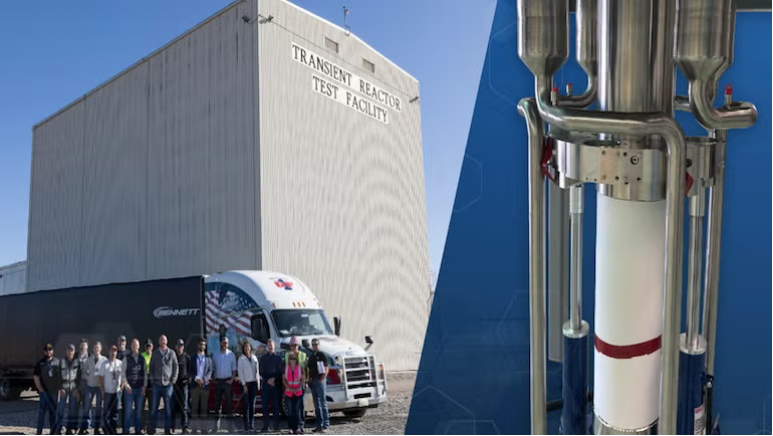
The MARVEL (Microreactor Applications Research Validation and Evaluation) project is a sodium-potassium alloy-cooled microreactor test platform with a design thermal power of 85 to 100 kilowatts and a net electrical power of approximately 20 kilowatts. The facility is designed to help private companies such as Amazon Web Services (AWS) and GE Vernova test the feasibility of microreactors providing power to data centers and industrial processes.
As a compact, factory-prefabricated nuclear energy application device, the MARVEL reactor has an overall height of approximately 15 feet and a width of approximately 4 feet. According to the plan, the reactor is expected to be fully operational by the end of 2027 at INL's Transient Reactor Test Facility (TREAT), where it will be connected to a functional microgrid to demonstrate the capability of micro nuclear technology to provide power to remote communities, military bases, data centers, and heavy industry sites.
On the engineering front, researchers earlier this year unveiled the first new microreactor control system in decades, which uses control drums rather than traditional control rods to regulate the nuclear fission reaction. In addition, the reactor's primary coolant system (PCS) arrived at the laboratory in mid-September, providing the engineering team with the last set of core primary components needed to begin physical integration.
During full-power operation, the primary coolant system uses a sodium-potassium alloy as the coolant to carry heat away from the core. This alloy remains liquid at room temperature, enabling efficient absorption and transfer of heat at high core temperatures while eliminating the need to pressurize the system.
The project team currently plans to begin initial testing as early as December 2026. The first phase will focus on dry criticality testing, in which the reactor achieves a self-sustaining nuclear chain reaction under conditions of no coolant loading and near-zero power. This dry-run phase will allow researchers to collect fundamental physics data that will serve as a benchmark reference for reactor physics research nationwide.
After completing dry testing, engineers will load a specialized liquid metal sodium-potassium alloy coolant. Abdalla Abou-Jaoude, project lead for the MARVEL microreactor, said that obtaining the key DOE approval has enabled the project to take a solid step toward initial criticality, and that the team is very pleased to share the approved safety analysis documents with industry stakeholders, with the aim of providing a standard template that the nuclear industry can reference.
Disclaimer: Information republished from partner media, institutions or other websites is provided for reference and communication purposes only. It does not imply endorsement of its views or verification of its accuracy. Please contact us if any content infringes rights or requires correction.